
How Does a Special Industrial Sewing Machine Sew Elastic Fabric?
2026-09-18
1. Why Is Elastic Fabric So Difficult to Sew on a Standard Machine?
Elastic fabric, such as spandex, lycra, or elastane blends, has a property that woven fabric does not: it stretches and recovers. When the fabric is fed through a standard sewing machine, the feed dog pulls it forward. The fabric stretches under the tension of the feed. When the sewing is complete and the fabric is released, it recovers to its original length. The stitches, however, do not recover because the sewing thread is relatively inelastic. The result is that the stitches either break when the garment is stretched, or the fabric puckers around the seam. The problem is compounded by the fact that the feed dog on a standard machine moves at a constant speed. It does not compensate for the stretch of the fabric. In our factory, we have tested standard machines on elastic fabric and found that the stitch elongation is often less than 20 percent, while the fabric can stretch by 50 percent or more.
The core problem: The stitch must be able to stretch with the fabric without breaking. A standard lockstitch has limited elongation because the thread is locked in place. A chain stitch or overlock stitch has more elongation because the loops can move. The Special Industrial Sewing Machine uses a stitch structure that is designed for stretch.
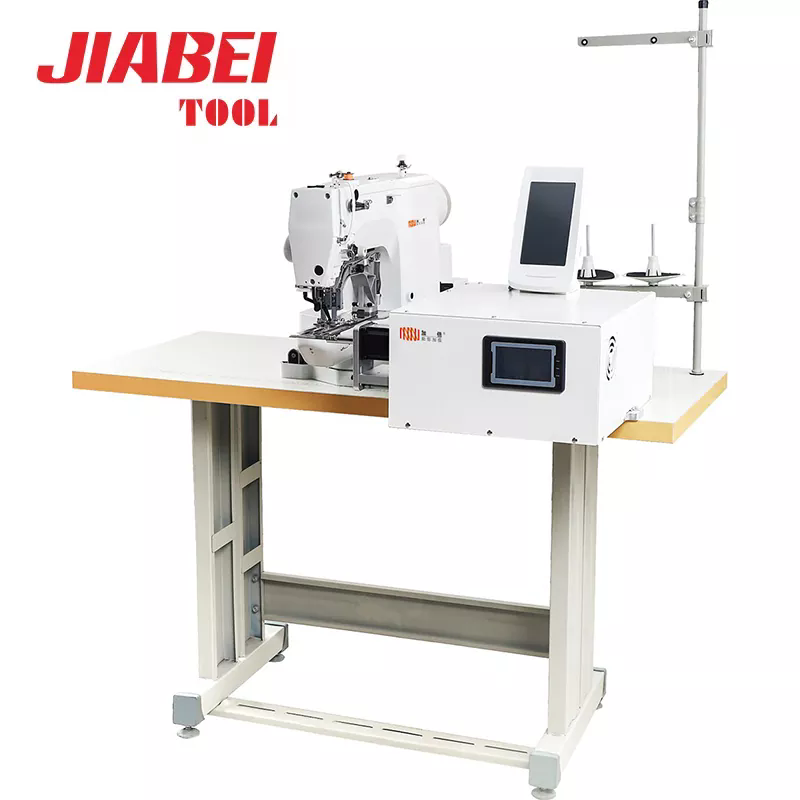
Lishui Jiwu Technology Co.,Ltd. manufactures Special Industrial Sewing Machine units that are designed for elastic fabrics. Our factory focuses on three key systems: the differential feed mechanism, the stitch formation system, and the thread tension control. Each system is engineered to handle the specific challenges of stretch materials.
2. How Does Differential Feed Compensate for Fabric Stretch?
Differential feed is the most important feature of a Special Industrial Sewing Machine for elastic fabric. It uses two feed dogs instead of one. The front feed dog and the rear feed dog move at different speeds. The ratio between the two speeds is called the differential ratio. When the front feed dog moves faster than the rear feed dog, the fabric is stretched as it is sewn. When the rear feed dog moves faster, the fabric is gathered. For elastic fabric, the differential ratio is set so that the fabric is slightly gathered as it is sewn. This gathering compensates for the stretch that occurs during sewing. When the fabric recovers after sewing, the seam lies flat instead of puckering. The table below shows the differential ratio settings for different elastic fabrics.
| Fabric type | Stretch percentage | Recommended differential ratio | Stitch type |
| Cotton-spandex blend (lightweight) | 20 – 30% | 1:1.3 | 3-thread overlock |
| Polyester-spandex (medium weight) | 30 – 50% | 1:1.5 | 4-thread overlock |
| Nylon-spandex (swimwear) | 50 – 80% | 1:1.8 | 3-thread overlock with elastic tape |
| Rib knit (cuffs, necklines) | 40 – 60% | 1:1.6 | Coverstitch |
The differential ratio is adjusted by a lever on the machine. The operator can change the ratio while sewing to adapt to different fabric sections. Our Special Industrial Sewing Machine units have a digital display that shows the current differential ratio, which makes it easier to repeat settings for different orders.
3. What Stitch Structures Are Used for Elastic Fabric and Why?
The stitch structure determines the elongation of the seam. A standard lockstitch has an elongation of 15 to 25 percent. A chain stitch has an elongation of 30 to 40 percent. An overlock stitch has an elongation of 40 to 60 percent. A coverstitch has an elongation of 50 to 70 percent. The choice of stitch depends on the application. For side seams and armholes on stretch garments, a 4-thread overlock is standard. For hemming and binding, a coverstitch is used. For attaching elastic tape, a 3-thread overlock with a differential feed is used. The table below compares the stitch properties for elastic fabric applications.
| Stitch type | Elongation | Seam strength | Typical application |
| Lockstitch (standard) | 15 – 25% | High | Non-stretch seams, woven fabrics |
| Chain stitch | 30 – 40% | Moderate | Decorative stitching, temporary seams |
| 3-thread overlock | 40 – 50% | Moderate | Edge finishing, light stretch fabrics |
| 4-thread overlock | 50 – 60% | High | Side seams, armholes, medium stretch |
| Coverstitch | 50 – 70% | High | Hemming, binding, high stretch |
Our factory manufactures Special Industrial Sewing Machine units that can produce all of these stitch types. The machine can be configured with different needle counts and loopers to match the specific stitch structure required for the garment. We also provide stitch samples so that customers can verify the elongation before production.
4. How Is Thread Tension Controlled to Prevent Stitch Breakage?
Thread tension is critical for elastic fabric. If the tension is too high, the thread will break when the fabric is stretched. If the tension is too low, the stitch will be loose and the seam will not be secure. A Special Industrial Sewing Machine uses a multi-stage tension system. The main tension is controlled by a dial that adjusts the pressure on the tension discs. The secondary tension is controlled by a check spring that absorbs the shock when the needle penetrates the fabric. The thread path is also designed to minimize friction. In our factory, we use ceramic thread guides that reduce friction and heat buildup. The tension is set so that the stitch lies flat on the fabric without puckering. We recommend testing the tension on a sample of the actual fabric before starting production.
Frequently Asked Questions About Sewing Elastic Fabric with Industrial Machines
Summary for Garment Production Engineers
Sewing elastic fabric requires a Special Industrial Sewing Machine that is designed for the specific challenges of stretch materials. The differential feed compensates for fabric stretch, the stitch structure provides the required elongation, and the tension control prevents stitch breakage. The combination of these three systems allows for consistent, high-quality seams on elastic fabrics. Lishui Jiwu Technology Co.,Ltd. has been manufacturing Special Industrial Sewing Machine units for over 15 years and supplies to garment factories worldwide.
Lishui Jiwu Technology Co.,Ltd. manufactures Special Industrial Sewing Machine units with differential feed, multiple stitch configurations, and digital tension control. We provide stitch samples and technical support for elastic fabric applications.