

How Does a Spiral Dryer Optimize Industrial Moisture Removal and Production Efficiency?
2025-12-11
Spiral dryers have become a critical component in modern industrial drying lines, particularly in textile, nonwoven, paper, chemical, and food-processing environments where continuous, uniform, and energy-efficient moisture removal is required. A spiral dryer is designed as a helical or spiral-shaped drying channel, allowing materials to travel progressively upward or downward while exposed to controlled airflow and thermal energy.
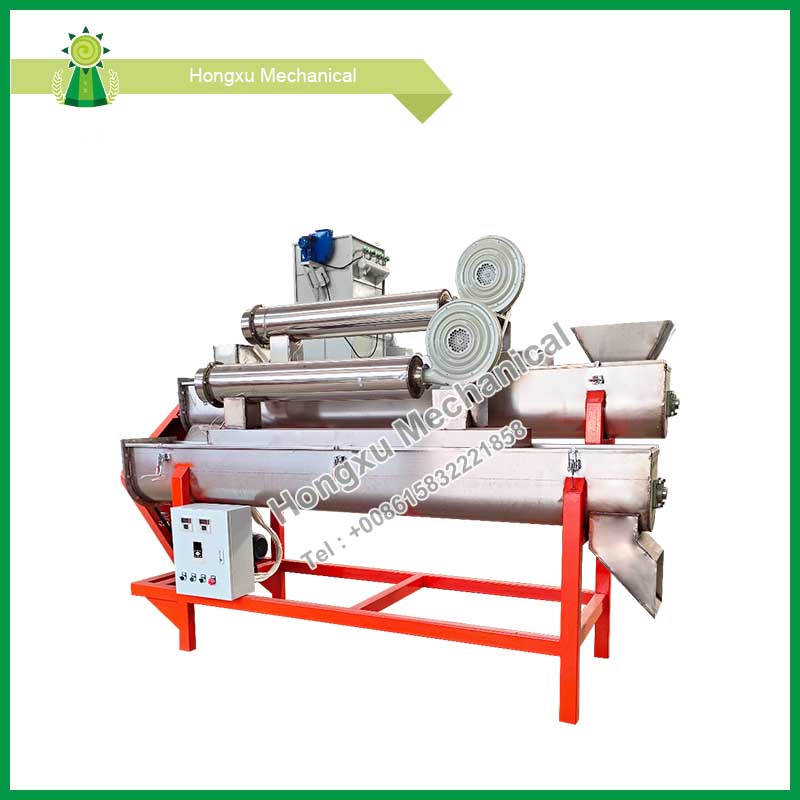
A representative spiral dryer configuration includes the following technical parameters:
| Parameter | Specification Range |
|---|---|
| Application Materials | Fabrics, chemical fibers, nonwovens, paper webs, films, granular raw materials |
| Operating Temperature | 50°C – 200°C configurable based on process requirements |
| Airflow Direction | Cross-flow, counter-flow, or mixed-flow |
| Spiral Layer Height | 1 m – 10 m depending on production line design |
| Conveyor Structure | PTFE mesh belt, stainless steel wire belt, or customized polymer belt |
| Heating Options | Electric heating, steam heating, thermal oil, or gas heating |
| Air Volume | 5,000 – 50,000 m³/h adjustable |
| Moisture Reduction Rate | 10% – 60% depending on initial moisture and material characteristics |
| Control System | PLC automation with temperature, speed, and humidity monitoring |
| Footprint | Compact vertical layout for minimal factory space usage |
These parameters influence drying uniformity, energy consumption, throughput, and overall operational reliability. Understanding them is essential for optimal equipment selection and line integration.
How Does a Spiral Dryer Enhance Throughput in Continuous Production?
Industries increasingly seek stability, high-capacity drying, and uninterrupted process flow. Spiral dryers are engineered to support these exact conditions. By allowing materials to pass through multiple vertically arranged drying layers, a spiral dryer maximizes surface exposure while maintaining continuous movement. This geometry eliminates bottlenecks typical in flat-bed dryers and reduces manual handling, lowering operational overhead.
Airflow distribution plays an instrumental role. A properly engineered spiral dryer integrates high-volume fans, directional ducts, and segmented thermal zones to deliver constant air velocity across all spiral layers. This prevents inconsistent drying, which is a frequent challenge when processing materials with variable thickness or density. The ability to maintain consistent thermal conditions ensures reproducible results—critical for quality-sensitive industries such as technical textiles, precision nonwovens, and film processing.
Another key throughput advantage is its compact footprint. Instead of occupying long horizontal floorspace like traditional conveyor dryers, a spiral dryer builds vertically. This design allows facilities to expand drying capacity without expanding factory real estate. As the global manufacturing sector increasingly shifts toward cost efficiency and space optimization, spiral dryers have emerged as a practical solution to scale output without facility reconstruction.
How to Evaluate the Performance and Durability of a Spiral Dryer?
Evaluating a spiral dryer requires comprehensive technical and operational analysis, including airflow engineering, materials of construction, thermal design, and control system integration. The quality of the spiral conveyor, for example, determines longevity and the dryer’s ability to withstand mechanical wear under continuous operation. Stainless steel belts provide superior resistance to corrosion and high temperatures, while PTFE mesh belts allow enhanced breathability and faster moisture dissipation.
Temperature uniformity is equally vital. A high-precision spiral dryer utilizes insulated chambers, variable-speed fans, and multi-zone heating to stabilize internal conditions. Poor thermal management can cause fluctuating drying results, shrinkage, or energy waste. A high-performance dryer minimizes such variations through automated feedback controls, ensuring the entire spiral structure maintains calibrated temperatures.
Durability also depends on maintenance accessibility. Spiral dryers designed with modular access doors, removable side panels, and easy-to-clean ductwork reduce downtime during servicing. In textile and nonwoven environments, fiber accumulation is inevitable; therefore, a dryer with well-designed filtration and clean-out systems can significantly extend service intervals and prevent fire hazards or airflow obstruction.
The global industrial equipment market increasingly emphasizes operational continuity. Choosing a spiral dryer with a well-engineered mechanical structure and a robust automation suite ensures long-term reliability and lowers lifetime operational cost.
How to Determine Whether a Spiral Dryer Matches Your Industry’s Workflow Requirements?
Every production environment utilizes different moisture levels, material weights, speeds, and operational constraints. Selecting a spiral dryer that fits these needs requires a detailed evaluation of process parameters.
First, analyze the moisture profile. High-moisture materials demand powerful airflow, larger drying zones, or higher temperatures. Low-moisture materials need precise thermal control to prevent deformation or surface hardening. Spiral dryers offer the advantage of extended residence time, making them effective across diverse moisture scenarios.
Second, identify the required production speed. Industries such as disposable hygiene products or technical textiles demand rapid continuous throughput. A high-tier spiral dryer includes frequency-controlled drives that synchronize conveyor motion with upstream and downstream equipment. This synchrony is essential to avoid material tension, wrinkles, or breakage.
Third, consider the environmental and regulatory requirements. Spiral dryers can be equipped with heat-recovery systems, filtration modules, and exhaust management technologies to reduce emissions and improve energy efficiency. As global manufacturing adopts environmentally aligned production standards, these capabilities are increasingly evaluated during equipment procurement.
Finally, evaluate integration complexity. Spiral dryers that support PLC communication protocols (e.g., Modbus, EtherNet/IP) can seamlessly engage with MES systems, plant-wide automation frameworks, and remote monitoring setups, creating a consistent data-driven environment for production optimization.
How Will Spiral Dryer Technology Align With the Future of Industrial Drying?
Industrial drying is transitioning toward automation, energy optimization, and material-specific customization. Spiral dryers are well-positioned to evolve with these trends. Their vertical architecture provides flexibility for thermal upgrades, modular expansions, and IoT-enabled monitoring.
Emerging innovations include:
• Adaptive thermal zoning that adjusts heat distribution automatically based on material moisture feedback.
• High-efficiency motors and airflow components to reduce power consumption during non-peak production.
• Predictive maintenance algorithms analyzing belt wear, fan vibrations, and temperature deviations.
• Environmentally friendly heating methods that replace traditional fuel-intensive systems.
As industries advance toward intelligent manufacturing, spiral dryers are expected to integrate deeper into digital production ecosystems. This evolution supports higher product consistency, faster production cycles, and lower overhead costs.
Common Questions About Spiral Dryers
Q1: What types of materials can be processed in a spiral dryer?
A spiral dryer can process a wide range of materials, including fabrics, knitted textiles, chemical fibers, nonwoven substrates, paper webs, and film-based materials. The adaptive belt configurations and adjustable thermal zones allow the equipment to handle lightweight, delicate materials and heavier, moisture-rich substrates without causing deformation or thermal damage.
Q2: How does a spiral dryer reduce overall energy consumption compared to traditional drying equipment?
The spiral layout extends material residence time without increasing linear footprint, enabling more effective heat transfer with lower airflow demands. Additionally, many spiral dryer designs incorporate heat-recovery units, insulated chambers, and advanced airflow controls that recycle thermal energy and prevent heat loss. These efficiencies reduce total energy consumption while maintaining high drying performance.
Spiral dryers have become indispensable across multiple industrial sectors due to their compact structure, stable drying performance, consistent airflow distribution, and compatibility with high-speed production lines. Their ability to minimize energy consumption, maintain uniform product quality, and integrate into automated workflows positions them as a strategic investment for manufacturers upgrading or expanding their drying systems. As industrial production continues to evolve toward higher efficiency and technical sophistication, spiral dryers are expected to gain broader adoption and technological enhancement.
Hongxu® provides spiral dryer configurations engineered to support diverse industrial applications, from technical textiles to high-precision nonwovens and specialty processing lines. For detailed specifications, system selection guidance, or project consultation, please contact us.