

How Does a Standing Seam Machine Transform Modern Metal Roofing Production?
2026-06-29
Abstract
A Standing Seam Machine is a critical piece of equipment in modern metal roofing manufacturing, enabling precise, efficient, and durable panel production for architectural and industrial applications. This article explores how it works, its advantages, common challenges it solves for manufacturers, and how to select the right system for your production needs. It also includes operational insights, maintenance considerations, and practical guidance for buyers seeking long-term value and performance stability.
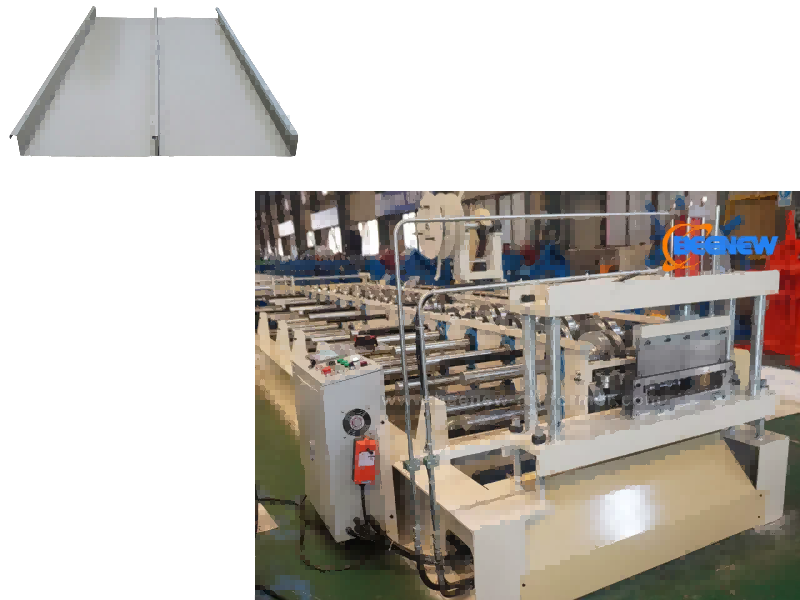
Table of Contents
- Introduction: Why Standing Seam Technology Matters
- What Is a Standing Seam Machine?
- How It Works: Core Operating Principle
- Key Benefits for Manufacturers
- Industry Pain Points It Solves
- Technical Structure and Key Components
- Standing Seam vs Traditional Roofing Methods
- Applications Across Industries
- Buying Guide: What to Consider
- Maintenance and Operational Best Practices
- Frequently Asked Questions
- Conclusion and Next Steps
Introduction: Why Standing Seam Technology Matters
Modern construction demands roofing systems that are durable, weather-resistant, and visually clean. The Standing Seam Machine has become a core solution for manufacturers aiming to produce high-quality roofing panels with consistent precision. As building standards evolve, the demand for seamless, leak-proof, and structurally reliable roofing continues to grow globally.
Unlike traditional manual or semi-automated systems, this machine allows continuous roll forming of metal sheets into interlocking panel profiles that provide superior weather protection and aesthetic value.
What Is a Standing Seam Machine?
A Standing Seam Machine is industrial roll-forming equipment designed to manufacture standing seam metal roofing panels. These panels are characterized by raised seams that interlock adjacent sheets, eliminating exposed fasteners and improving waterproofing performance.
The system typically integrates feeding, forming, cutting, and control systems into a single production line, allowing continuous and automated output.
- Continuous coil feeding system
- Roll forming stations with progressive shaping
- Hydraulic or servo cutting system
- PLC control system for precision automation
How It Works: Core Operating Principle
The machine operates by gradually shaping flat metal coils into a standing seam profile through multiple forming rollers. Each roller set performs a specific deformation step, ensuring the material is not damaged while achieving high structural integrity.
Below is a simplified operational flow:
- Step 1: Coil loading and alignment
- Step 2: Feeding into leveling system
- Step 3: Progressive roll forming
- Step 4: Profile locking formation
- Step 5: Length measurement control
- Step 6: Automatic cutting
The precision of this process ensures consistent geometry across all produced panels, which is critical for installation compatibility on-site.
Key Benefits for Manufacturers
Investing in a Standing Seam Machine brings multiple operational and commercial advantages, especially for large-scale roofing production facilities.
- High Production Efficiency: Continuous forming reduces downtime and increases output.
- Superior Accuracy: Automated controls ensure dimensional consistency.
- Material Optimization: Minimal waste during forming and cutting.
- Enhanced Product Quality: Strong interlocking seams improve durability.
- Labor Reduction: Automation reduces dependency on manual labor.
Industry Pain Points It Solves
Manufacturers often face challenges such as inconsistent panel quality, high labor costs, and slow production rates. The Standing Seam Machine directly addresses these issues.
| Common Problem | Machine Solution |
|---|---|
| Manual production errors | Automated PLC control ensures accuracy |
| Low output efficiency | Continuous roll forming increases speed |
| Inconsistent panel dimensions | Precision roller calibration system |
| Roof leakage issues | Interlocking seam structure eliminates exposed fasteners |
Technical Structure and Key Components
Understanding the machine’s structure is essential for evaluating performance and reliability. A typical system includes the following components:
- Uncoiler system
- Guiding and leveling section
- Roll forming station
- Hydraulic cutting device
- PLC control panel
- Output receiving table
Manufacturers such as Xiamen Beenew integrate advanced engineering design to ensure stable operation under long production cycles, reducing downtime and improving consistency.
Standing Seam vs Traditional Roofing Methods
| Feature | Standing Seam Machine System | Traditional Roofing Production |
|---|---|---|
| Automation level | High | Low to medium |
| Installation reliability | Very high | Moderate |
| Production speed | Continuous | Batch-based |
| Labor dependency | Low | High |
Applications Across Industries
Standing seam roofing systems are widely used across various sectors due to their durability and modern appearance.
- Commercial buildings
- Industrial warehouses
- Residential roofing projects
- Public infrastructure facilities
- Airport and transportation hubs
The flexibility of profile design allows architects and engineers to adapt the system to both functional and aesthetic requirements.
Buying Guide: What to Consider
When selecting a Standing Seam Machine, buyers should evaluate several key factors to ensure long-term production efficiency and return on investment.
- Material compatibility: Ability to process different metal types
- Forming speed: Output rate per minute or hour
- Automation level: PLC integration and digital controls
- Blade quality: Cutting precision and durability
- After-sales support: Technical assistance and spare parts availability
Suppliers like Xiamen Beenew provide tailored solutions based on production scale and regional construction demands, helping clients optimize operational efficiency.
Maintenance and Operational Best Practices
Proper maintenance ensures consistent machine performance and extends equipment lifespan.
- Regular lubrication of roller components
- Periodic calibration of forming stations
- Inspection of hydraulic and electrical systems
- Cleaning of metal debris from cutting units
- Software updates for control systems
Preventive maintenance significantly reduces unexpected downtime and ensures stable production output.
Frequently Asked Questions
Q1: What materials can a Standing Seam Machine process?
It can typically process aluminum, galvanized steel, and coated steel coils depending on machine configuration.
Q2: Is operator training required?
Yes, basic training is recommended to ensure safe and efficient operation of the control system and forming process.
Q3: How long does installation take?
Installation time varies but generally ranges from a few days to two weeks depending on system complexity.
Q4: Can the machine be customized?
Yes, many manufacturers, including Xiamen Beenew, offer customized profiles and production configurations.
Q5: What is the expected lifespan of the machine?
With proper maintenance, the machine can operate efficiently for many years in industrial environments.
Conclusion and Next Steps
The Standing Seam Machine plays a critical role in modern roofing production by combining automation, precision engineering, and structural performance. It not only improves manufacturing efficiency but also ensures higher quality roofing systems that meet global construction standards.
For businesses seeking reliable and scalable production solutions, partnering with an experienced manufacturer is essential. Xiamen Beenew offers advanced engineering solutions designed to meet diverse industrial requirements while ensuring long-term operational stability.
Contact us today to explore customized Standing Seam Machine solutions and take your production capability to the next level with Xiamen Beenew.