Article Summary
A vibrating screen is one of the most important pieces of equipment in modern mining, quarrying, and mineral processing industries. It plays a critical role in separating materials according to particle size, improving production efficiency, reducing operational costs, and ensuring consistent product quality. However, many companies face challenges such as low screening accuracy, high maintenance requirements, excessive downtime, and inefficient material handling. Understanding how a vibrating screen works and how to select the right solution can help operators overcome these issues.
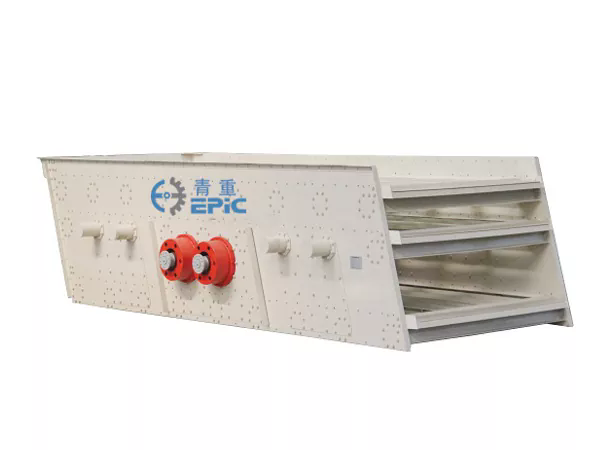
This article explains the working principles, structural advantages, application scenarios, and maintenance strategies of vibrating screens. It also introduces how EPIC provides reliable screening solutions designed to meet different industrial requirements and help customers achieve stable and efficient production.
Article Outline
-
Understanding the role of vibrating screens in industrial processing
-
Explaining the operating mechanism and screening process
-
Analyzing equipment structures and functional advantages
-
Identifying common production problems and solutions
-
Providing practical guidance for equipment selection and maintenance
-
Answering common customer concerns about vibrating screens
Introduction to Vibrating Screen Technology
In mining, construction, chemical processing, and aggregate production, material classification is a key step that directly affects production efficiency and final product quality. Raw materials usually contain particles with different sizes, and separating these materials accurately requires advanced screening equipment.
A vibrating screen is designed to complete this separation process by using controlled vibration to move materials across a screening surface. Compared with traditional screening methods, modern vibrating screens offer higher capacity, better accuracy, and improved energy efficiency.
As industrial demands continue to increase, companies need equipment that can operate continuously under demanding conditions. EPIC develops vibrating screen solutions that focus on durability, stable operation, and optimized screening performance for various industrial applications.
How Does a Vibrating Screen Work?
The working principle of a vibrating screen is based on mechanical vibration. The equipment uses a vibration motor or an excitation system to generate periodic movement, causing the screen surface to move in a specific direction.
When materials enter the screen deck, vibration forces cause smaller particles to pass through the mesh openings, while larger particles remain on the surface and move toward the discharge end. Through this continuous movement, materials are separated into different size categories.
The screening efficiency depends on several factors, including vibration frequency, amplitude, screen surface design, material characteristics, and feeding conditions. A properly designed vibrating screen can significantly improve throughput while maintaining accurate classification.
-
Material feeding: Raw materials enter the screening area evenly.
-
Vibration movement: The screen deck moves continuously to separate particles.
-
Particle classification: Different particle sizes are separated through screen openings.
-
Material discharge: Classified products leave through different outlets.
Key Components of a Vibrating Screen
A vibrating screen consists of multiple components working together to ensure reliable performance. Each part influences screening efficiency, equipment lifespan, and maintenance requirements.
-
Screen Deck: The surface where material separation takes place. Different mesh sizes can be selected according to production requirements.
-
Vibration Motor: Provides the necessary excitation force to create controlled vibration movement.
-
Screen Frame: Supports the screen structure and maintains equipment stability during operation.
-
Spring System: Reduces vibration transmission and improves operating smoothness.
-
Feeding and Discharge System: Ensures continuous material flow and efficient product collection.
High-quality components are essential for reducing unexpected failures. EPIC focuses on equipment reliability by optimizing structural design and selecting suitable materials for different working environments.
What Problems Can a Vibrating Screen Solve?
Many industrial operators experience production challenges caused by inefficient material separation. A properly selected vibrating screen can solve several common problems.
-
Low Screening Accuracy: Advanced vibration control improves particle separation and reduces unwanted mixing.
-
High Production Costs: Efficient screening reduces unnecessary processing steps and improves resource utilization.
-
Frequent Equipment Downtime: Strong structural design helps extend service life and reduce maintenance frequency.
-
Uneven Material Processing: Stable vibration ensures consistent movement and better screening results.
-
Limited Production Capacity: High-performance vibrating screens allow larger material volumes to be processed efficiently.
For industries handling large quantities of raw materials, improving screening performance can directly influence overall productivity and profitability.
Common Applications of Vibrating Screens
Vibrating screens are widely used across different industries because they provide flexible and efficient material separation solutions.
-
Mining Industry: Separating ores, minerals, and crushed materials.
-
Aggregate Production: Classifying sand, gravel, and construction materials.
-
Coal Processing: Sorting coal particles according to size requirements.
-
Chemical Industry: Screening powders and granular materials.
-
Recycling Industry: Separating reusable materials from waste streams.
Different industries require different screening configurations. Factors such as material moisture, hardness, density, and production volume must be considered when designing an effective screening system.
How to Choose the Right Vibrating Screen?
Selecting the correct vibrating screen is essential for achieving maximum efficiency. Before purchasing equipment, customers should evaluate several important factors.
-
Material Characteristics: Consider particle size, moisture content, density, and abrasiveness.
-
Production Capacity: Choose equipment that matches required processing volume.
-
Screening Accuracy: Determine the required separation precision for final products.
-
Operating Environment: Consider temperature, dust levels, and working conditions.
-
Maintenance Requirements: Select equipment with convenient inspection and replacement procedures.
Working with an experienced manufacturer helps customers avoid incorrect equipment selection and achieve better long-term performance.
Maintenance Tips for Better Vibrating Screen Performance
Regular maintenance is essential for keeping vibrating screens operating efficiently. Proper maintenance reduces unexpected failures and extends equipment service life.
-
Inspect screen mesh regularly for damage or blockage.
-
Check vibration motors and fastening components periodically.
-
Remove accumulated materials from the equipment surface.
-
Monitor unusual noise or abnormal vibration conditions.
-
Replace worn parts according to operating conditions.
Preventive maintenance allows operators to identify potential issues before they affect production. A well-maintained vibrating screen can provide stable performance for a longer operational period.
Vibrating Screen Performance Factors
The performance of a vibrating screen depends on multiple technical factors. Understanding these elements helps operators improve screening results.
-
Vibration Frequency: Determines how quickly materials move across the screen surface.
-
Amplitude: Controls the intensity of material movement.
-
Screen Opening Size: Influences final particle classification.
-
Feeding Method: Affects material distribution and screening efficiency.
-
Equipment Design: Determines stability, durability, and energy consumption.
Optimizing these factors ensures that the vibrating screen performs effectively under specific production conditions.
Frequently Asked Questions
Q1: What is the main purpose of a vibrating screen?
A vibrating screen is mainly used to separate materials according to particle size. It improves classification accuracy and helps industries process materials more efficiently.
Q2: Why does screening efficiency decrease?
Reduced efficiency can be caused by incorrect screen selection, blocked mesh openings, uneven feeding, worn components, or unsuitable vibration settings.
Q3: Can vibrating screens handle different materials?
Yes. Vibrating screens can be customized for various materials, including minerals, aggregates, powders, and recycled materials.
Q4: How can equipment lifespan be extended?
Regular inspection, proper operation, timely replacement of worn parts, and professional maintenance can significantly extend equipment lifespan.
Q5: Why choose EPIC vibrating screen solutions?
EPIC provides professionally designed vibrating screen equipment focused on reliable operation, efficient screening performance, and solutions that meet different industrial requirements.
Conclusion
A vibrating screen is an essential solution for industries that require efficient material separation and stable production performance. By understanding how vibrating screens work, selecting the correct equipment, and applying proper maintenance practices, companies can improve productivity, reduce operational challenges, and achieve better processing results.
EPIC continues to provide advanced screening solutions designed for demanding industrial environments. Whether you need improved screening efficiency, customized equipment configuration, or professional technical support, EPIC can help you find the right solution. Contact us today to discuss your vibrating screen requirements and discover how EPIC can support your business growth.