

How Does an Air Filter Production Machine Improve Manufacturing Efficiency and Product Quality?
2026-06-12
Summary
As demand for clean air continues to rise across automotive, industrial, commercial, and residential sectors, manufacturers are under increasing pressure to produce high-quality air filters quickly and cost-effectively. An Air Filter Production Machine plays a critical role in automating the manufacturing process, ensuring consistent product quality, reducing labor costs, and increasing production capacity.
This article explores how an Air Filter Production Machine works, its key components, benefits, applications, and important factors to consider before investing in one. Whether you are expanding an existing filter production facility or entering the filtration industry, understanding these machines can help you make a more informed decision.
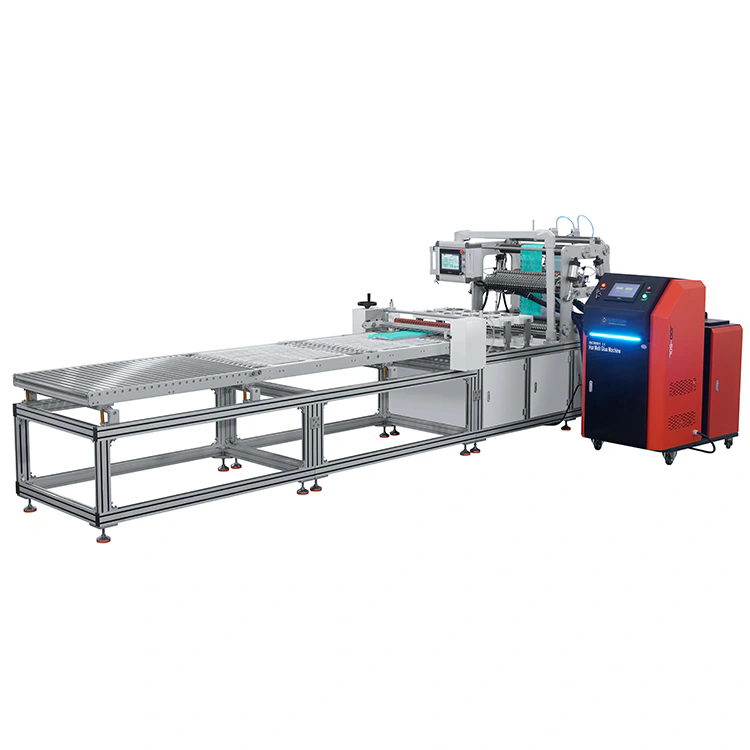
Table of Contents
- Why Air Filter Manufacturing Matters
- What Is an Air Filter Production Machine?
- How Does an Air Filter Production Machine Work?
- Key Components of the Production Line
- Major Benefits of Automated Production
- Industries That Use Air Filter Production Machines
- How to Choose the Right Machine
- Manual vs Automated Production Comparison
- Maintenance Tips for Long-Term Performance
- Future Trends in Air Filter Manufacturing
- Frequently Asked Questions
- Conclusion
Why Air Filter Manufacturing Matters
Air filtration systems have become essential in modern life. They help remove dust, pollen, smoke particles, bacteria, and other airborne contaminants from indoor and outdoor environments. Air filters are widely used in vehicles, HVAC systems, industrial ventilation systems, clean rooms, medical facilities, and commercial buildings.
As global awareness of air quality continues to increase, manufacturers need efficient production solutions capable of delivering large quantities of reliable filters without compromising quality. This demand has accelerated the adoption of automated Air Filter Production Machines.
Unlike traditional manufacturing methods that rely heavily on manual labor, automated production equipment improves consistency, reduces material waste, and enhances production efficiency.
What Is an Air Filter Production Machine?
An Air Filter Production Machine is specialized equipment designed to manufacture various types of air filters through automated or semi-automated processes. These machines can perform multiple operations including media feeding, pleating, cutting, gluing, frame assembly, curing, and final inspection.
Depending on the product type, a production line may be configured for:
- Automotive air filters
- Cabin air filters
- Industrial air filters
- HEPA filters
- HVAC filters
- Panel filters
- Pocket filters
- Activated carbon filters
Modern production lines integrate intelligent control systems that ensure stable operation and precise manufacturing results.
How Does an Air Filter Production Machine Work?
The exact process varies depending on filter design, but most production lines follow a similar workflow.
-
Filter Media Feeding
Filter material is automatically fed into the production line from a roll system. -
Pleating Process
The media is folded into uniform pleats to maximize filtration surface area. -
Cutting and Sizing
Precision cutting systems trim the material according to product specifications. -
Adhesive Application
Hot melt or specialized adhesives are applied to secure the filter structure. -
Frame Assembly
Plastic, metal, or paper frames are attached to support the filter element. -
Curing and Shaping
The assembled filter undergoes curing to strengthen bonds and maintain dimensional stability. -
Quality Inspection
Automated sensors verify dimensions, structural integrity, and assembly accuracy. -
Packing and Output
Finished filters are collected and prepared for packaging.
This streamlined process minimizes human intervention while maintaining high production standards.
Key Components of the Production Line
A complete Air Filter Production Machine typically includes the following systems:
| Component | Function |
|---|---|
| Media Feeding Unit | Supplies filter material continuously |
| Pleating Machine | Creates uniform filter folds |
| Cutting System | Ensures precise dimensions |
| Glue Application Unit | Applies adhesive accurately |
| Frame Assembly Section | Integrates filter frames |
| Control System | Monitors and controls operations |
| Inspection Equipment | Checks product quality |
| Conveyor System | Transfers products between stages |
When properly integrated, these components create a highly efficient manufacturing environment.
Major Benefits of Automated Production
Investing in an advanced Air Filter Production Machine offers numerous operational advantages.
1. Higher Productivity
Automated systems can produce significantly more filters per hour compared to manual assembly methods.
2. Consistent Product Quality
Computer-controlled processes ensure every filter meets the same dimensional and performance requirements.
3. Reduced Labor Costs
Automation reduces dependence on large production teams while increasing overall output.
4. Material Savings
Precision cutting and adhesive application minimize waste and improve material utilization.
5. Faster Return on Investment
Higher production efficiency often results in faster profitability and stronger market competitiveness.
6. Flexible Manufacturing
Many modern machines can quickly switch between different filter sizes and specifications.
Industries That Use Air Filter Production Machines
Air filter production equipment serves a broad range of industries.
- Automotive manufacturing
- Commercial HVAC systems
- Industrial ventilation
- Medical and pharmaceutical facilities
- Food processing plants
- Electronics manufacturing
- Clean room environments
- Residential air purification products
Growing environmental standards and indoor air quality requirements continue to drive demand across these sectors.
How to Choose the Right Machine
Selecting the appropriate Air Filter Production Machine requires evaluating several critical factors.
| Selection Factor | Why It Matters |
|---|---|
| Production Capacity | Matches output requirements |
| Filter Type Compatibility | Supports target products |
| Automation Level | Affects labor requirements |
| Machine Reliability | Reduces downtime |
| Control System | Improves operational efficiency |
| After-Sales Support | Ensures long-term operation |
| Expansion Capability | Supports future growth |
Partnering with an experienced equipment manufacturer can simplify the evaluation process and help identify the most suitable solution.
Companies such as Jundingda provide advanced air filter manufacturing solutions designed to meet the diverse needs of modern filtration manufacturers.
Manual vs Automated Production Comparison
| Factor | Manual Production | Automated Production |
|---|---|---|
| Output Capacity | Low | High |
| Consistency | Variable | Excellent |
| Labor Requirement | High | Low |
| Material Waste | Higher | Lower |
| Production Speed | Slower | Faster |
| Scalability | Limited | Strong |
| Operating Cost | Higher Over Time | More Efficient |
For manufacturers aiming to increase production volume while maintaining product quality, automated systems offer a clear competitive advantage.
Maintenance Tips for Long-Term Performance
Routine maintenance is essential for achieving maximum equipment lifespan and production stability.
- Inspect moving components regularly
- Lubricate mechanical systems according to manufacturer recommendations
- Clean adhesive application systems frequently
- Monitor sensor accuracy and calibration
- Replace worn cutting blades promptly
- Check electrical connections periodically
- Train operators on proper machine operation procedures
Preventive maintenance can significantly reduce unexpected downtime and repair expenses.
Future Trends in Air Filter Manufacturing
The filtration industry is rapidly evolving, and production equipment is becoming increasingly intelligent.
Emerging trends include:
- Smart factory integration
- Real-time production monitoring
- Predictive maintenance technologies
- Advanced servo control systems
- Energy-efficient manufacturing solutions
- Flexible production for customized filters
- Data-driven quality management
Manufacturers that adopt advanced automation technologies today will be better positioned to meet future market demands.
Frequently Asked Questions
Q1: What types of filters can be produced using an Air Filter Production Machine?
Most systems can manufacture automotive filters, HVAC filters, HEPA filters, industrial filters, cabin filters, and customized filtration products.
Q2: Is a fully automatic machine better than a semi-automatic machine?
Fully automatic machines generally offer higher productivity and lower labor requirements, while semi-automatic systems may be suitable for smaller production volumes.
Q3: How much production capacity can these machines achieve?
Capacity varies depending on machine configuration, filter type, and product specifications.
Q4: Can one machine produce different filter sizes?
Many modern systems support quick adjustments and can manufacture multiple filter dimensions.
Q5: What is the expected service life of the equipment?
With proper maintenance and operation, high-quality production equipment can provide many years of reliable performance.
Conclusion
An Air Filter Production Machine is a valuable investment for manufacturers seeking greater productivity, stable quality, reduced labor costs, and long-term operational efficiency. By automating critical production processes, these machines help businesses meet growing market demand while maintaining consistent manufacturing standards.
Whether you are producing automotive air filters, HVAC filtration products, or specialized industrial filters, selecting the right equipment can have a significant impact on your business success. Jundingda offers innovative air filter production solutions designed to help manufacturers improve efficiency, expand capacity, and enhance product quality.
Ready to upgrade your filter manufacturing capabilities? Contact us today to discuss your production requirements and discover how Jundingda can provide the ideal Air Filter Production Machine solution for your business growth.