

How Does an Apple Juice Production Line Operate at Industrial Scale?
2025-12-29
Article Abstract
An apple juice production line is a fully integrated processing system designed to convert fresh apples into clarified, cloudy, or concentrated juice under controlled industrial conditions. This article provides a comprehensive explanation of how an apple juice production line operates, focusing on equipment configuration, process logic, technical parameters, automation standards, and scalability. The core objective is to explain how production efficiency, hygiene compliance, and juice quality are achieved simultaneously in modern processing plants.
Outline
- Introduction to Apple Juice Production Line Systems
- How Does the Apple Juice Production Process Flow Work?
- How Are Key Technical Parameters Defined in an Apple Juice Production Line?
- How Do Automation and Hygiene Standards Shape Line Design?
- Common Questions About Apple Juice Production Lines
- Industry Applications and Capacity Planning
- Future-Oriented Development Trends in Apple Juice Processing
- Conclusion and Contact Information
Table of Contents
- Introduction
- Production Process Flow
- Technical Parameters
- Automation and Hygiene
- FAQ
- Applications
- Industry Trends
- Conclusion
Introduction to Apple Juice Production Line Systems
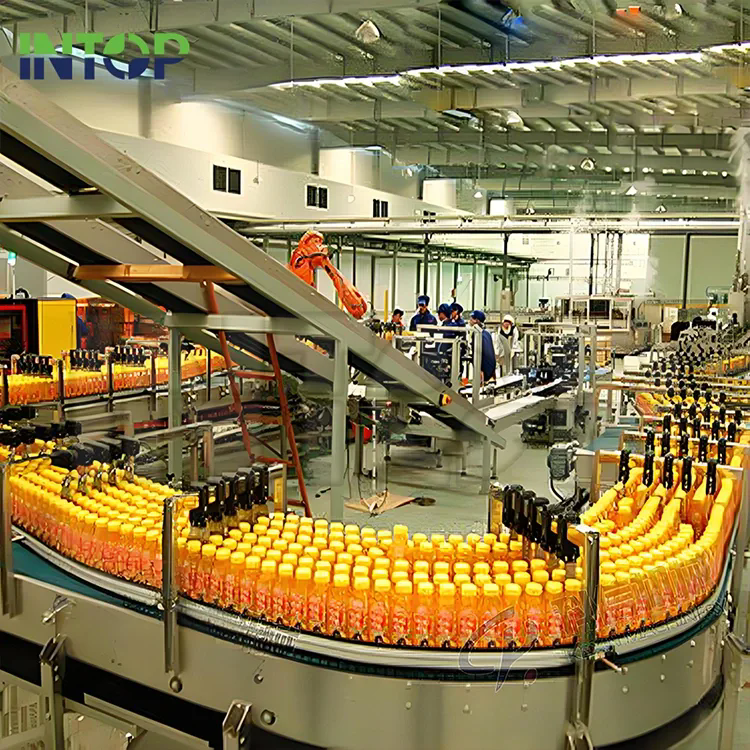
An Apple Juice Production Line refers to a complete set of industrial equipment engineered to handle washing, sorting, crushing, enzymatic treatment, pressing, clarification, sterilization, and filling of apple juice. These systems are widely used in beverage factories, fruit processing plants, and integrated agricultural operations. The central theme of this article is to explain how a standardized production line structure ensures consistent juice quality while maintaining operational efficiency and regulatory compliance.
How Does the Apple Juice Production Process Flow Work?
The apple juice manufacturing process begins with raw material handling and ends with aseptic or hot-filled packaging. Each stage is designed to control microbial load, minimize oxidation, and preserve flavor compounds.
Process Stages Explained
Apples are first unloaded and conveyed to a washing and sorting unit where surface contaminants, stones, and damaged fruit are removed. After inspection, apples enter a crushing and pulping stage where cell walls are mechanically broken to release juice.
The pulp is then subjected to enzymatic treatment to improve juice yield and clarity. Hydraulic or belt presses extract juice, which is subsequently filtered or centrifuged. Pasteurization follows, ensuring microbial safety before filling.
How Are Key Technical Parameters Defined in an Apple Juice Production Line?
Technical parameters vary based on capacity, product type, and automation level. However, standardized configurations are commonly adopted across industrial installations.
| Parameter | Specification Range |
|---|---|
| Processing Capacity | 1–20 tons/hour |
| Juice Yield | 65–75% |
| Pasteurization Temperature | 85–95°C |
| Automation Level | PLC / HMI Control |
| Material Standard | SUS304 / SUS316 Stainless Steel |
These parameters are selected to balance throughput, energy consumption, and product stability while meeting food safety regulations.
How Do Automation and Hygiene Standards Shape Line Design?
Automation plays a central role in maintaining consistency across production cycles. PLC-based control systems regulate temperature, flow rate, and residence time with minimal operator intervention.
From a hygiene perspective, Clean-in-Place (CIP) systems are integrated to allow automated cleaning of pipelines, tanks, and heat exchangers. This reduces downtime and ensures compliance with HACCP and FDA standards.
Common Questions About Apple Juice Production Lines
Q: How does an apple juice production line handle different apple varieties?
A: Adjustable crushing gaps, enzyme dosing systems, and press pressure settings allow the line to accommodate variations in apple firmness, sugar content, and fiber structure.
Q: How is oxidation controlled during juice extraction?
A: Closed-system conveyors, nitrogen blanketing, and rapid processing minimize oxygen exposure and preserve natural color.
Q: How can production capacity be expanded in the future?
A: Modular equipment design allows additional presses, clarification units, or fillers to be integrated without replacing the entire line.
Industry Applications and Capacity Planning
Apple juice production lines are deployed in standalone juice factories, integrated fruit processing hubs, and export-oriented beverage plants. Capacity planning is based on seasonal apple supply, storage capabilities, and target markets.
Smaller systems focus on regional distribution, while high-capacity lines support concentrate production for global supply chains.
Future-Oriented Development Trends in Apple Juice Processing
Current industry trends emphasize energy efficiency, reduced water consumption, and digital monitoring. Smart sensors and data analytics are increasingly used to optimize yield and reduce waste.
Additionally, flexible line configurations are gaining importance as manufacturers diversify product portfolios to include NFC juice, blends, and functional beverages.
Conclusion
An Apple Juice Production Line represents a critical infrastructure investment for modern juice manufacturers. Through standardized process flow, precise technical parameters, and intelligent automation, consistent product output is achieved at scale.
Intop provides integrated apple juice processing solutions designed to align with industrial requirements and long-term operational goals. For detailed configuration options, technical consultation, or project planning support, contact us to explore how a customized production line can be implemented effectively.