

How Does an Infrared Tunnel Oven Improve Industrial Heating Efficiency
2026-04-27
Abstract
Infrared tunnel ovens are increasingly becoming a core solution in modern industrial heating, drying, and curing applications. Unlike conventional convection-based systems, infrared tunnel ovens use radiant heat energy to directly transfer heat to products, significantly improving energy efficiency, production speed, and process stability. This article explores how infrared tunnel ovens work, the key benefits they offer, and how businesses can solve common production challenges such as uneven heating, high energy consumption, and inconsistent product quality. It also introduces practical selection guidance and real-world applications supported by industrial experience from Dingfeng.
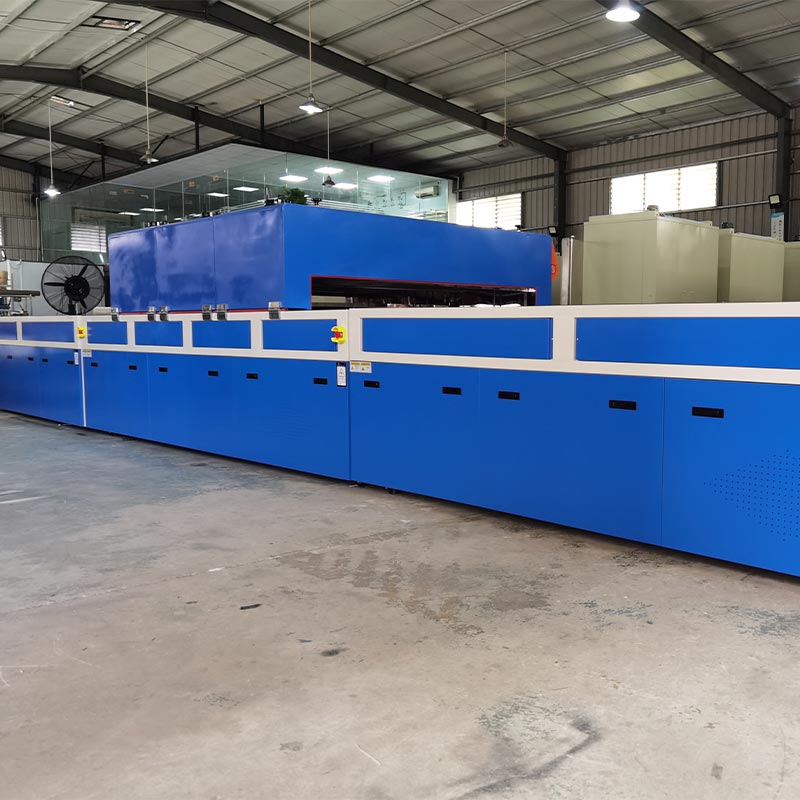
Table of Contents
- 1. Overview of Infrared Tunnel Ovens
- 2. How Infrared Tunnel Ovens Work
- 3. Key Advantages in Industrial Applications
- 4. Infrared vs Traditional Tunnel Ovens
- 5. Typical Industrial Applications
- 6. How to Choose the Right Infrared Tunnel Oven
- 7. Technical Comparison Table
- 8. Frequently Asked Questions
- 9. Conclusion
1. Overview of Infrared Tunnel Ovens
An infrared tunnel oven is an industrial heating system designed to continuously process materials through a controlled tunnel structure using infrared radiation. It is widely used in manufacturing industries such as electronics, automotive parts, food processing, and coating lines. The key difference lies in its heating mechanism: instead of heating air, it directly transfers radiant energy to the surface of objects.
This method reduces heat loss, improves heating precision, and ensures a more uniform thermal profile across production lines. Companies like Dingfeng have developed advanced infrared tunnel oven systems to help manufacturers optimize production efficiency and reduce operational costs.
2. How Infrared Tunnel Ovens Work
Infrared tunnel ovens operate based on electromagnetic radiation. Infrared emitters generate heat energy, which travels in waves and directly penetrates the surface of the material being processed. Unlike convection ovens, no intermediate medium such as air is required for heat transfer.
Basic working stages include:
- Radiation Generation: Infrared heaters produce short, medium, or long-wave radiation.
- Energy Transmission: Infrared waves travel through the tunnel chamber.
- Absorption: Materials absorb infrared energy and heat up rapidly.
- Controlled Conveyance: Products move through the tunnel on a conveyor system.
This direct heating method reduces energy waste and shortens processing time significantly.
3. Key Advantages in Industrial Applications
Infrared tunnel ovens are designed to solve several pain points in industrial heating systems:
- High Energy Efficiency: Direct heating reduces heat loss to surrounding air.
- Faster Processing Speed: Rapid heat transfer shortens production cycles.
- Uniform Heating: Consistent radiation distribution ensures even product quality.
- Lower Maintenance Costs: Fewer mechanical components compared to traditional systems.
- Compact Design: Optimized footprint for production line integration.
Manufacturers adopting infrared technology often experience measurable improvements in throughput and energy consumption.
4. Infrared vs Traditional Tunnel Ovens
Understanding the differences between infrared and conventional tunnel ovens is critical for selecting the right solution.
| Feature | Infrared Tunnel Oven | Traditional Tunnel Oven |
|---|---|---|
| Heating Method | Radiant infrared energy | Hot air convection |
| Energy Efficiency | High | Moderate to low |
| Heating Speed | Fast | Slower |
| Temperature Control | Highly precise | Less precise |
| Maintenance | Low | Higher |
5. Typical Industrial Applications
Infrared tunnel ovens are widely used across multiple industries due to their flexibility and performance.
- Electronics: PCB drying, solder curing, component preheating
- Automotive: Paint curing, coating drying, adhesive setting
- Food Industry: Baking, sterilization, dehydration
- Textile: Fabric finishing and dye fixation
- Packaging: Ink drying and film curing
In all these applications, consistency and speed are essential, making infrared tunnel ovens a preferred solution.
6. How to Choose the Right Infrared Tunnel Oven
Selecting the right equipment depends on production requirements, material type, and energy expectations.
Key selection factors include:
- Type of infrared wavelength required (short, medium, long-wave)
- Conveyor speed and production volume
- Temperature range and control accuracy
- Material sensitivity to heat
- Energy consumption targets
Dingfeng provides customized infrared tunnel oven systems designed to match specific industrial requirements, ensuring optimal performance and integration into existing production lines.
7. Technical Comparison Overview
| Parameter | Standard Model | Advanced Dingfeng Model |
|---|---|---|
| Heating Efficiency | 85% | Up to 95% |
| Temperature Control Accuracy | ±5°C | ±1–2°C |
| Energy Consumption | Medium | Optimized Low Consumption |
| Automation Level | Semi-automatic | Fully automated control system |
8. Frequently Asked Questions
Q1: What materials can be processed in an infrared tunnel oven?
Infrared tunnel ovens can handle metals, plastics, coatings, textiles, and food products depending on configuration.
Q2: Is infrared heating safe for sensitive materials?
Yes. With proper wavelength selection and temperature control, infrared systems can be precisely adjusted for delicate materials.
Q3: How does an infrared tunnel oven save energy?
It directly heats products instead of heating air, reducing thermal losses significantly.
Q4: Can it be integrated into existing production lines?
Yes. Systems from manufacturers like Dingfeng are designed for modular integration.
Q5: What maintenance is required?
Minimal maintenance is needed, mainly periodic inspection of infrared emitters and conveyor systems.
9. Conclusion
Infrared tunnel ovens represent a major advancement in industrial heating technology. By delivering fast, efficient, and uniform heat transfer, they address key production challenges such as energy waste, inconsistent quality, and slow processing speeds. Whether in electronics, automotive, or food manufacturing, these systems provide measurable operational improvements.
With advanced engineering and customization capabilities, Dingfeng continues to support global industries in upgrading their thermal processing systems with reliable infrared tunnel oven solutions.
For more technical details or customized solutions, Dingfeng invites you to contact us today to explore how infrared tunnel oven technology can transform your production efficiency and reduce operational costs.