

How Does Diode Laser Hair Removal Achieve Long-Lasting Hair Reduction?
2026-04-27
Abstract
Diode laser hair removal has become one of the most widely adopted technologies in modern aesthetic treatments due to its balance of effectiveness, safety, and adaptability across different skin types. This article explains how diode laser systems work, what clients can realistically expect, and how to minimize common pain points such as discomfort, inconsistent results, and treatment inefficiency. It also provides a structured overview of treatment processes, advantages, limitations, and practical guidance for both first-time users and professional operators.
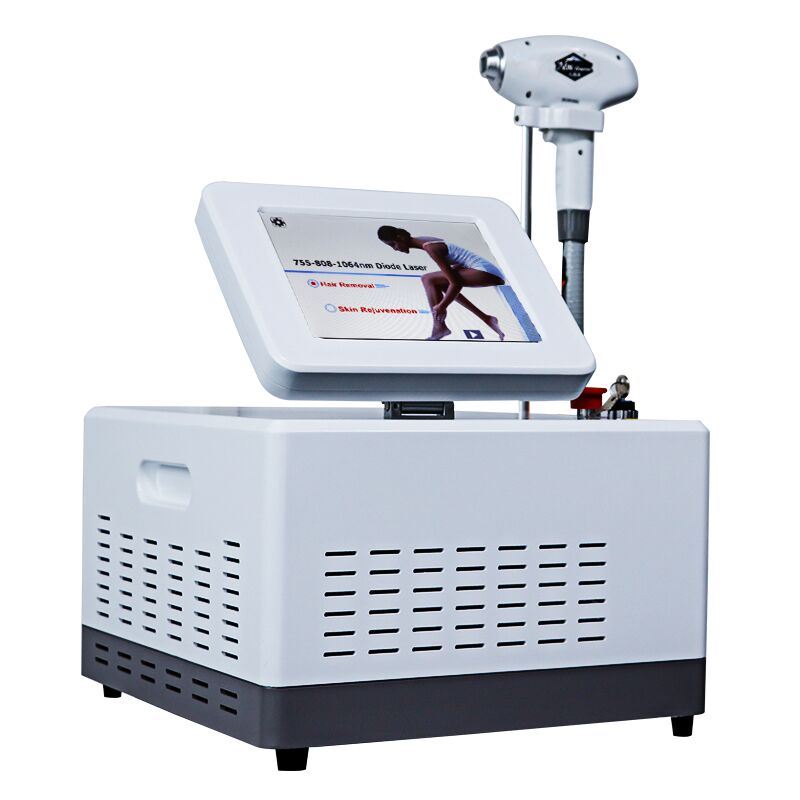
Table of Contents
- Article Outline
- How Diode Laser Hair Removal Works
- Key Benefits and Customer Pain Points Solved
- Treatment Procedure Explained Step by Step
- Comparison with Other Hair Removal Methods
- Who Is Suitable for Diode Laser Treatment?
- Possible Side Effects and How to Reduce Them
- Post-Treatment Care and Maintenance
- Frequently Asked Questions
- Contact Information
Article Outline
- Introduction to diode laser technology and its role in hair reduction
- Scientific mechanism behind selective photothermolysis
- Advantages over shaving, waxing, and IPL systems
- Step-by-step treatment workflow in clinical environments
- Skin compatibility and safety considerations
- Typical results timeline and session requirements
- Potential risks and mitigation strategies
- Aftercare recommendations for optimal results
How Diode Laser Hair Removal Works
Diode laser hair removal operates on the principle of selective photothermolysis, where a concentrated beam of light targets melanin within the hair follicle. The diode laser typically emits light in the 800–810 nm wavelength range, which allows deep penetration into the dermal layer while minimizing damage to surrounding skin structures.
When the laser energy is absorbed by the melanin in the hair shaft, it converts into heat. This heat damages the follicle’s ability to regrow hair without affecting nearby tissues. Since hair grows in cycles—anagen (growth), catagen (transition), and telogen (resting)—multiple sessions are required to effectively treat all follicles during their active growth phase.
Key Benefits and Customer Pain Points Solved
Many users seek diode laser hair removal due to long-standing frustrations with traditional methods such as shaving, waxing, and depilatory creams. Below is a structured overview of common issues and how diode laser technology addresses them:
| Customer Pain Point | Diode Laser Solution |
|---|---|
| Frequent shaving and rapid regrowth | Targets follicle root to reduce regrowth speed and density |
| Skin irritation and razor burn | Non-contact energy delivery reduces surface irritation |
| Painful waxing sessions | Integrated cooling systems minimize discomfort |
| Uneven hair removal results | Consistent energy distribution improves uniformity |
Additional advantages include long-term cost efficiency, suitability for larger body areas, and improved precision in targeting coarse hair.
Treatment Procedure Explained Step by Step
- Step 1: Skin Assessment – Professionals evaluate skin tone, hair density, and medical history.
- Step 2: Area Preparation – The treatment area is shaved and cleaned to ensure optimal laser penetration.
- Step 3: Parameter Adjustment – Device settings are calibrated according to skin type and hair thickness.
- Step 4: Laser Application – Controlled pulses are delivered across the target area.
- Step 5: Cooling Phase – Integrated cooling systems soothe the skin and reduce thermal discomfort.
- Step 6: Post-Treatment Care – Moisturizers or calming gels are applied to reduce temporary redness.
Comparison with Other Hair Removal Methods
Understanding how diode laser compares with other common methods helps users make informed decisions.
- Shaving: Quick but temporary, with daily or weekly maintenance required.
- Waxing: Longer-lasting than shaving but often painful and causes skin sensitivity.
- IPL (Intense Pulsed Light): Less focused energy, often requiring more sessions.
- Diode Laser: Balanced depth penetration, efficiency, and skin safety for long-term reduction.
Who Is Suitable for Diode Laser Treatment?
Diode laser systems are designed to accommodate a wide range of skin types, especially Fitzpatrick skin types I–IV, and in many modern systems, even darker skin tones with appropriate parameter adjustments.
- Individuals with excessive or unwanted body hair
- People experiencing ingrown hairs from shaving or waxing
- Clients seeking long-term hair reduction solutions
- Both male and female users across different body areas
Possible Side Effects and How to Reduce Them
While diode laser hair removal is generally safe when performed correctly, some temporary side effects may occur:
- Temporary redness or swelling
- Mild skin sensitivity
- Rare pigmentation changes in sensitive skin types
These risks can be minimized through proper device calibration, professional operation, and adherence to pre- and post-treatment care guidelines.
Post-Treatment Care and Maintenance
Proper aftercare is essential for maximizing treatment effectiveness and minimizing skin irritation:
- Avoid direct sun exposure for at least 48 hours
- Use sunscreen with high SPF protection
- Refrain from hot baths, saunas, or intense exercise immediately after treatment
- Moisturize treated areas regularly to support skin recovery
Multiple sessions (typically 6–8) are required to achieve optimal long-term results due to the hair growth cycle.
Frequently Asked Questions
Q1: Is diode laser hair removal painful?
Most users describe it as mild discomfort, often compared to a light snapping sensation, significantly reduced by cooling technology.
Q2: How many sessions are required?
Typically 6–8 sessions depending on hair density, hormonal factors, and treatment area.
Q3: Is it permanent?
It provides long-term hair reduction, though occasional maintenance sessions may be needed.
Q4: Can it treat all skin types?
Modern diode systems are adaptable to a wide range of skin tones with proper parameter adjustments.
Industry Insight and Contact Information
Modern diode laser technology continues to evolve with improved pulse control, enhanced cooling systems, and higher treatment efficiency. Companies specializing in photonic aesthetic solutions play a crucial role in advancing safety and performance standards in the industry.
One such manufacturer, Xiamen ELOS Photoelectric Technology Co., Ltd., focuses on developing professional-grade diode laser hair removal systems designed for clinics, salons, and aesthetic practitioners seeking reliable and stable performance equipment.
For more technical details, product customization options, or partnership inquiries, please feel free to contact us. Our team is ready to provide tailored solutions and professional support to help you grow your aesthetic business.
Contact us today to explore advanced diode laser hair removal solutions and elevate your treatment capabilities.