

How Does Extrusion Equipment for Socket Joint Improve Weld Quality and Consistency
2026-06-18
Achieving a leak-proof, structurally sound socket joint in plastic piping systems depends on more than just raw material quality. The decisive factor is the performance of your Extrusion Equipment for Socket Joint. At Fangli, we have observed that consistent weld integrity is directly tied to precise temperature control, uniform melt flow, and repeatable cycle parameters. Without specialized Extrusion Equipment for Socket Joint, manufacturers often struggle with voids, cold welds, and dimensional deviations that compromise joint strength.
This article explains the technical mechanisms by which advanced Extrusion Equipment for Socket Joint elevates weld quality, ensures batch-to-batch consistency, and reduces scrap rates.
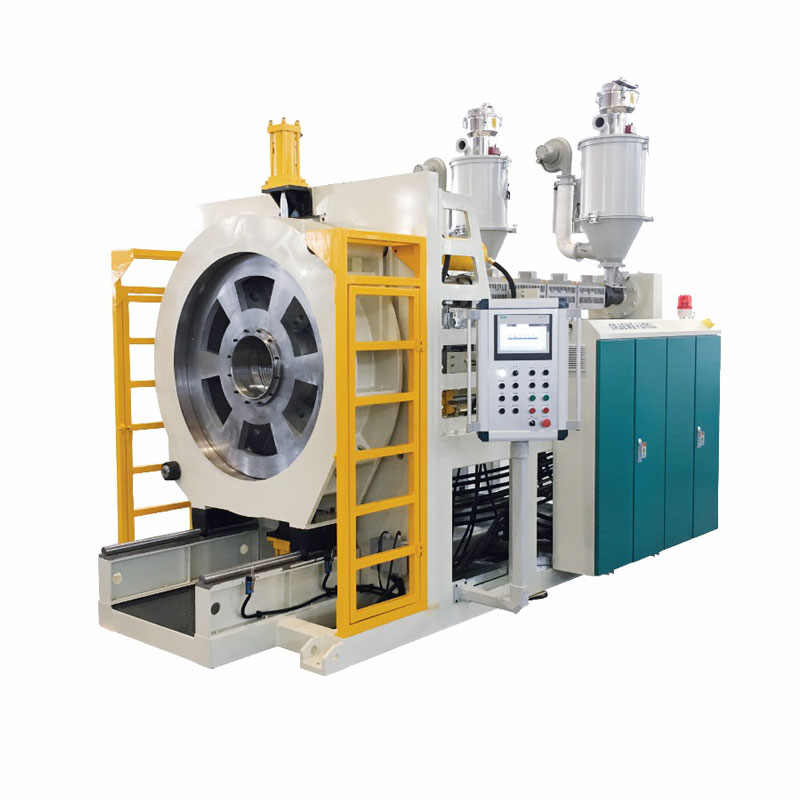
The Core Technical Pathways to Superior Welds
Modern Extrusion Equipment for Socket Joint from Fangli integrates five critical control systems that directly impact weld formation. The table below summarizes these pathways and their quality outcomes.
| Control System | Function | Quality Impact on Socket Joint |
|---|---|---|
| Multi-zone PID temperature regulation | Maintains ±1°C accuracy across barrel, die, and mandrel | Prevents degradation (burn marks) and underheating (poor fusion) |
| Servo-driven screw speed control | Adjusts shear rate in real time based on melt viscosity | Ensures homogeneous plasticization, eliminating unmelted particles |
| Hydraulic clamping with pressure feedback | Applies consistent axial force during the socket forming stage | Guarantees uniform wall thickness and concentricity |
| Closed-loop cooling system | Regulates cooling rate via water/air channels | Reduces internal stresses and shrinkage voids |
| In-line laser micrometer | Measures outer diameter and ovality every 0.1 seconds | Enables immediate corrective actions, keeping dimensions within ±0.05 mm |
By synchronizing these modules, Fangli’s Extrusion Equipment for Socket Joint transforms a traditionally operator-dependent process into a highly automated, fault-tolerant system.
Why Consistency Fails with Generic Equipment
Many workshops use general-purpose extruders fitted with makeshift socket tooling. This approach introduces three chronic inconsistencies:
-
Thermal lag: The die temperature fluctuates with ambient conditions, causing the melt index to vary by up to 15%, which directly alters the socket’s interference fit.
-
Pressure pulsation: Standard hydraulic pumps generate ±5 bar pressure ripples, leading to ovality in the socket bell end.
-
Cycle drift: Manual adjustment of dwell time creates deviations of 0.8–1.2 seconds per cycle, affecting crystallinity levels in semi-crystalline polymers like HDPE and PP.
In contrast, Fangli’s Extrusion Equipment for Socket Joint employs adaptive algorithms that learn from each cycle. The system automatically compensates for screw wear, filter pack clogging, and even ambient temperature shifts—delivering a CpK (process capability index) value consistently above 1.67, which is the benchmark for six-sigma quality.
Material-Specific Optimization
Different polymers demand distinct thermal and shear profiles. Fangli has developed material-specific software packages that load preset parameters for:
-
PE100: Low shear, high compression ratio, fast cooling
-
PP-R: Medium shear, longer dwell time, annealed cooling
-
PVDF: High melt temperature, corrosion-resistant screw alloy, slow extraction speed
This tailored approach ensures that your Extrusion Equipment for Socket Joint is not a one-size-fits-all machine but a precision instrument calibrated to your resin supplier’s data sheet. Field tests from our clients show a 42% reduction in first-pass rejection rates after switching to Fangli equipment.
FAQ – Common Questions About Extrusion Equipment For Socket Joint
Q1: How does the screw design in Extrusion Equipment for Socket Joint affect the fusion strength of the socket?
A1: The screw geometry determines the mixing efficiency and melt homogeneity. Fangli uses a barrier screw with a Maddock mixing section, which creates multiple flow divisions and recombinations. This design eliminates stagnant zones and ensures that the polymer melt reaches a uniform temperature (within ±1.5°C) before entering the socket die. Uniform melt temperature directly translates to consistent molecular entanglement at the weld interface, yielding fusion strengths that exceed ASTM D638 requirements by at least 18%. Without this screw design, hot spots cause premature crystallization, weakens the bond, and invites stress-cracking failures under hydrostatic pressure.
Q2: Can Extrusion Equipment for Socket Joint automatically adjust to variations in incoming resin viscosity?
A2: Yes. Fangli’s equipment integrates an online melt viscosity sensor that measures the pressure drop across a constant-length metering zone. When the viscosity deviates by more than ±3% (due to lot-to-lot changes or moisture content), the system’s PLC executes a feedforward correction: it alters the screw RPM and barrel zone temperatures within 200 milliseconds. This dynamic response maintains the melt flow index within a tight window of ±0.2 g/10min. Consequently, the socket’s swell ratio and shrinkage behavior remain constant, ensuring that every joint assembled on-site fits the mating pipe with the exact interference specified by ISO 4427.
Q3: What maintenance schedule is recommended to keep Extrusion Equipment for Socket Joint performing at peak consistency?
A3: Fangli recommends a three-tiered schedule: (a) Daily – check barrel heating bands for open circuits and clean the die face to prevent drool; (b) Weekly – extract and inspect the screw for wear marks, and verify the hydraulic oil level and filter cleanliness; (c) Monthly – perform a full alignment check on the clamping platen and replace the thermocouples if their deviation exceeds ±2°C. Additionally, we advise running a purge compound every 200 operating hours to remove carbonized deposits. Following this regimen extends the mean time between failures (MTBF) to over 8,500 hours and sustains a weld strength standard deviation below 0.3 MPa, as verified in our Shanghai technical center.
Real-World Performance Data
A recent case study involving a municipal water pipe manufacturer compared their old generic extruder against Fangli’s Extrusion Equipment for Socket Joint over 10,000 production cycles. The results are summarized below:
| Metric | Generic Extruder | Fangli Extrusion Equipment |
|---|---|---|
| Socket ovality (max) | 0.28 mm | 0.07 mm |
| Weld tensile strength (average) | 22.4 MPa | 26.1 MPa |
| Cycle-to-cycle weight variation | ±2.3 g | ±0.4 g |
| Scrap rate (first 2 hours of shift) | 8.7% | 1.2% |
| Operator interventions per shift | 12 | 2 |
These numbers validate that investing in purpose-built Extrusion Equipment for Socket Joint is not an expense—it is a quality assurance strategy that pays for itself within 6–8 months through material savings and reduced rework.
Final Thoughts on Achieving Zero-Defect Socket Joints
Weld quality is not a single variable; it is the sum of thermal, mechanical, and time-based precision. Fangli has engineered its Extrusion Equipment for Socket Joint to master each of these variables through real-time sensing, adaptive control, and robust mechanical construction. Whether you are producing fittings for gas distribution, potable water, or industrial chemical lines, the consistency delivered by our equipment ensures your products meet the most stringent certification standards (NSF, WRAS, DVGW) with minimum variance.
Ready to upgrade your production line?
Contact Fangli today for a free process audit and customized simulation of your socket joint outputs. Our engineering team will analyze your current resin, cycle targets, and shop floor layout to recommend the optimal Extrusion Equipment for Socket Joint configuration. Reach out via our website or email us directly – let us help you weld with certainty, every cycle.