

How Does Glycol Concentration Affect Cooling Performance in Distillation
2026-02-11
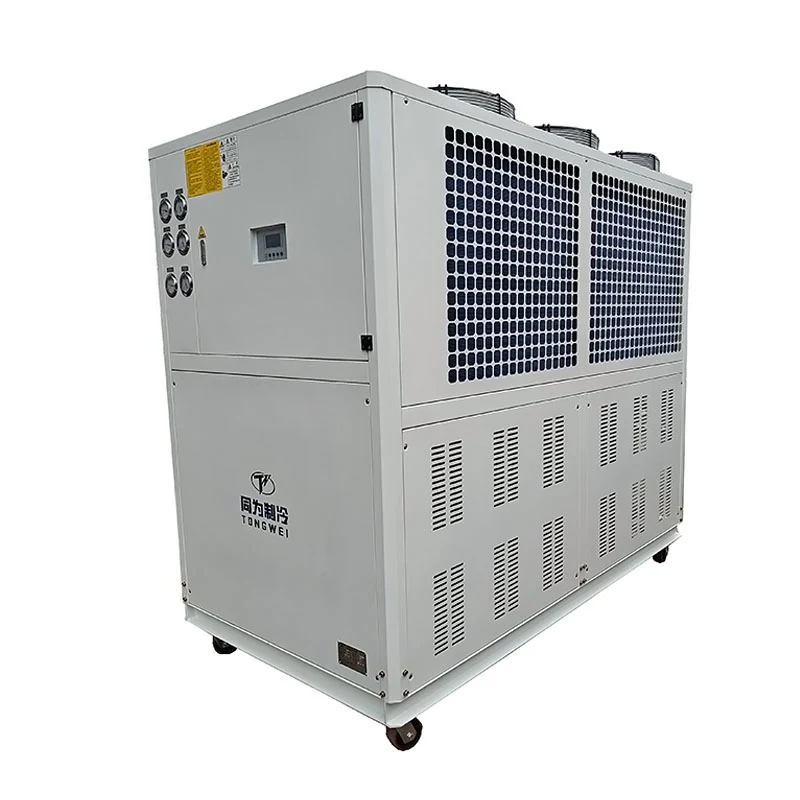
In the precise world of distillation, achieving and maintaining perfect Low Temperature Glycol Distillery Chiller control is paramount for product quality and consistency. As a core component of this system, the glycol-water mixture itself is a critical variable. Here at Tongwei, we understand that the concentration of glycol in your chiller loop is not a "set it and forget it" parameter; it directly dictates the efficiency, safety, and reliability of your entire cooling process. This blog delves into the science and practical implications of glycol concentration for distillers.
The primary role of glycol is to depress the freezing point of the cooling fluid. However, its concentration creates a balancing act with several key performance factors:
-
Freeze Point: A higher glycol percentage lowers the freeze point, protecting your system in cold environments.
-
Heat Transfer Efficiency: A lower glycol percentage (more water) allows for better heat absorption from your distillation condensers.
-
Pumpability & Viscosity: Higher concentrations increase fluid thickness, potentially requiring more pump power.
-
System Protection: Glycol inhibits corrosion, but its effectiveness and lifespan depend on proper concentration and inhibitor packages.
The relationship between concentration and performance is not linear. The table below illustrates this critical trade-off:
| Glycol Concentration (by volume) | Freeze Protection Point | Relative Heat Transfer Efficiency | Viscosity & Flow Impact | Best Application Scenario |
|---|---|---|---|---|
| 30% Glycol / 70% Water | Down to approx. -15°C (5°F) | Excellent (Closest to pure water) | Low | Tongwei systems in mild climates where extreme freeze risk is low. |
| 40% Glycol / 60% Water | Down to approx. -25°C (-13°F) | Very Good | Moderate | The most common and recommended starting point for balanced performance. |
| 50% Glycol / 50% Water | Down to approx. -35°C (-31°F) | Good | Noticeably Higher | For distilleries in very cold environments or for processes requiring ultra-low brine temperatures. |
Using too high a concentration unnecessarily sacrifices efficiency and increases operational costs. Conversely, too low a concentration risks catastrophic freeze damage. A Tongwei Low Temperature Glycol Distillery Chiller is engineered to operate optimally within a specified concentration range, ensuring you hit the sweet spot for your specific climate and process requirements.
Low Temperature Glycol Distillery Chiller FAQ
What is the ideal glycol concentration for my distillery chiller?
For most distillation applications, a 40% glycol to 60% water ratio provides an optimal balance of freeze protection down to -25°C and excellent heat transfer efficiency. Always consult your Tongwei manual and consider your local ambient conditions for final specification.
How often should I check and adjust the glycol concentration in my system?
Concentration should be verified at least twice annually, typically at the start and end of the winter season. Use a refractometer designed for glycol mixtures for an accurate reading, as glycol degrades over time and water can evaporate, altering the balance.
Can I use automotive antifreeze in my distillation glycol chiller?
No, you must never use automotive antifreeze. It contains silicates and other additives toxic to humans and unsuitable for food-grade equipment. Always use an industrial-grade, inhibited propylene glycol specifically formulated for food and beverage processing applications.
Mastering your glycol mixture is a simple yet powerful step toward achieving superior distillation control and energy efficiency. An improperly maintained chiller fluid can lead to poor product cuts, higher energy bills, and preventable equipment strain. Trust the engineering and expertise behind Tongwei to guide you in optimizing this critical aspect of your operation.
Contact us today to speak with a Tongwei cooling specialist. We can help you analyze your specific needs, recommend the perfect Low Temperature Glycol Distillery Chiller configuration, and provide expert guidance on maintenance for peak performance and longevity.