

How Does LTCC Machine Transform Advanced Electronic Manufacturing?
2026-06-29
Abstract
LTCC (Low Temperature Co-Fired Ceramic) technology has become a cornerstone in modern electronic component manufacturing, enabling high-density, high-frequency, and highly reliable multilayer circuit structures. An LTCC Machine plays a critical role in automating and stabilizing the entire production process, from ceramic tape processing to lamination and co-firing preparation.
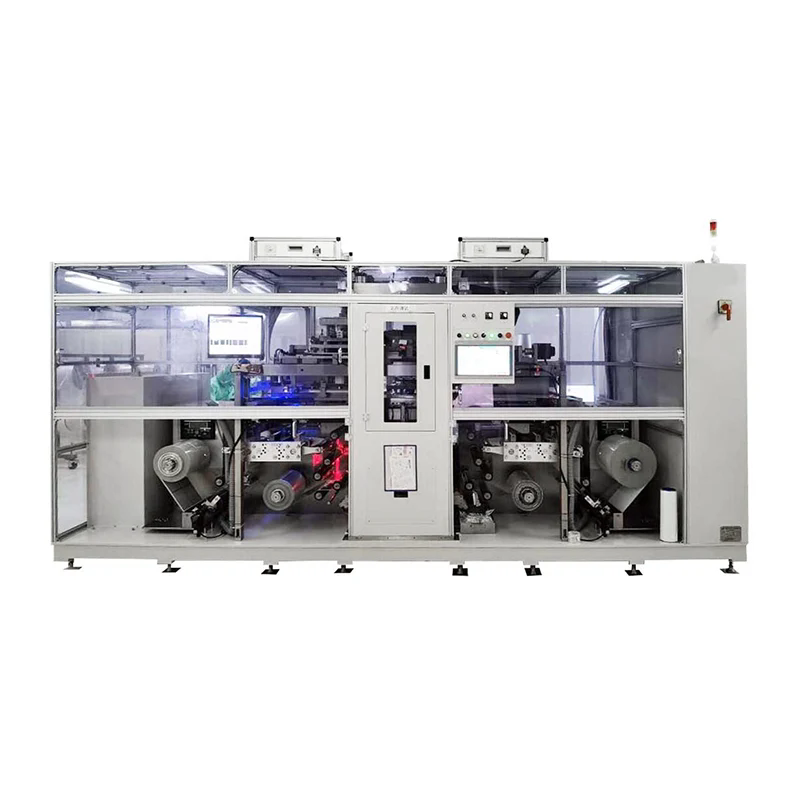
This article explores how LTCC Machines work, why they matter, and how manufacturers can overcome common production challenges such as dimensional instability, poor yield rates, and high operational complexity. It also highlights how YSR provides industrial-grade LTCC Machine solutions designed for precision, scalability, and long-term reliability.
Table of Contents
- 1. Introduction to LTCC Manufacturing
- 2. What Is an LTCC Machine?
- 3. Working Principle of LTCC Machines
- 4. Industrial Applications
- 5. Key Benefits in Production
- 6. Common Manufacturing Challenges
- 7. How YSR LTCC Machines Improve Efficiency
- 8. Maintenance and Operational Stability
- 9. Buying Guide for LTCC Machines
- 10. FAQ
- 11. Conclusion
1. Introduction to LTCC Manufacturing
Modern electronics demand miniaturization, high frequency performance, and exceptional reliability. LTCC technology meets these demands by allowing multiple layers of ceramic-based circuits to be stacked and co-fired at relatively low temperatures. This process creates compact and highly integrated components widely used in telecommunications, automotive radar systems, aerospace electronics, and medical devices.
However, the success of LTCC production heavily depends on the precision and stability of the manufacturing equipment—especially the LTCC Machine that manages the critical pre-firing stages.
2. What Is an LTCC Machine?
An LTCC Machine is a specialized industrial system designed to handle the production steps of low-temperature co-fired ceramic components. It integrates multiple functional modules including tape casting, punching, screen printing, alignment, lamination, and cutting systems.
Key functions include:
- Precision ceramic tape processing
- Automated via hole punching
- Conductive paste printing for circuit formation
- Layer alignment and stacking
- Isostatic or uniaxial lamination control
These functions ensure that multilayer ceramic circuits maintain structural integrity before entering the co-firing furnace.
3. Working Principle of LTCC Machines
The LTCC production process is highly structured and sensitive. The machine orchestrates each step to ensure dimensional accuracy and electrical performance consistency.
Typical workflow includes:
- Step 1: Ceramic slurry is cast into thin green tapes
- Step 2: Via holes are precisely punched into each layer
- Step 3: Conductive paste is printed onto layers
- Step 4: Layers are aligned using optical or mechanical systems
- Step 5: Lamination applies controlled pressure and temperature
- Step 6: The stacked structure is prepared for co-firing
Each step requires micron-level accuracy to avoid misalignment, cracking, or electrical failure.
4. Industrial Applications
LTCC Machines support the production of components used across several high-value industries.
| Industry | Application | Typical Components |
|---|---|---|
| Telecommunications | RF modules and filters | Antenna substrates, signal filters |
| Automotive | Radar and sensor systems | ADAS modules, pressure sensors |
| Aerospace | High-frequency electronics | Navigation and control circuits |
| Medical Devices | Miniaturized electronics | Implantable device circuits |
5. Key Benefits in Production
Using an LTCC Machine significantly enhances manufacturing capability and product consistency. Key benefits include:
- High Precision: Ensures accurate layer alignment and circuit formation
- Scalability: Supports mass production without compromising quality
- Material Efficiency: Reduces ceramic waste during processing
- Process Stability: Minimizes defects caused by manual handling
- Enhanced Electrical Performance: Enables stable high-frequency operation
6. Common Manufacturing Challenges
Despite its advantages, LTCC manufacturing presents several challenges that require advanced equipment control.
- Layer misalignment leading to signal distortion
- Uneven lamination pressure causing structural defects
- Material shrinkage inconsistencies during firing
- Low yield rates in manual or semi-automated systems
- High operational complexity and training requirements
These issues highlight the importance of using a highly automated and precision-engineered LTCC Machine.
7. How YSR LTCC Machines Improve Efficiency
YSR specializes in providing advanced LTCC Machine solutions designed to address real production pain points. With a focus on automation, precision control, and industrial durability, YSR systems significantly enhance manufacturing efficiency.
Key improvements include:
- Advanced vision alignment systems for ultra-precise layer stacking
- Stable lamination pressure control to reduce deformation risks
- Integrated automation to minimize human error
- Optimized production throughput for large-scale manufacturing
- Robust mechanical structure for long-term operation stability
By integrating YSR LTCC Machines into production lines, manufacturers can achieve higher yield rates and lower defect ratios while maintaining consistent product quality.
8. Maintenance and Operational Stability
Regular maintenance is essential to ensure the long-term performance of LTCC Machines. Preventive maintenance reduces downtime and ensures consistent output quality.
Recommended practices:
- Routine calibration of alignment systems
- Cleaning of ceramic residue from processing modules
- Lubrication of mechanical components
- Software diagnostics and firmware updates
- Periodic inspection of pressure and temperature controls
9. Buying Guide for LTCC Machines
When selecting an LTCC Machine, manufacturers should evaluate several critical factors to ensure optimal return on investment.
- Precision Level: Ensure micron-level alignment accuracy
- Automation Degree: Higher automation reduces labor dependency
- Production Capacity: Match machine throughput with demand
- System Stability: Evaluate long-term operational reliability
- After-Sales Support: Technical support and spare parts availability
10. FAQ
Q1: What materials are used in LTCC processes?
LTCC typically uses ceramic-based green tapes combined with conductive pastes such as silver or gold-based inks.
Q2: Why is LTCC preferred over traditional PCB methods?
LTCC allows for higher frequency performance, better thermal stability, and compact multilayer integration compared to standard PCBs.
Q3: How does YSR ensure machine reliability?
YSR focuses on industrial-grade mechanical design, precision control systems, and continuous performance optimization testing.
Q4: Can LTCC Machines support mass production?
Yes, modern LTCC Machines are designed for scalable production environments with high throughput and stable quality control.
11. Conclusion
LTCC technology continues to drive innovation in high-frequency and miniaturized electronic systems. The LTCC Machine is at the core of this transformation, ensuring precision, stability, and scalability in production processes.
With advanced engineering and automation, YSR provides reliable LTCC Machine solutions that help manufacturers overcome production challenges and achieve consistent high-quality output.
If you are looking to upgrade your manufacturing capabilities, optimize yield rates, or improve production stability, YSR is ready to support your needs with professional-grade solutions. contact us today to explore how we can enhance your LTCC production line.