

How Does Reverse Osmosis Equipment Shape Industrial and Commercial Water Treatment Decisions?
2026-01-05
Abstract
Reverse Osmosis Equipment has become a foundational solution in industrial, commercial, and municipal water treatment. By applying pressure-driven membrane separation technology, this equipment enables the effective removal of dissolved salts, organic compounds, microorganisms, and other impurities from raw water sources. This article provides a comprehensive and structured exploration of Reverse Osmosis Equipment, focusing on operational logic, system configuration, technical parameters, application environments, and frequently asked questions. The objective is to support informed decision-making by clarifying how Reverse Osmosis Equipment functions across different usage scenarios and how future developments may influence system design and deployment.
Outline
- Overview of Reverse Osmosis Equipment and Core Operating Principles
- How System Configuration and Technical Parameters Are Determined
- How Reverse Osmosis Equipment Is Applied Across Key Industries
- How Performance, Maintenance, and System Longevity Are Evaluated
Table of Contents
- 1. How Does Reverse Osmosis Equipment Operate at a System Level?
- 2. How Are Technical Parameters Defined for Reverse Osmosis Equipment?
- 3. How Is Reverse Osmosis Equipment Implemented in Practical Applications?
- 4. How Are Long-Term Performance and Development Trends Assessed?
1. How Does Reverse Osmosis Equipment Operate at a System Level?
Reverse Osmosis Equipment is designed around a semi-permeable membrane that selectively allows water molecules to pass while restricting the flow of dissolved solids and contaminants. The system operates by applying hydraulic pressure greater than the natural osmotic pressure of the feed water. This pressure differential drives purified water through the membrane while concentrated impurities are discharged as reject water.
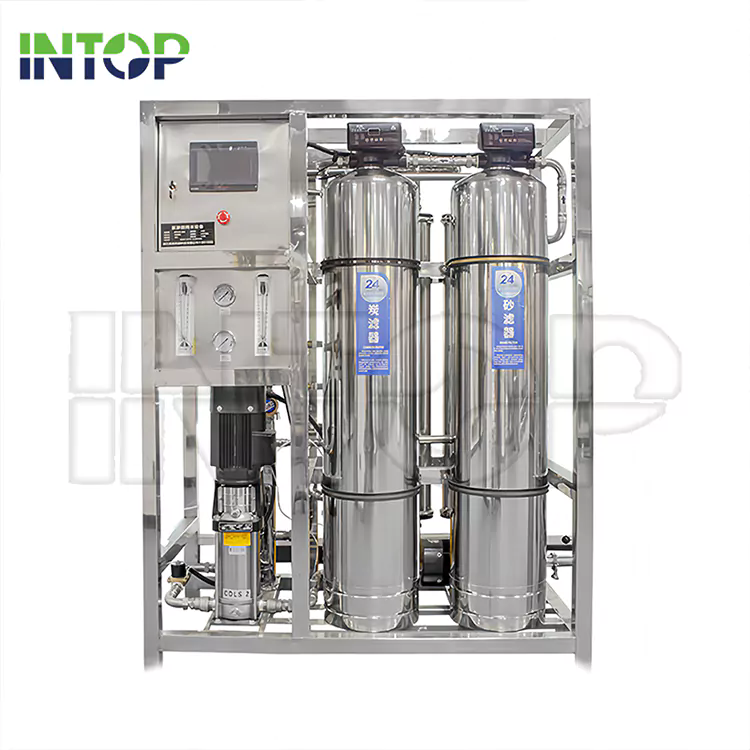
A complete Reverse Osmosis Equipment configuration typically includes pretreatment modules, high-pressure pumps, membrane housings, control instrumentation, and post-treatment components. Pretreatment is essential to stabilize influent water quality and reduce membrane fouling risks. High-pressure pumps supply consistent operational pressure, ensuring stable permeate flow and predictable system output.
The operational logic of Reverse Osmosis Equipment is governed by physical laws of diffusion, pressure gradients, and membrane permeability. These principles enable predictable separation efficiency across a wide range of total dissolved solids (TDS) concentrations, making the technology suitable for both low-brackish and high-salinity feed water.
2. How Are Technical Parameters Defined for Reverse Osmosis Equipment?
Technical parameters play a decisive role in determining system suitability, efficiency, and operational stability. Reverse Osmosis Equipment parameters are established based on feed water analysis, required permeate quality, and target production capacity. Engineers assess factors such as water temperature, salinity, turbidity, and chemical composition before finalizing system specifications.
| Parameter | Typical Range | Technical Significance |
|---|---|---|
| System Capacity | 0.5–500 m³/h | Defines hourly permeate production and scalability |
| Operating Pressure | 0.6–7.0 MPa | Determines membrane driving force and recovery ratio |
| Salt Rejection Rate | 95%–99.8% | Indicates dissolved solids removal efficiency |
| Recovery Rate | 40%–75% | Reflects water utilization efficiency |
| Operating Temperature | 5–35°C | Affects membrane permeability and lifespan |
Parameter optimization ensures that Reverse Osmosis Equipment maintains stable output while minimizing energy consumption and membrane degradation. These parameters are continuously monitored through integrated sensors and automated control systems.
3. How Is Reverse Osmosis Equipment Implemented in Practical Applications?
Reverse Osmosis Equipment is widely implemented across diverse sectors due to its adaptability and consistent output quality. In industrial manufacturing, it supports boiler feed water preparation, process water purification, and wastewater reuse initiatives. In commercial facilities, it provides reliable water treatment for food processing, pharmaceuticals, and electronics production.
Municipal applications often deploy large-scale Reverse Osmosis Equipment for desalination and potable water production in regions facing water scarcity. The modular nature of these systems allows for phased expansion and capacity upgrades without disrupting ongoing operations.
System integration is tailored to site-specific requirements. Skid-mounted configurations are favored for space-limited installations, while containerized systems offer mobility and rapid deployment for temporary or remote operations.
Reverse Osmosis Equipment – Common Questions and Answers
How does Reverse Osmosis Equipment differ from conventional filtration systems?
Reverse Osmosis Equipment operates at the molecular level using semi-permeable membranes, whereas conventional filtration relies on physical barriers with larger pore sizes, limiting contaminant removal efficiency.
How often should membranes in Reverse Osmosis Equipment be replaced?
Membrane replacement cycles typically range from two to five years, depending on feed water quality, pretreatment effectiveness, and operational discipline.
How is system performance monitored during continuous operation?
Performance is monitored through parameters such as permeate conductivity, pressure differential, flow rate, and recovery ratio, enabling early detection of fouling or scaling.
4. How Are Long-Term Performance and Development Trends Assessed?
Long-term evaluation of Reverse Osmosis Equipment focuses on operational stability, maintenance efficiency, and adaptability to evolving water quality standards. Preventive maintenance strategies, including membrane cleaning protocols and pretreatment optimization, are essential for sustaining performance.
From a development perspective, Reverse Osmosis Equipment continues to evolve through advancements in membrane materials, energy recovery devices, and intelligent control systems. These innovations aim to reduce operational costs and enhance system resilience under variable feed water conditions.
Industry research institutions and water treatment associations consistently publish studies supporting the reliability of membrane-based desalination and purification technologies. Authoritative references include technical publications from the International Desalination Association and peer-reviewed journals in water process engineering.
Conclusion and Brand Perspective
Reverse Osmosis Equipment remains a critical component in modern water treatment strategies due to its scalability, consistency, and technical maturity. Through precise system design and disciplined operation, it supports sustainable water management across industrial and commercial environments. Intop continues to focus on engineering-driven solutions that align Reverse Osmosis Equipment performance with real-world operational demands.
For organizations evaluating system design, upgrades, or application-specific configurations, a structured consultation process can clarify technical requirements and deployment strategies. Contact us to explore how Reverse Osmosis Equipment solutions can be aligned with project-specific water treatment objectives.