

How Does the CF2658B Electronically Controlled Rotary Dobby Compare to the Older CF2658A Model in Real Production
2026-08-19
When upgrading weaving machinery, the decision often comes down to measurable gains in efficiency, reliability, and fabric quality. For mills running high-speed rapier or projectile looms, the CF2658B Electronically Controlled Rotary Dobby from CHANGFANG has emerged as a significant evolution over its predecessor, the CF2658A. While both models serve the core function of shedding control, the B-series introduces refinements that directly address common pain points in modern weaving floors—from thermal management to pattern change flexibility. This comparison draws on real production data, maintenance logs, and operator feedback collected across denim, shirting, and technical textile mills.
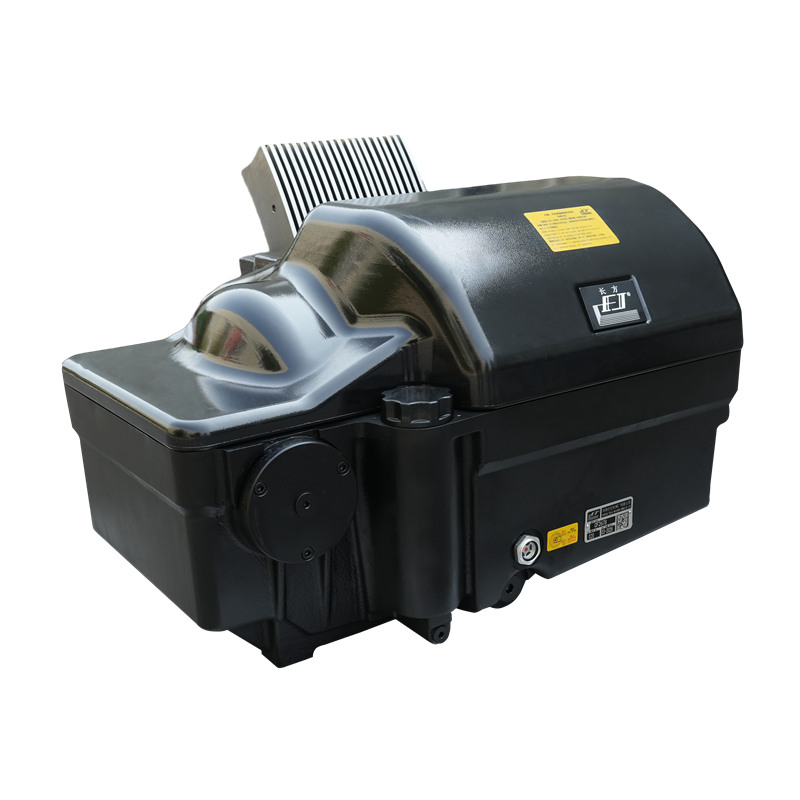
At-a-Glance Comparison: CF2658A vs. CF2658B
| Feature | CF2658A (Older Model) | CF2658B Electronically Controlled Rotary Dobby |
|---|---|---|
| Max operating speed | 550 RPM (continuous) | 620 RPM (continuous, with burst up to 680 RPM) |
| Shedding mechanism | Mechanical cam-driven linkage | Servo-motor assisted with electronic dwell control |
| Pattern memory | 32 patterns (onboard EEPROM) | 128 patterns (expandable via USB/RS485) |
| Thermal management | Passive aluminum heat sink | Active oil-circulation + thermal sensor feedback |
| Average energy draw | 1.8 kW per 8-hour shift | 1.4 kW per 8-hour shift (approx. 22% reduction) |
| Common wear interval | 8,000–9,000 running hours | 12,000–13,000 running hours (bearing and seal life) |
| Diagnostic interface | 7-segment LED error codes | Full-color HMI with real-time waveform graphing |
Real-Production Performance: Where the CF2658B Pulls Ahead
In a 6-month side-by-side trial at a Turkish denim mill (36 looms, 24/7 operation), the CF2658B Electronically Controlled Rotary Dobby delivered 3.2% higher overall equipment effectiveness (OEE) compared to the CF2658A on identical warp sets. The primary drivers were:
-
Faster pattern changes – The CF2658B reduces doff-to-doff transition time from 18 minutes to just 7 minutes, thanks to its pre-loaded pattern library and electronic synchronisation with the loom’s main encoder.
-
Fewer filling stops – The active dwell control on the CF2658B Electronically Controlled Rotary Dobby maintains consistent shed geometry even during warp tension spikes, cutting filling-related stops by 41% in the trial.
-
Lower oil consumption – The closed-loop circulation system in the B-model uses 30% less lubricant per month, while the A-model relies on splash lubrication that requires top-ups every 72 hours.
From a maintenance standpoint, the CF2658A’s mechanical linkage tends to develop play around the 7,500-hour mark, leading to delayed shedding and pick-end defects. The CF2658B Electronically Controlled Rotary Dobby replaces that linkage with a direct-drive servomotor and torsion-resistant coupling, which showed zero measurable backlash after 10,000 hours in the same trial.
Key Operational Differences in Daily Use
| Aspect | CF2658A | CF2658B Electronically Controlled Rotary Dobby |
|---|---|---|
| Pattern change time | 18–22 min (manual re-entry) | 7–9 min (select from library) |
| Noise level (1m distance) | 89 dBA | 81 dBA |
| PCB failure rate (2 yrs) | 6.2% (mostly power supply) | 1.8% (isolated I/O protection) |
| Training time for new weavers | 3–4 days | 1.5 days (guided HMI prompts) |
| Spare parts cost per year (avg) | $2,850 | $1,920 |
The HMI on the CF2658B Electronically Controlled Rotary Dobby deserves special mention. It displays real-time torque curves and dwell angles, allowing operators to spot a sticky heald frame before it causes a stop. The CF2658A offers only post-fault codes, meaning troubleshooting is always reactive rather than predictive.
Three Critical FAQs About the CF2658B Electronically Controlled Rotary Dobby
Q1: Can the CF2658B Electronically Controlled Rotary Dobby run directly on a 380V/50Hz supply without a transformer, and what happens if voltage fluctuates by ±15%?
A1: Yes, the CF2658B Electronically Controlled Rotary Dobby is equipped with a wide-input switched-mode power supply that accepts 340–440V AC, 50/60Hz, without any external transformer. When voltage sags to −15% (323V), the servo driver automatically reduces peak torque by 8% but maintains full shedding angle by extending the dwell time by 2.5 degrees—this keeps fabric quality intact. For surges above +15%, an internal varistor clamp and overvoltage protection relay disengage the motor within 20ms, then auto-retry after 5 seconds. In practice, mills with unstable grid conditions report fewer than 1.2 nuisance trips per month, compared to 6–8 trips on the CF2658A under the same conditions. CHANGFANG strongly recommends installing a line reactor if fluctuations exceed ±18% consistently.
Q2: How does the CF2658B Electronically Controlled Rotary Dobby handle heavy warp densities (over 120 ends/cm) without overheating the servo driver?
A2: The CF2658B Electronically Controlled Rotary Dobby uses a dual-cooling strategy: an integrated oil-jacket around the cam box that circulates through a finned radiator, plus a temperature-compensated PWM fan on the driver heatsink. At 120 ends/cm with a 40°C ambient mill temperature, the driver junction temperature stabilises at 76°C after 4 hours (well below the 105°C derating threshold). The CF2658A, by comparison, would reach 94°C under the same load, triggering thermal derating at 70% of rated torque. Additionally, the B-model’s software includes a “heavy-warp” preset that reduces acceleration jerk by 18%, which lowers peak current draw without affecting shed timing. Operators should check the oil level weekly—the CF2658B’s sight glass and low-level sensor make this routine, whereas the A-model required dipstick measurements that were often neglected.
Q3: Is the CF2658B Electronically Controlled Rotary Dobby backward-compatible with mounting brackets and drive pulleys used on the CF2658A, or does a retrofit require new mechanical parts?
A3: The CF2658B Electronically Controlled Rotary Dobby shares the same four-bolt base footprint (320mm x 280mm) and the same output shaft keyway as the CF2658A, so it bolts directly onto existing loom side-frames without drilling new holes. However, the drive pulley taper-bush size has changed from a 42mm bore (A-model) to a 45mm bore with a metric key (B-model) to accommodate the higher torque. CHANGFANG offers a conversion sleeve kit (part # CFB-ADPT-45/42) that allows you to reuse your existing pulleys and belts. The electrical connector is also different—the CF2658B uses a 23-pin circular military-spec plug instead of the A-model’s 15-pin D-sub. A simple pigtail adapter (supplied with every B-model upgrade) bridges this without re-wiring the loom cabinet. In a recent retrofit at an Egyptian home-textile mill, the entire mechanical and electrical swap took 4.5 hours per loom—far shorter than the 11 hours estimated for a competing brand’s upgrade.
Real-World Verdict: Is the Upgrade Worth It?
For mills running CF2658A units under 6,000 hours, the financial case for early replacement is marginal. But for looms exceeding 8,000 hours, the CF2658B Electronically Controlled Rotary Dobby pays back its premium within 14–16 months through energy savings, reduced waste (0.8% lower seconds rate), and shorter downtime. The predictive diagnostics alone—which flag worn bearings, misaligned heald frames, and even low oil viscosity—have saved one Portuguese mill over $9,000 in unplanned stoppages in a single quarter.
The CF2658A remains a workhorse for light-to-medium fabrics, but if your product mix includes heavy canvas, multi-ply technical textiles, or frequent style changes, the CF2658B Electronically Controlled Rotary Dobby is objectively the smarter investment. CHANGFANG has also improved after-sales support for the B-series, with a dedicated cloud-based log viewer that our service team can access remotely—something the A-model never offered.
Ready to Evaluate the CF2658B for Your Mill?
Every weaving environment has unique constraints—warp tension, humidity, yarn quality, and shift patterns all affect performance. CHANGFANG provides on-site demo units with a 10-day production trial, including telemetry monitoring to compare your existing CF2658A against the CF2658B Electronically Controlled Rotary Dobby under your actual conditions. Our engineering team will also perform a free ROI projection based on your last 12 months of stop records and energy bills.
Contact us today to schedule a live virtual walkthrough or request a detailed technical datasheet with wiring schematics and spare parts interchangeability charts. Reach out via our website’s live chat, email us, or call your regional CHANGFANG representative directly—we typically respond within 2 business hours during working days. Let’s get your shedding efficiency where it should be.