

How Does the Duty Cycle Affect Performance on a Handheld Air Plasma Cutting Machine for Heavy Use
2026-06-17
If you are pushing a Handheld Air Plasma Cutting Machine to its limits every day—cutting thick plate, long seams, or production runs—the single most critical specification on the spec sheet is the duty cycle. Ignoring it leads to frustrating shutdowns, slower work, and premature wear. For heavy-use shops, HawkWeld engineers its plasma systems with industrial-grade duty cycles, but understanding how this metric actually affects real-world performance is what separates a productive shift from a broken one.
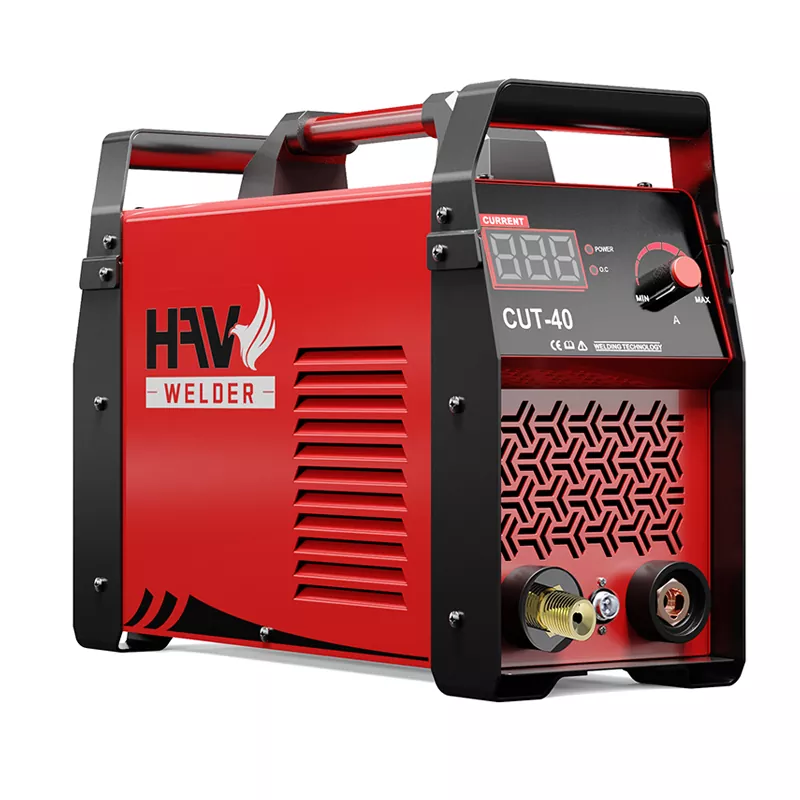
What Duty Cycle Actually Means (Beyond the Percentage)
Duty cycle is the ratio of cutting time to cooling time within a 10‑minute period, measured at a specific amperage and ambient temperature (usually 40°C/104°F). For example, a 60% duty cycle at 60A means you can cut continuously for 6 minutes, then must let the machine idle for 4 minutes to cool.
For heavy use, this number is not a suggestion—it is a hard operational limit. Exceeding it triggers thermal overload protection, which cuts power mid‑cut to save internal components (IGBTs, transformer, and rectifier).
5 Ways Duty Cycle Directly Impacts Heavy-Duty Performance
| Performance Factor | Effect of Low Duty Cycle (≤40%) | Effect of High Duty Cycle (≥60‑80%) |
|---|---|---|
| Cutting Continuity | Stops every 4‑5 minutes; ruins workflow | Runs full sheets or long rails without interruption |
| Cut Quality | Resuming after cool-down causes inconsistent arc starts and dross | Stable arc temperature = smooth, slag‑free edges |
| Consumable Life | Frequent heat‑cool cycles crack nozzles and electrodes | Steady thermal state extends electrode life by 30‑50% |
| Compressor Load | Short bursts waste air; moisture condenses more | Continuous air flow keeps torch dry and clean |
| Productivity (ft/min) | Effective cutting speed drops ~40% due to downtime | Maintains rated speed (e.g., 20 IPM on ½” steel) |
The Hidden Cost of Over-Rating Duty Cycle
Many operators buy a Handheld Air Plasma Cutting Machine based only on max amperage (e.g., 70A) and assume they can cut at that level all day. In reality, a 70A machine with a 35% duty cycle delivers only 3.5 minutes of cut time per 10‑minute block. Over an 8‑hour shift, you lose over 4 hours to forced cooling. HawkWeld addresses this by offering dual‑voltage models (110V/220V) that maintain a 60% duty cycle at full rated current, ensuring that advertised amperage is usable amperage.
Real‑World Heavy‑Use Scenarios
-
Structural steel fabrication – cutting ⅝” flange plates repeatedly requires a minimum 60% duty cycle at 50A. Below that, the machine overheats before finishing a single 24‑inch cut.
-
Pipe beveling – rotating the torch around a 12″ pipe takes 4‑5 minutes of continuous arc. A low‑duty‑cycle unit will cut out at the 4‑minute mark, ruining the bevel angle.
-
Scrap demolition – random, intermittent cuts actually generate more heat than steady cutting because the compressor cycles on/off, spiking internal temperatures.
FAQ – Common Questions About Duty Cycle on a Handheld Air Plasma Cutting Machine
Q: Can I just lower the amperage to get a higher duty cycle on my Handheld Air Plasma Cutting Machine?
A: Yes, duty cycle is always rated at a specific amperage. If your Handheld Air Plasma Cutting Machine is rated 60% at 60A, dropping to 40A may push that to 80‑90% because internal heat generation drops exponentially with current. However, lower amperage reduces cut thickness and speed. For heavy use, this is a trade‑off: you can finish thinner materials non‑stop, but for thick plate, you must respect the rated duty cycle or upgrade to a higher‑capacity unit like the HawkWeld Pro‑Series, which holds 80% at 60A.
Q: Does the air compressor affect the duty cycle of a Handheld Air Plasma Cutting Machine?
A: Indirectly, yes—and this is often overlooked. The compressor generates heat and moisture. If your Handheld Air Plasma Cutting Machine uses an external compressor, undersized or oil‑lubricated units cause the internal air regulator to work harder, increasing power supply temperature. More critically, moisture in the air line reduces arc stability, which forces the machine to draw higher current to maintain the cut, artificially lowering the effective duty cycle. HawkWeld recommends a dedicated 6‑8 CFM dry air compressor with a refrigerated dryer for any heavy‑use application to keep both the air supply and the power board cool.
Q: What happens if I ignore the duty cycle and keep cutting after the thermal overload trips?
A: The Handheld Air Plasma Cutting Machine has a built‑in thermal switch that will forcibly shut down the output—you cannot override it without damaging the unit. Repeatedly running into overload will degrade the IGBT modules and electrolytic capacitors, cutting their lifespan from 5,000+ hours to under 500 hours. In worst cases, the torch head can melt or the main board can short. HawkWeld units include a smart thermal display that shows remaining cut time before overload, so you can plan cool‑down breaks proactively rather than losing a cut mid‑way.
Practical Rule for Heavy‑Duty Operators
| Daily Usage Pattern | Minimum Recommended Duty Cycle |
|---|---|
| Occasional repair (<10 cuts/day) | 30‑40% |
| Light fabrication (intermittent) | 50% |
| Heavy production (continuous) | ≥ 60% (HawkWeld recommended) |
| Automated or jig cutting | 80‑100% (water‑cooled) |
For most job sites, a 60% duty cycle is the goldilocks zone—enough for 90% of structural and pipe work, provided you pair it with proper air management and quality consumables from HawkWeld.
Final Verdict
Duty cycle is not just a number—it is the rhythm of your workday. A Handheld Air Plasma Cutting Machine with a low duty cycle forces you into a stop‑start cadence that ruins cut quality, consumes more electrodes, and costs you billable hours. Conversely, a properly rated unit—like those from HawkWeld—delivers consistent arc energy, cleaner cuts, and longer torch life, even under 8‑hour continuous loads. Always match the duty cycle to your thickest material and longest cut length, not just the peak amperage.
Ready to upgrade your heavy‑cutting workflow? Contact the HawkWeld technical team today for a personalized duty‑cycle calculation based on your actual material thickness and daily footage. We will help you select the right Handheld Air Plasma Cutting Machine that keeps cutting while others cool down. Reach out to us now—your productivity depends on it.