
How Does the Hinge-Blade Design Improve Thermal Efficiency in Industrial Wiped Film Evaporators
2026-04-17
Thermal efficiency remains the cornerstone of high-performance thermal separation, and Industrial hinge-bladed Wiped Film Evaporator systems have redefined energy utilization in processing heat-sensitive, viscous, and fouling materials. At Hongdinghua, advanced hinge-blade configurations address traditional evaporator limitations by dynamically adjusting blade-to-wall contact, reducing thermal degradation, and maximizing heat transfer coefficients. This blog explores the mechanical innovations behind hinge-blade technology and its measurable impact on industrial evaporation processes.
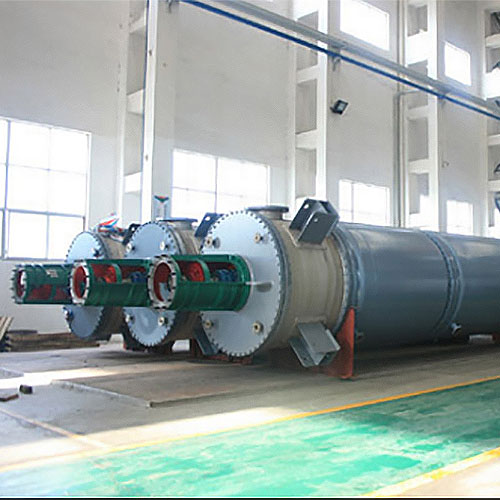
Key Thermal Efficiency Improvements from Hinge-Blade Design
| Mechanism | Contribution to Thermal Efficiency | Operational Benefit |
|---|---|---|
| Self-adjusting blade-wall contact | Maintains uniform film thickness even with thermal expansion | Eliminates dry spots and localized overheating |
| Reduced residence time | Lowers thermal exposure per pass | Preserves product quality in heat-sensitive compounds |
| Enhanced turbulence generation | Increases overall heat transfer coefficient (U) by 25-35% | Reduces energy consumption per kilogram of distillate |
| Continuous surface renewal | Prevents fouling layer build-up | Sustains high evaporation rates over extended runs |
How Hinge-Blades Outperform Fixed-Blade Designs
In traditional wiped film evaporators, fixed blades often lose contact due to shaft deflection, thermal distortion, or mechanical tolerances. Hongdinghua hinge-blades pivot independently, using centrifugal force to maintain consistent wall pressure. This self-cleaning action minimizes boundary layer resistance—the primary bottleneck in falling film and thin film evaporation. Consequently, Industrial hinge-bladed Wiped Film Evaporator units achieve stable operation at lower wall temperatures, directly translating to higher thermal efficiency and reduced utility costs.
Critical Design Parameters Influencing Efficiency
-
Blade hinge angle (10° to 25°): Optimizes radial force without excessive wear
-
Rotor speed (150-400 RPM): Balances film turbulence and mechanical longevity
-
Blade material (PTFE, stainless steel, or ceramic): Matches thermal conductivity and chemical resistance
-
Number of blade rows: Determines wiping frequency and surface renewal rate
Industrial hinge-bladed Wiped Film Evaporator FAQ Section
Question 1: How does the hinge-blade design reduce product thermal degradation while improving heat transfer?
Answer: Hinge-blades maintain a microscopically thin, turbulent liquid film (0.5-2.5 mm) that promotes rapid heat flux into the bulk liquid. Because the blades pivot independently, they continuously lift and reapply the product layer, preventing stagnant boundary layers. This mechanism allows heat to penetrate without requiring high wall temperatures. Hongdinghua evaporators typically reduce required heating medium temperature by 15-30°C compared to conventional designs, achieving the same evaporation rate while lowering thermal stress on sensitive molecules such as vitamins, polymers, or pharmaceutical intermediates.
Question 2: What maintenance advantages do hinge-blades offer that sustain long-term thermal efficiency?
Answer: Fixed blades can wear unevenly, creating gaps that reduce wiping effectiveness and cause fouling. Hinge-blades self-compensate for wear through centrifugal force and hinge articulation, maintaining consistent wall contact for thousands of operating hours. Hongdinghua implements quick-release hinge pins, enabling blade replacement without full rotor disassembly. Routine inspection every 2,000-3,000 hours restores thermal efficiency to near-original levels. Additionally, the hinge action prevents hard fouling adhesion, reducing chemical cleaning frequency by up to 50%, which directly lowers downtime and energy penalties associated with fouled surfaces.
Question 3: Can hinge-blade evaporators handle high-viscosity or crystallizing fluids without losing thermal performance?
Answer: Yes. Fixed-blade systems often struggle with viscosity exceeding 5,000 cP, as thick fluids lift blades away from the wall. Hinge-blades generate mechanical shearing and radial pressure even at viscosities up to 50,000 cP. The hinge action creates a wave-like film movement that disrupts boundary layers in viscous media. For crystallizing fluids, the blades scrape nascent crystals before they insulate the heat transfer surface. Hongdinghua has successfully applied Industrial hinge-bladed Wiped Film Evaporator technology to concentrated lecithin, heavy petroleum residues, and polymer solutions, maintaining stable overall heat transfer coefficients above 300 W/m²·K under challenging conditions.
Conclusion and Contact Call to Action
Hinge-blade design fundamentally transforms thermal efficiency in wiped film evaporation through self-adjusting wall contact, enhanced turbulence, and superior fouling control. Hongdinghua continues to advance this technology with precision-engineered hinge systems, custom material selections, and process-specific rotor configurations. For heat-sensitive separations, high-viscosity applications, or energy-intensive distillation tasks, Industrial hinge-bladed Wiped Film Evaporator solutions deliver measurable economic and operational returns.
Contact us today to request a thermal efficiency calculation or a pilot test with your specific product. Our engineering team at Hongdinghua provides detailed performance simulations, blade material recommendations, and turnkey integration support for your evaporation line.