

How Does the Weir Height Affect the Classification Accuracy in a High Weir Spiral Classifier
2026-05-19
In mineral processing circuits, the High Weir Spiral Classifier plays an essential role in separating fine particles from coarse material for recirculation to grinding mills. One of the most influential parameters in this process is the weir height. Understanding its effect on classification accuracy can significantly enhance mill efficiency and product consistency. At EPIC, we specialize in designing High Weir Spiral Classifier systems that optimize separation precision through tailored weir configurations.
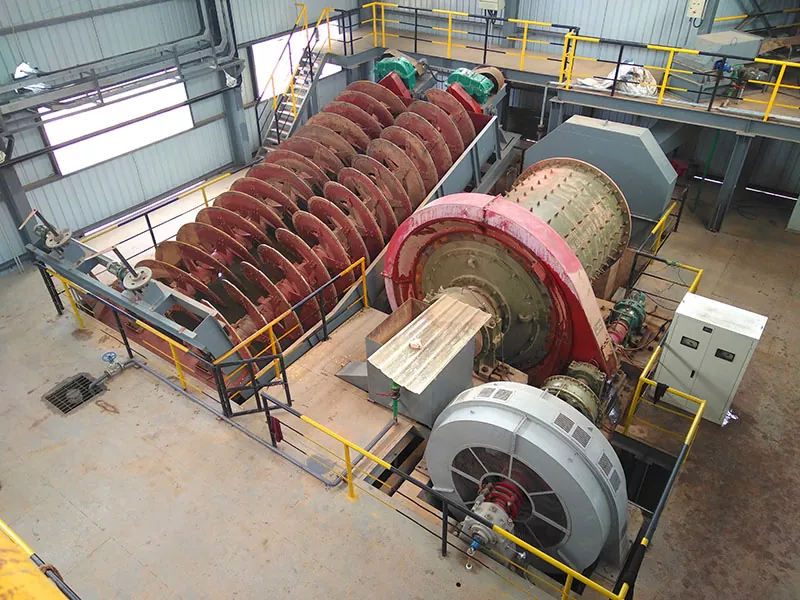
The Role of Weir Height in Classification
The weir height in a High Weir Spiral Classifier determines the settling area available for fine particles. A higher weir increases the pool area and retention time, allowing finer solids to settle before overflowing. Conversely, a lower weir reduces the settling zone, leading to coarser overflow. This directly impacts classification accuracy—defined as the sharpness of separation between desired fine product and rejected coarse sands.
| Weir Height Setting | Effect on Pool Area | Overflow Particle Size | Classification Accuracy |
|---|---|---|---|
| High (above spiral center) | Large settling zone | Finer overflow | High for fine fractions |
| Medium (at spiral center) | Balanced area | Standard target size | Optimal for most duties |
| Low (below spiral center) | Small settling zone | Coarser overflow | Reduced; risk of misplaced coarse particles |
Practical Observations from Operations
Field data across multiple mineral processing plants confirms that a High Weir Spiral Classifier operating with excessive weir height may create turbulence, reducing density stratification and harming accuracy. Too low a weir, however, causes rapid slurry short-circuiting. EPIC recommends calculating the optimal weir height based on ore specific gravity, desired cut size (typically 100–400 mesh), and feed flow rate.
High Weir Spiral Classifier FAQ
What is the typical range of weir height adjustment in a High Weir Spiral Classifier?
Weir height adjustments are generally possible within 0 to 300 mm above or below the spiral centerline, depending on the classifier model and manufacturer. For most EPIC units, the standard operating range is between 100 mm below to 200 mm above the spiral shaft center. Modifying weir height changes the submerged volume of the spiral, directly altering sand raking capacity and overflow fineness. Operators must re-evaluate slurry density and feed rate after each adjustment to maintain classification accuracy.
How can I determine if my weir height is causing poor classification accuracy
Signs of incorrect weir height include excessive coarse particles reporting to overflow (visible in sieve analysis) or a lack of fine material returning to the mill via the sand discharge. To diagnose, perform a wet sieve analysis on overflow and underflow samples. If the overflow contains more than 10–15% of material coarser than your target cut size, the weir is likely too low. If the sand discharge is overly wet and contains excessive fines, the weir is likely too high. EPIC provides technical support for real-time cut-size validation using plant data.
Does weir height interact with spiral speed and feed solids concentration
Yes, strongly. A High Weir Spiral Classifier operates as an integrated system. At higher feed solids concentrations (>45% by weight), a lower weir is often required to prevent overflow thickening. At lower concentrations (<25%), a higher weir improves fines recovery. Similarly, high spiral speeds (above 6 RPM) generate more pool turbulence, which may necessitate a lower weir to maintain accuracy. EPIC engineers use computational modeling to balance weir height, speed, and feed density for each application.
Best Practices for Weir Height Optimization
-
Start at manufacturer’s recommended baseline (typically at spiral centerline).
-
Perform a grind-size analysis on overflow every 4–6 hours.
-
Adjust weir height in increments of 25–50 mm, observing accuracy trends over 24 hours.
-
Log changes against mill circulating load and cyclone feed density if downstream.
For maximum classification accuracy, EPIC integrates variable weir plates and digital monitoring into its High Weir Spiral Classifier line, enabling precise tuning without mechanical modifications.
Contact Us
Want to optimize your High Weir Spiral Classifier for sharper separation and higher throughput? Contact EPIC today for a professional process audit and tailored weir height recommendation. Our team delivers field-tested solutions that improve classification accuracy by up to 30%. Reach out now to schedule your consultation.