

How High Tech Automated Sewing Device Transform Modern Manufacturing Efficiency?
2026-06-23
Abstract
The High Tech Automated Sewing Device represents a major evolution in textile and garment manufacturing. By integrating intelligent control systems, precision mechanics, and automation software, it dramatically improves production efficiency, reduces labor dependency, and ensures consistent stitching quality. This article explores how this advanced technology solves common manufacturing pain points, enhances scalability, and reshapes the future of industrial sewing operations, with insights from real-world applications including solutions offered by HD.
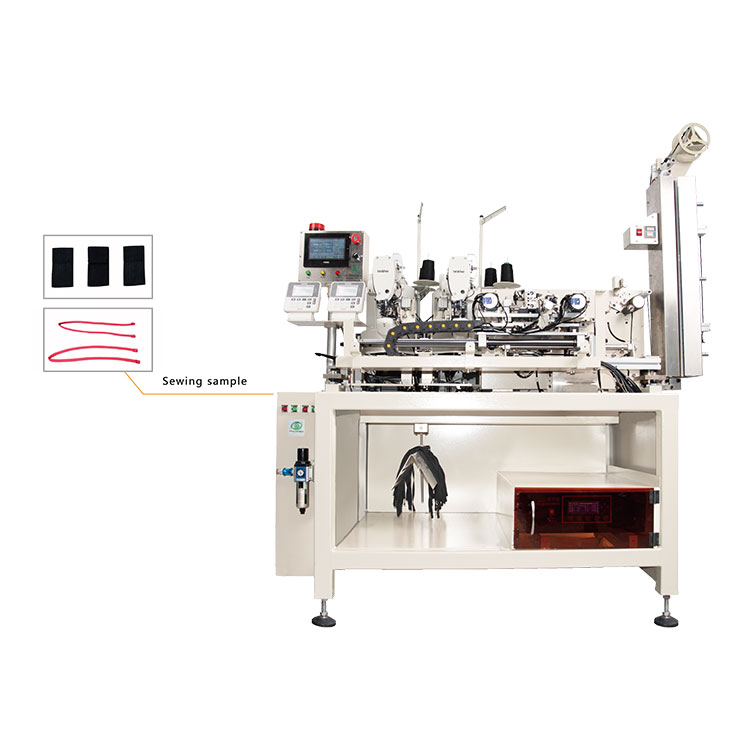
Table of Contents
- Outline
- 1. Introduction
- 2. What Is a High Tech Automated Sewing Device?
- 3. Key Features and Functions
- 4. Core Benefits for Manufacturers
- 5. Industry Applications
- 6. Technical Workflow Breakdown
- 7. Traditional vs Automated Sewing Systems
- 8. Manufacturing Pain Points Solved
- 9. Maintenance and Operational Considerations
- 10. Future Development Trends
- 11. FAQ
- 12. Conclusion
Outline
This article covers the definition, working principles, advantages, and industrial applications of High Tech Automated Sewing Devices. It also compares traditional sewing systems with modern automation and explains how manufacturers can benefit from adopting intelligent sewing solutions provided by companies such as HD.
1. Introduction
In the modern textile industry, efficiency, consistency, and scalability are critical. Traditional sewing machines often rely heavily on manual operation, which leads to inconsistencies, higher labor costs, and production limitations. The High Tech Automated Sewing Device addresses these challenges by introducing automation-driven precision and intelligent control systems into the sewing process.
Manufacturers today face increasing pressure to deliver high-quality garments faster and at lower costs. As global demand rises, automation is no longer optional—it is essential for competitive survival. This is where advanced solutions like those developed by HD become highly valuable.
2. What Is a High Tech Automated Sewing Device?
A High Tech Automated Sewing Device is an industrial-grade sewing system that integrates computer-controlled automation, servo motors, programmable stitching patterns, and real-time monitoring systems. Unlike conventional machines, it performs complex sewing tasks with minimal human intervention.
These machines are designed to handle repetitive, high-precision tasks while maintaining uniform stitch quality across large production batches. They are widely used in apparel manufacturing, automotive textiles, home furnishing production, and technical fabric industries.
3. Key Features and Functions
- Automated Stitch Programming: Pre-set stitching patterns reduce manual intervention.
- AI-Assisted Fabric Detection: Automatically adjusts settings based on fabric type.
- High-Speed Servo Motors: Ensure faster and more stable operation.
- Error Detection System: Identifies stitching issues in real time.
- Touchscreen Control Interface: Simplifies operation and reduces training time.
- Energy Efficiency Mode: Reduces power consumption during idle periods.
4. Core Benefits for Manufacturers
| Aspect | Benefit |
|---|---|
| Production Speed | Up to 3–5x faster output compared to manual sewing systems |
| Labor Costs | Reduced dependency on skilled operators |
| Quality Control | Consistent stitching with minimal defect rates |
| Scalability | Easily integrated into large-scale production lines |
| Operational Stability | Reduced downtime through predictive maintenance |
5. Industry Applications
High Tech Automated Sewing Devices are widely adopted across multiple industries:
- Garment Manufacturing: Shirts, pants, sportswear, and uniforms
- Automotive Industry: Seat covers, airbags, and interior textiles
- Home Furnishing: Curtains, upholstery, and bedding
- Industrial Textiles: Heavy-duty fabric and technical materials
6. Technical Workflow Breakdown
The operation of an automated sewing device follows a structured workflow:
- Fabric Loading and Alignment
- Pattern Selection via Control Interface
- Automated Stitch Execution
- Real-Time Quality Monitoring
- Output Completion and Sorting
This streamlined workflow eliminates unnecessary manual adjustments and ensures consistent output quality throughout production cycles.
7. Traditional vs Automated Sewing Systems
| Feature | Traditional Sewing Machine | High Tech Automated Sewing Device |
|---|---|---|
| Operation | Manual control | Automated digital control |
| Speed | Moderate | High-speed continuous operation |
| Error Rate | Higher due to human factors | Minimal due to sensors and AI correction |
| Training Requirement | High | Low |
| Cost Efficiency | Lower long-term efficiency | High long-term ROI |
8. Manufacturing Pain Points Solved
Manufacturers often face several operational challenges that automated sewing technology directly addresses:
- Labor Shortage: Reduces dependency on highly skilled operators.
- Inconsistent Quality: Ensures uniform stitching across batches.
- Slow Production Cycles: Increases throughput significantly.
- High Waste Rates: Reduces fabric waste through precision control.
- Machine Downtime: Predictive systems minimize unexpected breakdowns.
Solutions from HD are designed specifically to mitigate these issues while maintaining industrial-grade reliability.
9. Maintenance and Operational Considerations
Although automated sewing devices are highly efficient, proper maintenance is essential for long-term performance:
- Regular lubrication of moving parts
- Software updates for control systems
- Calibration of sensors and stitching heads
- Routine inspection of mechanical components
By following structured maintenance protocols, manufacturers can extend machine lifespan and ensure stable production output.
10. Future Development Trends
The evolution of High Tech Automated Sewing Devices is expected to focus on deeper integration of artificial intelligence, IoT connectivity, and adaptive robotics. Future systems will likely include:
- Self-learning stitching optimization
- Cloud-based production monitoring
- Fully autonomous production lines
- Advanced fabric recognition using machine vision
These innovations will further reduce human intervention while increasing production precision.
11. FAQ
Q1: What industries benefit most from automated sewing devices?
A: Apparel, automotive, home furnishing, and technical textile industries benefit significantly.
Q2: Is operator training required?
A: Minimal training is required due to intuitive control interfaces.
Q3: Can these machines handle different fabric types?
A: Yes, advanced sensors allow automatic adjustment for various fabric materials.
Q4: What is the main advantage over traditional machines?
A: Higher speed, consistency, and reduced operational costs.
Q5: Are HD machines suitable for small factories?
A: Yes, they are scalable and suitable for both small and large production environments.
12. Conclusion
The High Tech Automated Sewing Device is redefining industrial textile manufacturing by combining automation, intelligence, and precision engineering. It addresses long-standing production challenges while enabling manufacturers to scale efficiently and maintain consistent quality standards. Companies adopting this technology, including solutions from HD, gain a significant competitive advantage in today’s fast-paced manufacturing landscape.
For more information or customized solutions, contact us today at HD and explore how advanced automation can transform your production line. Contact us now to get started.