
How Is a Pipe Polisher Machine Becoming a Key Solution in Industrial Surface Finishing?
2025-12-15
A Pipe Polisher Machine is a specialized piece of industrial equipment designed to process the outer surface of round pipes and tubes through controlled abrasive contact. It is widely used in industries where surface consistency, dimensional accuracy, and visual uniformity of cylindrical metal components are critical. Common application sectors include stainless steel fabrication, architectural metalwork, food and pharmaceutical equipment manufacturing, chemical pipelines, handrail systems, and precision mechanical engineering.
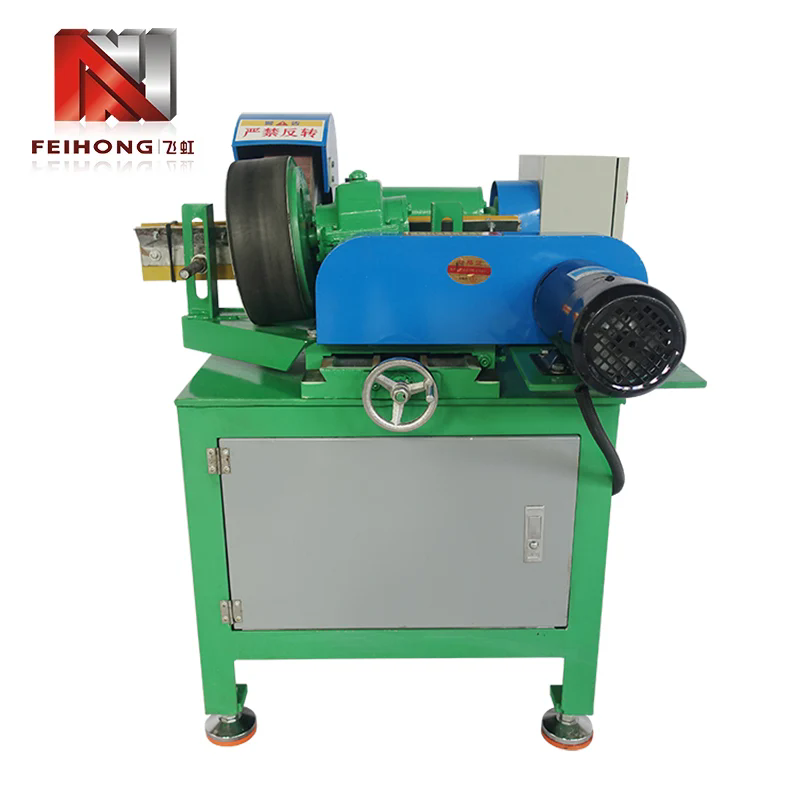
The core purpose of a Pipe Polisher Machine is to deliver stable, repeatable surface treatment results on pipes with varying diameters and wall thicknesses. Unlike manual polishing methods, which rely heavily on operator experience and physical endurance, automated or semi-automated pipe polishing systems provide standardized processing conditions. This ensures that each pipe receives a consistent surface finish across its entire circumference and length.
From an operational standpoint, the machine integrates mechanical transmission, abrasive tooling, adjustable pressure systems, and speed regulation. Pipes are either fed manually or automatically through the polishing zone, where rotating abrasive belts or wheels remove surface irregularities, oxide layers, welding marks, or minor scratches. The process can be configured for rough grinding, intermediate polishing, or fine finishing, depending on downstream requirements.
Technical Structure and Key Parameters
Understanding the technical configuration of a Pipe Polisher Machine is essential for evaluating its suitability for specific production needs. Although designs vary by manufacturer and model, most machines share a similar structural logic, combining mechanical rigidity with adjustable processing flexibility.
At the structural level, the machine typically consists of a heavy-duty frame, a drive system, a polishing head assembly, a pipe support and feeding mechanism, and an electrical control unit. The rigidity of the frame directly affects vibration control and surface uniformity during operation. A stable structure minimizes micro-movements that could otherwise result in uneven polishing patterns.
Below is a representative overview of common technical parameters found in industrial-grade Pipe Polisher Machines. This format highlights professional specifications without excessive complexity.
Typical Technical Parameters
-
Applicable Pipe Diameter Range: 10 mm – 120 mm (customizable for larger diameters)
-
Maximum Pipe Length: 6,000 mm (extendable with support stands)
-
Polishing Method: Abrasive belt or abrasive wheel system
-
Number of Polishing Stations: 1–4 stations, depending on finish requirements
-
Motor Power: 2.2 kW – 7.5 kW per station
-
Belt Speed Range: 5–30 m/s, adjustable via frequency inverter
-
Feed Speed: 0.5–5 m/min, continuously adjustable
-
Surface Finish Capability: From coarse grinding to mirror-like polish
-
Control System: Manual control panel or PLC-based interface
-
Material Compatibility: Stainless steel, carbon steel, aluminum, brass, copper alloys
Each parameter plays a role in determining output quality and operational efficiency. For example, adjustable belt speed allows operators to match abrasive aggression with material hardness, while variable feed speed ensures sufficient contact time for different finishing stages.
From a control perspective, modern machines increasingly incorporate PLC systems with digital displays. These interfaces allow operators to store process recipes, monitor motor load, and adjust parameters with precision. Such control capabilities are particularly relevant in batch production environments where repeatability is a core requirement.
Processing Logic, Workflow, and Operational Considerations
The working logic of a Pipe Polisher Machine is based on controlled relative motion between the pipe surface and abrasive media. The pipe is either rotated, linearly fed, or subjected to a combination of both motions while the abrasive belt or wheel applies consistent pressure.
A typical workflow begins with pipe loading and alignment. Proper alignment is critical, as misalignment can lead to uneven contact and localized over-polishing. Once positioned, the pipe enters the polishing zone, where abrasive media engages the surface under preset pressure and speed conditions. Depending on the machine configuration, multiple stations may perform sequential operations, such as initial grinding followed by fine polishing.
One of the main operational considerations is abrasive selection. Abrasive belts and wheels vary in grit size, bonding material, and wear characteristics. Coarser grits are used for removing weld seams or heavy oxidation, while finer grits are applied to achieve smooth or decorative finishes. Selecting the correct abrasive sequence directly impacts both surface quality and tool life.
Heat management is another important factor. Continuous friction generates heat, which can affect material properties, especially in thin-walled pipes. Many machines address this through optimized contact pressure, intermittent polishing cycles, or optional cooling systems. Proper heat control helps prevent discoloration, warping, or microstructural changes in sensitive materials.
Dust and debris management also influences operational efficiency and workplace safety. Industrial Pipe Polisher Machines are commonly equipped with dust extraction ports that connect to centralized collection systems. Effective dust removal not only improves visibility and cleanliness but also reduces abrasive clogging and extends consumable lifespan.
From a production planning perspective, these machines support both small-batch customization and large-scale continuous processing. Their adaptability makes them suitable for workshops producing architectural elements as well as factories supplying standardized pipe components to OEM customers.
Common Questions, Industry Outlook, and Brand Integration
As Pipe Polisher Machines become more prevalent in automated production lines, certain technical and operational questions arise frequently among buyers and operators. Addressing these questions helps clarify expectations and supports informed decision-making.
Q1: How does a Pipe Polisher Machine ensure consistent surface quality across different pipe diameters?
A Pipe Polisher Machine achieves consistency through adjustable support rollers, pressure control mechanisms, and variable-speed drives. These components allow the machine to maintain stable contact between the abrasive media and the pipe surface, regardless of diameter changes. By fine-tuning pressure and feed speed, operators can ensure uniform material removal across different pipe sizes.
Q2: How does a Pipe Polisher Machine compare to manual polishing in long-term production environments?
Compared to manual polishing, a Pipe Polisher Machine provides higher repeatability, reduced labor dependency, and improved throughput. Manual methods are subject to operator fatigue and skill variation, whereas machine-based processing maintains constant parameters throughout extended production runs. Over time, this consistency translates into more predictable quality control and cost management.
Looking ahead, the role of Pipe Polisher Machines is expected to expand alongside broader trends in industrial automation and smart manufacturing. Integration with upstream cutting systems and downstream inspection equipment is becoming more common. Digital monitoring, predictive maintenance, and data-driven process optimization are gradually being incorporated into newer machine designs, aligning surface finishing operations with Industry 4.0 principles.
In this evolving landscape, manufacturers seek equipment that balances mechanical reliability with adaptable control systems. Brands that focus on robust engineering, clear parameterization, and practical operator interfaces are well positioned to meet these expectations. Feihong has established a presence in this field by offering Pipe Polisher Machine solutions that align with industrial processing requirements while supporting diverse application scenarios.
For organizations evaluating surface finishing equipment or planning to upgrade existing production lines, understanding machine structure, parameters, and workflow logic is a critical first step. To explore suitable configurations or discuss specific application needs, interested parties are encouraged to contact us for detailed technical consultation and product information related to Feihong Pipe Polisher Machine solutions.