

How Is an Animal Carcass Crusher Applied in Livestock and Environmental Protection Systems?
2025-12-30
Abstract
An Animal Carcass Crusher is a specialized mechanical solution designed for the efficient size reduction of animal carcasses generated from livestock farming, slaughterhouses, quarantine stations, and emergency disease control operations. This article provides a comprehensive technical and application-oriented overview of Animal Carcass Crusher systems, focusing on how they function, how to evaluate their parameters, how they integrate into waste treatment processes, and how they are expected to evolve. The content is structured to support search visibility, professional decision-making, and practical deployment across global agricultural and environmental protection sectors.
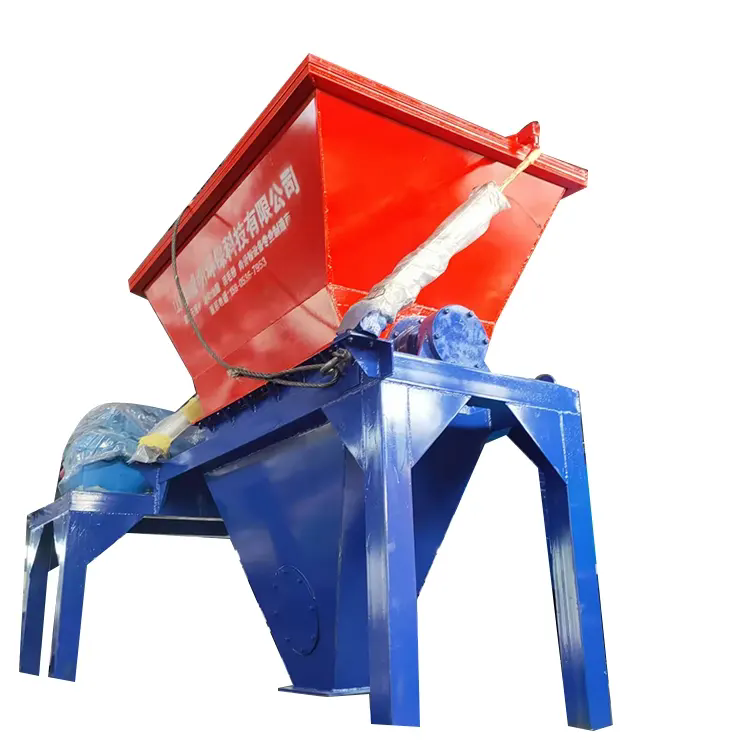
Table of Contents
- How Does an Animal Carcass Crusher Work?
- How Are Key Technical Parameters Defined?
- How Is an Animal Carcass Crusher Selected and Deployed?
- How Will Animal Carcass Crusher Technology Develop?
- Animal Carcass Crusher FAQ
Outline
- Product overview and core application scenarios
- Mechanical structure and operating principles
- Technical parameters and performance indicators
- Installation, operation, and integration guidance
- Industry trends and regulatory alignment
How Does an Animal Carcass Crusher Work?
An Animal Carcass Crusher operates by applying controlled mechanical force to break down whole or partial animal carcasses into smaller, manageable fragments. This process significantly improves downstream treatment efficiency, whether the carcasses are destined for rendering, incineration, fermentation, composting, or biosecurity disposal.
The system typically consists of a reinforced feeding chamber, high-torque rotating shafts, hardened alloy blades, and a sealed housing structure. When carcasses are introduced through the feeding inlet, synchronized cutter shafts apply shearing, tearing, and compressive forces. This ensures consistent particle size reduction while preventing material rebound or clogging.
A critical design objective is biosecurity containment. Enclosed crushing chambers minimize aerosol dispersion, odor leakage, and pathogen exposure. Many systems are engineered to operate under wet, high-organic-load conditions without compromising mechanical stability or throughput.
How Are Key Technical Parameters Defined?
Understanding technical parameters is essential when evaluating an Animal Carcass Crusher for industrial or agricultural deployment. These parameters directly affect processing capacity, durability, and compatibility with existing waste management systems.
| Parameter | Typical Specification Range | Technical Significance |
|---|---|---|
| Processing Capacity | 1–20 tons/hour | Determines suitability for small farms or centralized facilities |
| Blade Material | High-strength alloy steel | Ensures wear resistance and long service life |
| Shaft Configuration | Dual or multi-shaft | Improves crushing uniformity and torque distribution |
| Motor Power | 15–90 kW | Supports continuous operation under heavy load |
| Discharge Size | 20–80 mm adjustable | Optimizes downstream processing efficiency |
These parameters should be evaluated in conjunction with carcass type, average animal weight, moisture content, and daily processing volume. Matching equipment specifications to operational realities is critical for maintaining efficiency and regulatory compliance.
How Is an Animal Carcass Crusher Selected and Deployed?
Selecting an Animal Carcass Crusher involves more than capacity calculation. Environmental regulations, site conditions, and integration requirements all play decisive roles.
From an installation perspective, crushers are commonly positioned upstream of sterilization or thermal treatment units. The reduced particle size enhances heat penetration and microbial inactivation efficiency. In mobile or emergency disease response scenarios, compact skid-mounted units are favored due to rapid deployment capabilities.
Operational considerations include ease of cleaning, corrosion resistance, and automated overload protection. Many modern systems incorporate intelligent control panels that monitor torque fluctuations, blade wear indicators, and emergency stop functions.
Proper deployment also requires operator training, routine maintenance scheduling, and alignment with local animal health disposal protocols. These factors collectively determine long-term system reliability and compliance performance.
How Will Animal Carcass Crusher Technology Develop?
Future development of Animal Carcass Crusher systems is driven by tightening environmental standards and the growing scale of industrial livestock operations. Equipment designs are increasingly focused on energy efficiency, automation, and modular integration.
Advanced materials engineering is expected to further extend blade lifespan while reducing overall machine weight. Digital monitoring technologies will enable predictive maintenance and remote diagnostics, minimizing unplanned downtime.
In parallel, global emphasis on circular agriculture is influencing how crushed carcass material is reused within rendering and bioenergy systems. This positions the Animal Carcass Crusher as a foundational component in sustainable livestock waste management infrastructures.
Animal Carcass Crusher FAQ
Q: How does an Animal Carcass Crusher improve biosecurity?
A: By reducing carcass size in a sealed environment, the crusher limits pathogen spread, enhances sterilization efficiency, and lowers manual handling risks.
Q: How is blade wear managed during long-term operation?
A: High-alloy blades combined with reversible or replaceable designs allow extended service life and simplified maintenance cycles.
Q: How can an Animal Carcass Crusher be integrated into existing systems?
A: The equipment is typically installed upstream of thermal, chemical, or biological treatment units, with discharge sizing matched to downstream process requirements.
Conclusion
As livestock operations scale and environmental accountability intensifies, the Animal Carcass Crusher has become a critical asset in compliant and efficient carcass disposal systems. Through robust engineering, adaptable configurations, and integration-ready design, this equipment supports both operational efficiency and public health objectives.
Shandong Chengming Environmental Protection has accumulated extensive experience in the design and manufacturing of Animal Carcass Crusher solutions tailored to diverse regulatory and operational environments worldwide.
For project consultation, technical specifications, or customized system solutions, contact us to discuss how a professional Animal Carcass Crusher configuration can support your environmental protection and livestock management goals.