

How Is Glass Shredding Influencing the Way Recycling Facilities Operate Today?
2025-12-15
Glass waste management has become a critical component of modern recycling systems due to increasing environmental regulations, rising landfill costs, and the growing demand for reusable raw materials. A Glass Shredder is a specialized industrial machine designed to reduce glass bottles, flat glass, jars, and mixed glass waste into controlled particle sizes suitable for recycling, secondary manufacturing, or safe disposal. By converting bulky and hazardous glass waste into uniform fragments, this equipment enables higher processing efficiency, safer handling, and improved downstream material recovery.
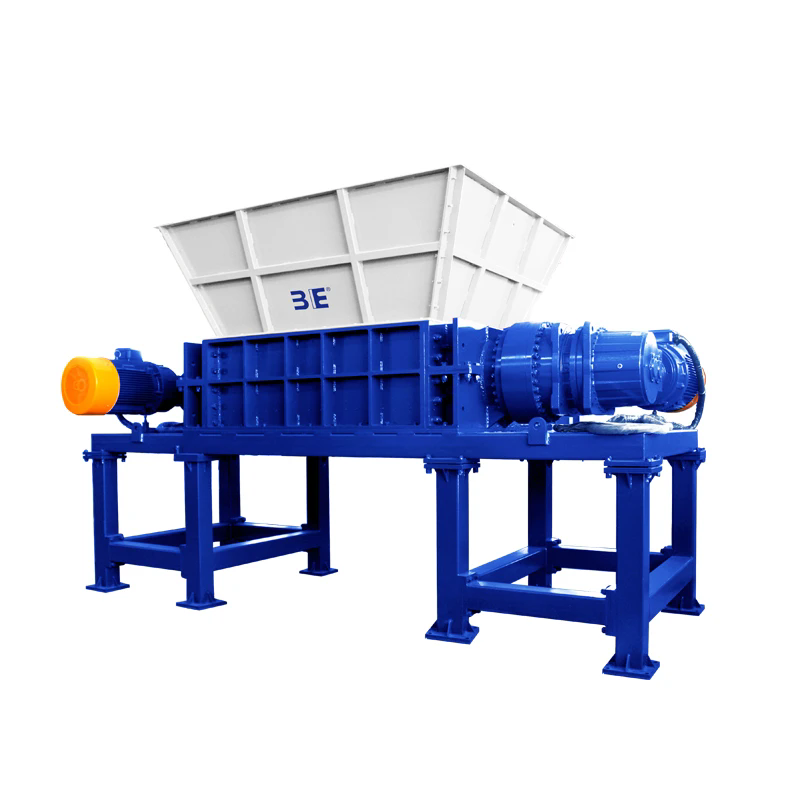
The central purpose of this article is to examine how Glass Shredder systems operate within contemporary recycling and industrial environments, how their engineering parameters align with operational demands, and how they integrate into evolving waste processing workflows. The discussion also addresses common operational questions and outlines the broader role of glass shredding within circular economy frameworks. All analysis is grounded in practical application and industry-recognized performance standards, reflecting real-world usage scenarios across municipal, commercial, and industrial sectors.
How Does a Glass Shredder Work Within Industrial Recycling Systems?
A Glass Shredder functions by applying controlled mechanical force to brittle glass materials, breaking them into predictable and reusable fragments. Unlike general-purpose crushers, glass shredders are engineered to minimize excessive fines while maintaining consistent output size, which is essential for glass remelting, construction aggregates, and filtration media production.
At the mechanical level, glass shredders typically employ hardened alloy steel blades or cutters mounted on single-shaft or dual-shaft configurations. These cutting elements rotate at low to moderate speeds with high torque, ensuring efficient size reduction without generating excessive dust or heat. The shredded material then passes through calibrated screens or discharge gaps, allowing precise control over particle dimensions.
To demonstrate the technical professionalism of the equipment, key parameters are summarized below in a single structured list:
-
Processing Capacity: 500 kg/h to 20,000 kg/h, depending on model and feed material
-
Input Material Types: Glass bottles, flat glass, laminated glass, tempered glass, mixed glass waste
-
Output Size Range: 5 mm to 50 mm (customizable via screen or cutter configuration)
-
Drive System: Electric motor with planetary gearbox or hydraulic drive
-
Blade Material: High-strength alloy steel with wear-resistant treatment
-
Noise Control: Enclosed housing with optional sound-dampening panels
-
Dust Management: Integrated extraction ports for connection to dust collection systems
-
Safety Features: Emergency stop, overload protection, and sealed cutting chamber
Within a complete recycling line, the Glass Shredder is often positioned after sorting and before washing or melting stages. This placement ensures optimal material flow and reduces wear on downstream equipment. The controlled shredding process also improves material purity, which directly impacts the economic value of recycled glass.
How Do Glass Shredders Adapt to Changing Industry Requirements and Regulations?
Glass recycling operations are subject to continuously evolving environmental standards and efficiency benchmarks. Glass Shredder systems have adapted through modular design concepts, allowing operators to reconfigure machines as feedstock composition or regulatory requirements change. Adjustable cutter spacing, interchangeable screens, and variable speed drives enable facilities to process different glass streams without replacing entire units.
From an operational perspective, energy efficiency has become a decisive factor. Modern glass shredders are designed to deliver high torque at low rotational speeds, significantly reducing energy consumption per ton processed. This approach also limits excessive wear, extending service intervals and lowering total cost of ownership.
Automation and monitoring technologies further enhance adaptability. Sensors can track load conditions, blade wear, and throughput consistency, allowing predictive maintenance strategies rather than reactive downtime. These capabilities align with smart factory initiatives and data-driven waste management practices increasingly adopted across developed markets.
Common Questions About Glass Shredders
Q: How is output size consistency maintained when processing mixed glass waste?
A: Output size is controlled through calibrated discharge screens and cutter geometry, ensuring uniform fragmentation even when feedstock varies in thickness and composition.
Q: What measures reduce equipment wear when handling abrasive glass materials?
A: Wear-resistant blade materials, optimized cutting angles, and low-speed high-torque operation significantly reduce abrasion and extend component lifespan.
These operational insights illustrate how Glass Shredder systems are engineered not only for performance, but also for long-term compliance and reliability within demanding industrial environments.
How Are Glass Shredders Positioned in the Broader Development of Recycling Infrastructure?
As recycling infrastructure continues to expand, glass shredding equipment plays an increasingly central role in material recovery strategies. Shredded glass is now widely used beyond traditional remelting applications, including road base materials, architectural aggregates, water filtration media, and insulation products. The ability to produce consistent, application-specific glass particles enhances market flexibility for recycling operators.
From a system integration perspective, Glass Shredders are designed to operate seamlessly with conveyors, separators, washing units, and storage silos. This interoperability supports scalable facility layouts, allowing recycling plants to expand capacity incrementally rather than through disruptive overhauls.
Manufacturers such as 3E MACHINERY have focused on engineering Glass Shredder solutions that balance durability, precision, and operational efficiency, supporting clients across recycling, manufacturing, and environmental services sectors. These systems are developed to meet international standards while remaining adaptable to regional processing requirements.
Organizations seeking to improve glass waste handling efficiency or upgrade existing recycling lines can benefit from professional consultation tailored to specific material streams and capacity goals. For further technical details, configuration guidance, or project discussions, interested parties are encouraged to contact us to explore suitable Glass Shredder solutions aligned with long-term operational objectives.