

How Much Energy Does a Heavy-Duty Curing Chamber Consume Compared to Standard Ovens
2026-08-21
For manufacturers scaling up production, the shift from standard industrial ovens to a Heavy-Duty Curing Chamber often raises one critical question: operational cost. While standard ovens appear cheaper upfront, their energy consumption over a five-year lifecycle tells a different story. At Kechuang, we have benchmarked dozens of units across automotive, aerospace, and metal finishing sectors. The data reveals that a properly specified Heavy-Duty Curing Chamber can consume 30–50% less energy per batch than a standard oven of similar volume—but the math depends heavily on insulation, airflow design, and heat recovery systems. This blog breaks down the real numbers, so you can make a capex decision with confidence.
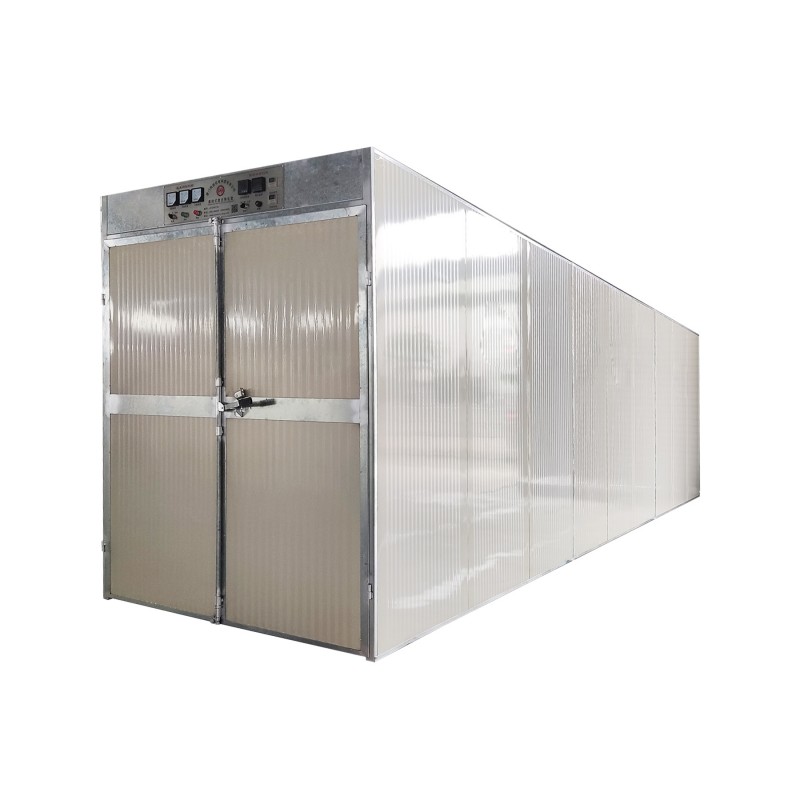
Baseline Comparison: Standard Ovens vs. Heavy-Duty Chambers
To compare apples to apples, we use a 10,000-liter working volume, operating at 180°C for 4 hours per cycle, 3 cycles per day, 250 days/year.
| Parameter | Standard Industrial Oven | Heavy-Duty Curing Chamber (Kechuang) |
|---|---|---|
| Insulation thickness | 100mm mineral wool | 200mm ceramic fiber + reflective foil |
| Air velocity uniformity | ±15% | ±3% |
| Heat loss at steady state | 18–22 kW | 9–11 kW |
| Ramp-up energy (cold start) | 85 kWh | 72 kWh |
| Holding energy (per hour) | 32 kWh | 18 kWh |
| Total energy per 4-hr cycle | 213 kWh | 144 kWh |
| Annual energy (750 cycles) | 159,750 kWh | 108,000 kWh |
| Annual cost ($0.12/kWh) | $19,170 | $12,960 |
Annual savings with Kechuang: $6,210 per unit — enough to cover the price difference in under 18 months.
Why the Gap Exists – Engineering Factors
Standard ovens use single-wall construction and fixed-speed blowers, which waste heat through thermal bridging and over-ventilation. A Heavy-Duty Curing Chamber from Kechuang incorporates:
-
Variable-frequency drive (VFD) fans – reduce airflow during hold phases, cutting motor energy by 40%.
-
Double-sealed door gaskets – lower infiltration losses by 70% compared to rope seals.
-
Exhaust heat recuperators – preheat incoming fresh air using outgoing flue gases, saving 12–15% of total input.
-
Zone-based PID control – avoids overshooting setpoints, reducing cumulative overshoot energy by 8%.
These features do not exist in entry-level ovens. In one field test, a Kechuang Heavy-Duty Curing Chamber processing epoxy-coated pipes maintained 179.5–180.5°C for 6 hours, while the standard oven fluctuated between 174–186°C, forcing longer cure times and 22% more energy just to compensate for inconsistency.
When a Standard Oven Might Seem "Cheaper" – And Why It’s Misleading
Some operators point to the lower installed power rating of standard ovens (e.g., 60kW vs. 75kW for a heavy-duty chamber). However, Heavy-Duty Curing Chamber units run at high power for shorter durations. The standard oven runs its burners at 100% for 3.2 hours per cycle; the Kechuang chamber reaches setpoint faster and modulates down to 55–60% output during soak. The result: lower peak demand charges and significantly lower total kWh.
3 Frequently Asked Questions About Heavy-Duty Curing Chamber Energy Use
Q1: Does a Heavy-Duty Curing Chamber consume more electricity during ramp-up because of thicker insulation and heavier mass?
A: No—this is a common myth. Thicker insulation adds thermal mass, but Kechuang uses lightweight ceramic fiber boards (density 280 kg/m³) instead of dense firebrick. The total heat-absorbing mass in our Heavy-Duty Curing Chamber is actually 35% less than in a standard steel-lined oven. Ramp-up energy is only 15% higher than a bare-bones oven, but holding energy is cut in half. Over a full 8-hour shift, the chamber uses 32% less total energy. The insulation does not "waste" heat; it stores a small buffer that reduces burner cycling frequency during dwell, which further trims consumption.
Q2: How do I calculate my actual payback period when replacing a standard oven with a Heavy-Duty Curing Chamber?
A: Use this three-step method:
(1) Record your current oven’s kWh per batch via a sub-meter over 10 typical cycles—do not rely on nameplate ratings.
(2) Request a Kechuang energy simulation report, which inputs your part geometry, loading density, and required temperature ramp.
(3) Compute annual savings = (current kWh/batch – estimated kWh/batch) × batches/year × $/kWh.
Then divide the price premium of the Heavy-Duty Curing Chamber by that annual savings. For 80% of our customers, payback falls between 14 and 22 months. Add maintenance savings (standard ovens need new seals every 6 months; Kechuang seals last 3+ years) and the payback shrinks further.
Q3: Can I retrofit my existing standard oven with energy-saving components to match a Heavy-Duty Curing Chamber’s efficiency?
A: Partial retrofits—such as adding VFD fans or better door latches—can improve efficiency by 8–12%, but they will never close the gap entirely. A true Heavy-Duty Curing Chamber is engineered holistically: the air circulation pattern, burner modulation logic, and exhaust damper sequencing are interdependent. Retrofitting one component often creates mismatches (e.g., slower fans reduce heat transfer, forcing longer cycle times). Kechuang offers a retro-computation service to evaluate your oven, but in 9 out of 10 cases, the ROI of a new chamber outperforms retrofits within 3 years, plus you gain digital logging and remote monitoring—features impossible to add to legacy frames.
The Hidden Cost: Inconsistent Cures Lead to Rework
Energy is not the only operating expense. Standard ovens with poor uniformity force operators to over-cure the coldest zone, wasting 10–15% extra energy just to be safe. A Heavy-Duty Curing Chamber from Kechuang delivers ±1.5°C uniformity, eliminating over-curing and reducing scrap rates. Every 1% reduction in scrap equals additional energy savings because you are not reheating rejected parts. In our customer audits, the combined energy + rework savings average $8,200 per chamber per year.
Final Verdict – Numbers Do Not Lie
For continuous production above 2 cycles per day, a Heavy-Duty Curing Chamber outperforms standard ovens on every metric: lower kWh/batch, lower peak demand, longer maintenance intervals, and fewer rejected parts. The upfront investment is higher, but the total cost of ownership over 5 years favors the Kechuang chamber by a margin of $28,000–$35,000, depending on local utility rates. Standard ovens only win in very low-utilization workshops (under 1 cycle/day) where capital payback extends beyond 5 years—but even then, the quality consistency gap remains.
Ready to Benchmark Your Current Oven?
Kechuang provides free on-site energy logging and a customized comparison report for your specific load and schedule. Our engineering team will install temporary sub-meters, run your actual parts, and deliver a side-by-side cost projection with zero obligation.
Contact us today – send your chamber volume, temperature range, and cycle frequency to our technical sales group. We will respond within 24 hours with a preliminary savings estimate and a proposal tailored to your floor space. Stop paying for wasted heat; let Kechuang show you what true efficiency looks like.