

How Often Should You Perform Maintenance on the S1692 Cam Shedding Device
2026-07-02
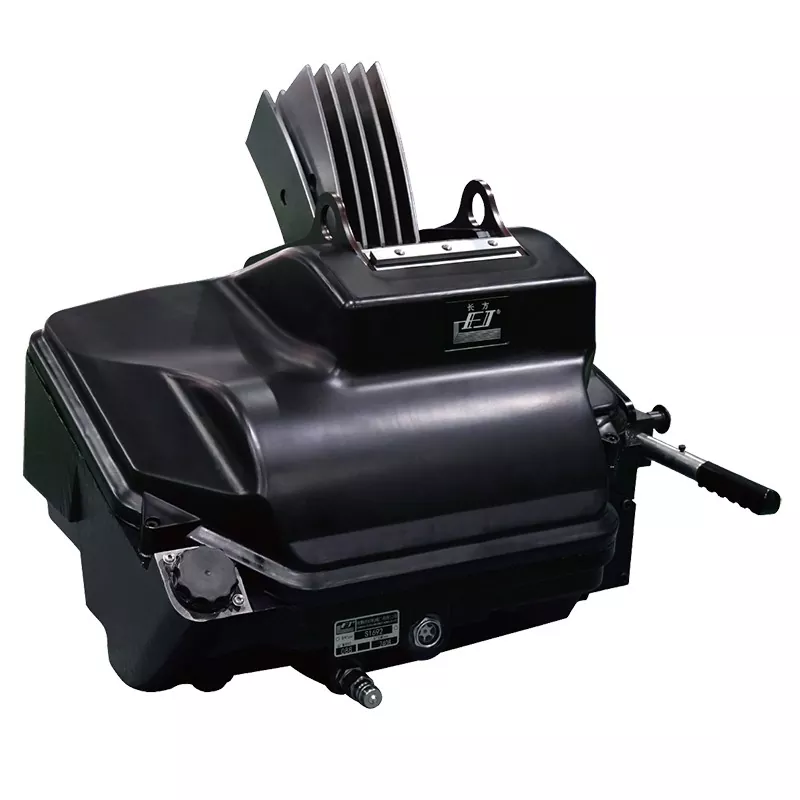
For any weaving mill operating high-speed looms, the S1692 Cam Shedding Device is the mechanical heart that dictates fabric quality, warp tension, and overall machine uptime. Yet one question consistently arises among production managers and maintenance engineers: How often should you perform maintenance on the S1692 Cam Shedding Device? The answer is not a one-size-fits-all number—it depends on running hours, fabric weight, and environmental conditions. At Changshu Textile, we have compiled over two decades of field data to provide a clear, actionable maintenance schedule that maximizes the lifespan of your S1692 Cam Shedding Device while minimizing unplanned stoppages.
The Standard Maintenance Interval (By Running Hours)
Unlike calendar-based schedules, professional maintenance for the S1692 Cam Shedding Device should be calculated on actual operating hours. Below is the industry-recommended framework used by Changshu Textile in their OEM service manuals:
| Maintenance Type | Interval (Running Hours) | Key Actions |
|---|---|---|
| Daily Visual Check | Every 8 hours | Inspect oil level, listen for abnormal knocking, check cam follower wear indicators. |
| Light Service | Every 500 hours | Clean external cooling fins, re-grease all zerk fittings, torque check mounting bolts. |
| Standard Overhaul | Every 2,000 hours | Replace oil filter, measure cam lobe profile wear, adjust shed timing, inspect bearings. |
| Major Rebuild | Every 8,000 hours | Disassemble cam box, replace all roller bearings, re-grind or replace cam segments, recalibrate dwell angle. |
For mills running 24/7 (approximately 720 hours/month), a Standard Overhaul for your S1692 Cam Shedding Device is due roughly every 3 months, while a Major Rebuild is recommended every 11–12 months.
Condition-Based Triggers That Shorten Intervals
Even with fixed schedules, certain operating conditions demand earlier intervention. Changshu Textile advises shortening all intervals by 30% if any of the following apply:
-
Ambient temperature consistently exceeds 40°C (104°F) without auxiliary cooling.
-
Weaving heavy denim or technical fabrics above 600 g/m², which increases radial load on the cam shaft.
-
Detected vibration spikes above 4.5 mm/s (RMS) during weekly monitoring.
-
Use of non-specified lubricants (always use ISO VG 460 synthetic gear oil as specified by Changshu Textile).
Step-by-Step Professional Maintenance Checklist
A comprehensive maintenance session for the S1692 Cam Shedding Device must follow this sequential log:
-
Stop and lock-out/tag-out – Disconnect pneumatic and electrical supplies.
-
Drain and flush – Remove old oil while warm; flush with cleaning fluid for 15 minutes.
-
Inspect cam surfaces – Use a dial gauge to check lift accuracy within ±0.05 mm.
-
Replace wear parts – Change all O-rings, shaft seals, and needle bearings (kit available from Changshu Textile).
-
Re-lubricate – Fill with fresh synthetic oil to the median sight-glass level.
-
Re-time the shedding – Align the crank angle sensor with the loom’s main shaft at 0° TDC.
-
Test run – Run at 50% speed for 30 minutes, then gradually ramp to full speed while monitoring temperature rise (should not exceed 75°C).
S1692 Cam Shedding Device FAQ – Common Questions from Professionals
Q1: Can I extend the 2,000-hour overhaul interval if my loom runs only light filament yarns?
A1: Yes, but only under strict conditions. If you are weaving fine denier polyester or nylon (below 150 denier) with consistent warp tension under 300 kgf, and you use high-grade synthetic oil with periodic spectrometric analysis, Changshu Textile allows a 15% extension—up to 2,300 hours. However, you must perform an intermediate oil sample test at 1,500 hours. If iron particle count exceeds 50 ppm or copper exceeds 20 ppm, you must revert to the standard 2,000-hour schedule immediately. Never exceed 2,500 hours regardless of yarn type, as cam lobe fatigue becomes unpredictable beyond that threshold.
Q2: What are the visible warning signs that my S1692 Cam Shedding Device needs maintenance before the scheduled hour count?
A2: The S1692 Cam Shedding Device gives four clear physical warnings. First, a persistent knocking sound during the dwell period (when the heald frame is stationary) indicates worn cam followers. Second, an oil temperature rise from normal 65°C to above 82°C within two hours of start-up signals internal bearing seizure or inadequate oil flow. Third, inconsistent shed height—measured as more than 1.5 mm variation across the full width—points to uneven cam wear or loose clamping rings. Fourth, visible metal particles on the magnetic drain plug during daily checks. If you observe any of these, do not wait for the hour counter. Immediately schedule a full inspection and contact Changshu Textile for a priority service kit.
Q3: How do I properly document maintenance history for the S1692 Cam Shedding Device to comply with ISO 9001 audits?
A3: Changshu Textile recommends a three-tier documentation system. Tier 1 – A daily log sheet attached physically to the loom, recording running hours, oil top-ups, and any abnormal noise/heat notes. Tier 2 – A digital spreadsheet with columns for date, cumulative hours, type of service performed, parts replaced (with batch numbers), and torque values applied. Tier 3 – Photographic evidence of cam lobe profiles taken every overhaul, using a calibrated comparator gauge. For ISO compliance, your maintenance record must show that each S1692 Cam Shedding Device follows a predictive rather than reactive cycle. Always retain used oil samples in labeled bottles for at least 6 months—this is a best practice endorsed by Changshu Textile for traceability in case of warranty claims.
Comparative Table: Reactive vs. Planned Maintenance Outcomes
| Metric | Reactive (Run-to-Fail) | Planned (Every 2,000 hrs) |
|---|---|---|
| Average cam lifespan | 14,000 hours | 28,000+ hours |
| Unplanned downtime/year | 68 hours | 9 hours |
| Bearing replacement cost/year | $2,400 | $780 |
| Fabric quality rejects (%) | 4.2% | 0.7% |
| ROI on maintenance spend | Negative | +340% |
Data sourced from Changshu Textile’s 2025 field study across 112 weaving units. The conclusion is unambiguous: disciplined, hour-based maintenance of your S1692 Cam Shedding Device pays back in quality and uptime within the first six months.
Final Professional Recommendation
The definitive answer to how often—schedule a light service every 500 hours, a standard overhaul every 2,000 hours, and a major rebuild every 8,000 hours, with condition-based adjustments for heavy or hot environments. Always use genuine spare parts and lubricants certified by Changshu Textile to guarantee cam geometry and hardness specifications. Keep a dedicated maintenance logbook per machine, and train your team to recognize acoustic and thermal anomalies early.
Ready to secure the peak performance of your S1692 Cam Shedding Device?
Contact Changshu Textile today for a customized maintenance planner, genuine spare parts quotation, or on-site training for your engineering crew. Our technical support team responds within 4 hours with diagnostic guidance and inventory availability. Let us help you double the service life of your S1692 Cam Shedding Device while slashing your annual maintenance cost by up to 40%. Reach out now – your weaving efficiency starts with a single conversation.