

How Often Should You Replace Seals and Gaskets on a Carbonated Beverage Filling Machine
2026-09-08
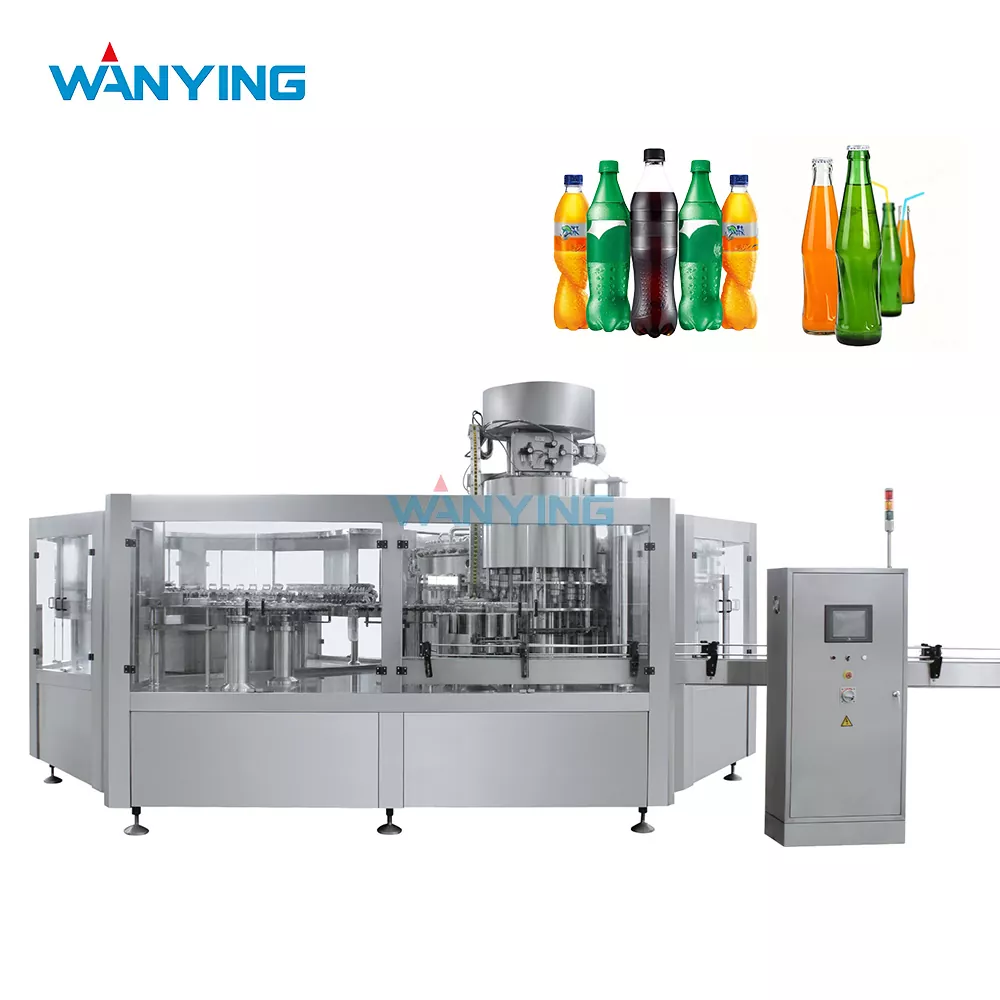
For any production manager overseeing a high-speed bottling line, the Carbonated Beverage Filling Machine is the heart of the operation. At Wanying, we have spent over a decade analyzing maintenance logs from hundreds of beverage plants, and one question consistently arises: what is the real-world replacement cycle for seals and gaskets? The answer is not a fixed number—it depends on production volume, operating pressure, cleaning frequency, and the specific material of the sealing components. This guide provides a data-driven maintenance framework to help you minimize unplanned downtime and preserve beverage quality.
The Science Behind Seal and Gasket Wear
Seals and gaskets in a Carbonated Beverage Filling Machine perform three critical functions: containing CO₂ pressure (typically 4–6 bar), preventing oxygen ingress, and resisting aggressive CIP (Clean-in-Place) chemicals. Over time, three degradation mechanisms take effect:
-
Mechanical fatigue from repeated filling valve actuation (cycles can exceed 500,000 per month).
-
Chemical swelling caused by caustic soda and acid rinses during daily sanitation.
-
Thermal cycling between cold product (2–4°C) and hot water sterilization (85–90°C).
Recommended Replacement Intervals by Component Type
The table below outlines Wanying’s recommended schedules based on field data from over 200 installed units:
| Component | Material | Light Duty (< 8 hrs/day) | Medium Duty (8–16 hrs/day) | Heavy Duty (> 16 hrs/day) |
|---|---|---|---|---|
| Filling valve stem seals | EPDM / PTFE | 12 months | 8 months | 6 months |
| Manifold gaskets | Silicone / NBR | 18 months | 14 months | 10 months |
| CO₂ injection nozzle O-rings | FKM (Viton) | 10 months | 7 months | 5 months |
| CIP cover gaskets | EPDM | 24 months | 18 months | 12 months |
| Bowl-to-head block gaskets | PTFE-encapsulated | 36 months | 28 months | 20 months |
Note: These intervals assume proper lubrication and correct torque settings. Under severe conditions (e.g., high-fruit-content syrups), reduce all timelines by 20%.
Five Warning Signs That Replacement Is Overdue
Even with a scheduled plan, visual and operational inspections are non-negotiable. Replace any seal or gasket immediately if you observe:
-
Persistent micro-foaming at the filling valve exit – indicates incomplete sealing.
-
CO₂ pressure decay exceeding 0.3 bar per hour during idle holding tests.
-
Black or white particulate in the product filter – a sign of elastomer shedding.
-
Visible cracking, flattening, or hardness loss (compare with a new spare).
-
Inconsistent fill heights (± 2 mm variation) that cannot be corrected by servo adjustment.
Step-by-Step Best Practice for Replacement
Wanying recommends the following workflow to avoid cross-contamination and assembly errors:
-
Depressurize the bowl and purge all CO₂ to atmospheric pressure.
-
Document the orientation and stacking sequence of each seal (use a digital photo).
-
Clean the gland and groove surfaces with a non-abrasive pad and food-grade alcohol.
-
Lubricate the new seal with a thin, even coat of food-grade silicone grease (approved for beverage contact).
-
Reassemble using a torque wrench – over-tightening is a leading cause of premature failure.
-
Perform a leak test at 1.5× operating pressure for 15 minutes before restarting production.
Critical Factors That Shorten Seal Life
-
Ozone-treated water in CIP cycles accelerates oxidation in NBR materials – switch to EPDM.
-
High ambient temperatures (>40°C) in the filling room increase compression set rate by 40%.
-
Frequent start/stop cycles (more than 20 per shift) cause abrasive wear from dry-running.
-
Incorrect shaft surface roughness (Ra > 0.8 μm) acts as a file on soft elastomers.
Carbonated Beverage Filling Machine FAQ – Common Questions from Plant Engineers
Q: Can I replace only the damaged seal, or should I replace all seals in the same valve bank at once?
A: Wanying strongly advises replacing all seals within the same valve bank simultaneously. While it appears cost-effective to change only the failed unit, the remaining seals have experienced identical cycle counts and thermal stress. Within 2–4 weeks, the next weakest seal will fail, forcing a second downtime event. Our field data shows that full-bank replacement reduces total annual downtime by 63% compared to piecemeal repairs. Always keep a complete valve bank seal kit as a standard spare part.
Q: How do I verify the correct hardness (durometer) for replacement seals on my Carbonated Beverage Filling Machine?
A: The optimal hardness range for most filling valves is Shore A 70–75 for EPDM and Shore A 80–85 for FKM. To verify, use a portable durometer tester on a new, unused seal from your current stock. Compare this reading against the original equipment specification (found in your Wanying machine manual). If the replacement seal is 5 points softer, it will extrude under CO₂ pressure; if 5 points harder, it will lose compression set resistance. Never rely solely on color or visual appearance – always confirm the durometer and the FDA / EU 1935/2004 compliance certificate before installation.
Q: What is the proper storage life for spare seals, and how should they be kept before use?
A: Unopened EPDM and FKM seals have a shelf life of 5 years when stored in a cool, dark, and dry environment (15–25°C, <65% RH). Avoid direct contact with copper, manganese, or ozone-generating equipment (e.g., electric motors without shielding). Wanying recommends a first-in-first-out inventory system and a visual inspection before every installation – look for surface bloom, tackiness, or permanent deformation from improper stacking. Seals that have been stored for more than 3 years should be tested for tensile strength and elongation before being placed into service on a Carbonated Beverage Filling Machine.
The Financial Case for Proactive Replacement
A single seal failure on a Carbonated Beverage Filling Machine typically causes:
-
45–90 minutes of production loss (worth $1,200–$2,500 in bottled product).
-
200–500 liters of product waste due to foaming and underfills.
-
Potential quality hold on an entire batch (up to 10,000 bottles).
Scheduled replacement of a complete seal set costs roughly the same as one unplanned hour of downtime. Therefore, preventive replacement is not an expense – it is a high-ROI insurance policy.
Summary Checklist for Maintenance Planners
| Action | Frequency | Responsible Role |
|---|---|---|
| Visual inspection of all visible seals | Daily (pre-start) | Line Operator |
| Torque check on manifold bolts | Weekly | Maintenance Technician |
| CO₂ leak rate measurement | Monthly | Quality Engineer |
| Full seal bank replacement (per table above) | Per duty schedule | Maintenance Supervisor |
| Durometer sampling from incoming spare lots | Every new batch | Stores Controller |
Partner with Wanying for Long-Term Reliability
Effective seal management requires more than a calendar – it demands technical insight, quality spare materials, and proven procedures. Wanying supplies precision-engineered seal kits with traceable material certificates, along with remote diagnostic support to help you interpret wear patterns before they become failures. Our team has assisted over 300 beverage plants in North America and Europe to extend their mean time between failures (MTBF) by an average of 42%.
Contact us today with your machine model, daily operating hours, and product type – we will send you a customized seal replacement schedule and a complimentary torque specification card for your Carbonated Beverage Filling Machine. Reach out via our website or email [email protected], and let us keep your line running at peak efficiency, bottle after bottle.