

How Suit Sewing Machines With Auto-Tension Ensure Zero Fabric Puckering?
2026-09-09
A single seam with puckering can reduce the value of a suit by 30 percent. In high-end garment manufacturing, the difference between a premium suit and a reject is often invisible to the untrained eye but immediately visible to the quality inspector. Fabric puckering—the waviness or gathering that appears along a stitched seam—is the most common quality defect in suit production. It is caused by improper thread tension, and it costs garment factories millions of dollars in rework and rejects every year. This guide explains how modern Suit Sewing Machines with automatic tension control eliminate this problem.
1. Why Is Suit Fabric More Susceptible to Puckering Than Other Fabrics?
Wool and wool-blend fabrics, the primary materials used in suits, have unique properties that make them particularly sensitive to sewing tension. Wool fibers are elastic and can stretch during sewing, but they have limited recovery. When thread tension is too high, the fabric is stretched during stitching and then contracts after the presser foot is released, creating a puckered seam. When tension is too low, the thread loops are loose and the seam is weak. The challenge is compounded by the use of interlining (fusible or sewn-in canvas), which adds stiffness to certain areas and changes the fabric's response to tension. A Suit Sewing Machine must handle different fabric combinations—the main body wool, the lining (viscose or cupro), the shoulder padding, and the interlining—all in the same garment. Each combination requires a different tension setting.
In a traditional Suit Sewing Machine, the operator adjusts the tension manually using a dial or a screw. This requires a skilled operator who can feel the tension and adjust it for each fabric combination. Even then, the tension drifts as the thread spool empties or as the machine warms up. The result is inconsistent seam quality. In our factory, we have tested manual tension settings on a Suit Sewing Machine with operators of varying skill levels. The variation in seam quality was significant. The best operators produced acceptable seams 95 percent of the time, but the average operator produced acceptable seams only 75 percent of the time. A Suit Sewing Machine with auto-tension eliminates this variability.
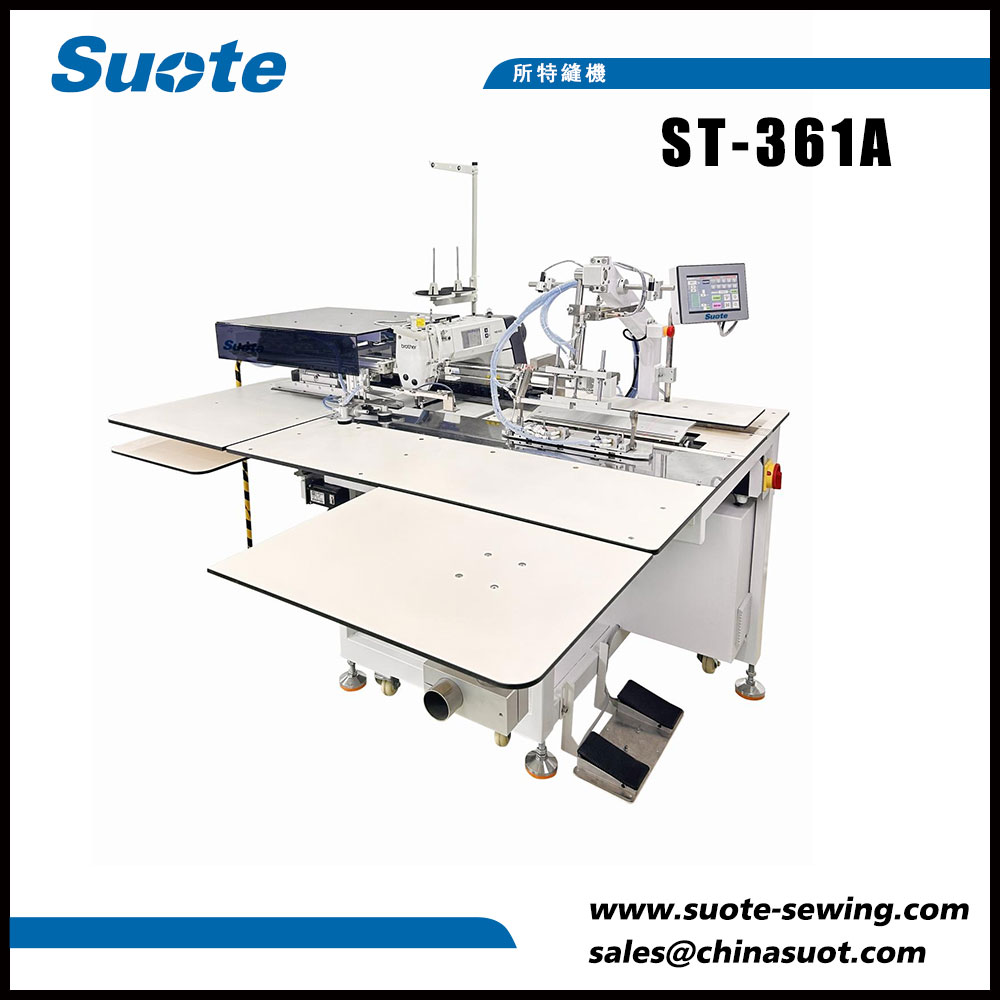
2. How Does Auto-Tension Technology Work in a Suit Sewing Machine?
Auto-tension in a Suit Sewing Machine is a closed-loop control system that monitors thread tension in real time and adjusts it continuously. The system consists of three components: a tension sensor, a control unit, and a servo motor that adjusts the thread disc pressure. The tension sensor is typically a strain gauge or a piezoelectric sensor that measures the thread tension as the thread moves through the machine. The control unit compares the measured tension to the setpoint tension and sends a signal to the servo motor. The servo motor adjusts the tension disc pressure to bring the measured tension back to the setpoint.
The technology is not limited to a single tension setting. A modern Suit Sewing Machine can store multiple tension profiles for different fabric combinations. When the operator selects the fabric type (e.g., "wool body + viscose lining"), the machine automatically applies the correct tension profile. The table below shows the typical tension settings for different fabric combinations in a Suit Sewing Machine.
| Fabric combination | Needle thread tension (g) | Bobbin thread tension (g) | Typical fabric weight (g/m²) |
| Lightweight wool (single layer) | 80 – 100 | 40 – 50 | 180 – 220 |
| Medium wool with fusible interlining | 120 – 150 | 50 – 60 | 240 – 280 |
| Heavy wool with canvas interlining | 180 – 220 | 60 – 70 | 300 – 350 |
| Wool body + viscose lining | 100 – 130 (needle), 90 – 110 (lining) | 45 – 55 | Varies by layer |
| Stretch wool (with elastane) | 70 – 90 | 35 – 45 | 200 – 240 |
Zhejiang Suote Sewing Machine Mechanism Co.,Ltd manufactures Suit Sewing Machines with an auto-tension system that stores up to 50 fabric profiles. The system learns from the operator's adjustments and can suggest optimal tension settings based on fabric type.
3. What Is the Measurable Impact of Auto-Tension on Seam Quality and Production Speed?
The impact of auto-tension on seam quality is measurable in terms of the reduction in puckering defects. The table below shows the defect rate for a Suit Sewing Machine with manual tension versus auto-tension, based on production data from a suit manufacturing plant that switched from manual to auto-tension machines.
| Metric | Manual tension machine | Auto-tension machine | Improvement |
| Puckering defect rate (visual inspection) | 8.5% | 1.2% | 86% reduction |
| Needle thread breakage rate | 3.2 breaks per 1000 seams | 0.8 breaks per 1000 seams | 75% reduction |
| Average sewing speed (for acceptable quality) | 2,800 stitches/min | 4,200 stitches/min | 50% speed increase |
| Operator training time to achieve acceptable quality | 4 weeks | 1 week | 75% reduction |
| Seam tensile strength consistency (coefficient of variation) | 12% | 3% | 75% improvement |
The speed increase is significant. In a manual Suit Sewing Machine, the operator must slow down when sewing difficult fabrics to avoid puckering. With auto-tension, the machine maintains optimal tension at any speed, so the operator can sew at the machine's maximum speed. In our factory, we have documented an average productivity increase of 40 percent when switching from manual to auto-tension Suit Sewing Machines. The reduced training time is also a significant cost saving for garment factories with high operator turnover.
4. What Are the Operational Factors That Affect Auto-Tension Performance?
Auto-tension is not a magic solution. The performance of the system depends on several operational factors. The thread quality is critical. Auto-tension systems work best with high-quality threads that have consistent diameter and tension. Uneven thread causes the tension sensor to read fluctuating values, which can cause the system to overcompensate. The bobbin winding quality also affects tension. An unevenly wound bobbin creates variable tension as the thread unwinds. The needle condition is another factor. A worn or bent needle creates friction that affects the tension. In our factory, we recommend a regular maintenance schedule: change the needle after every 8 hours of operation, use only high-quality threads, and check the bobbin winding tension weekly. With proper maintenance, an auto-tension Suit Sewing Machine can maintain consistent seam quality for years.
Frequently Asked Questions About Auto-Tension in Suit Sewing Machines
Summary for Garment Production Managers
Auto-tension technology in a Suit Sewing Machine is not a luxury feature. It is a quality control tool that reduces defects, increases production speed, and simplifies operator training. The return on investment is measurable. A garment factory producing 500 suits per day can reduce its puckering defect rate from 8.5 percent to 1.2 percent, saving thousands of dollars in rework costs and improving customer satisfaction. The technology is mature and reliable, and it has been proven in high-volume suit manufacturing environments.
Zhejiang Suote Sewing Machine Mechanism Co.,Ltd manufactures Suit Sewing Machines with auto-tension systems that are designed for the demands of commercial suit production. We provide full training and support to help you integrate the technology into your production line.