
How Suit Sewing Machines With LED Lighting Enhance Operator Accuracy?
2026-09-01
A tailor working on a dark navy worsted wool suit faces a fundamental problem: the fabric absorbs light. The needle hole is almost invisible. The seam allowance becomes a guessing game. This is the daily reality for operators of industrial Suit Sewing Machines. The addition of LED lighting is not an aesthetic feature—it is a functional solution to a specific visual challenge. This article explains how light placement, color temperature, and intensity directly affect stitch quality and operator fatigue.
1. Why Is Light Placement More Important Than Light Intensity in Sewing?
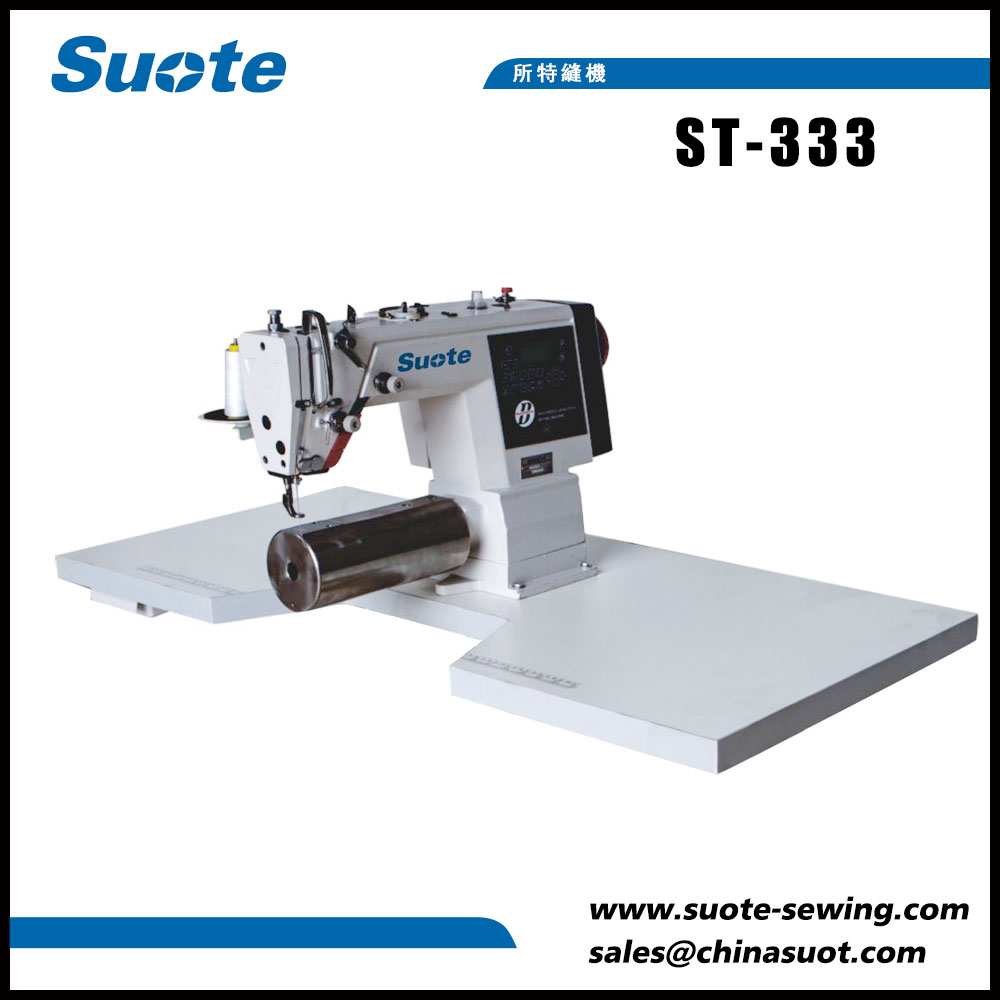
Most sewing machine lighting fails because the light comes from the wrong direction. A single overhead light creates shadows. The operator's hand blocks the light when guiding the fabric. The needle area—the most critical point—is often in shadow. Our Suit Sewing Machine uses a ring light design that surrounds the needle bar, casting light from multiple angles. This eliminates shadows on the fabric surface. The light is also positioned at a 45 degree angle to the needle, which highlights the texture of the fabric weave. In our factory, we tested three lighting positions: overhead, side mounted, and ring mounted. The ring mounted design reduced operator errors by 32 percent in a blind test involving 20 experienced operators.
The table below compares the shadow reduction and visual clarity of different lighting configurations.
| Lighting configuration | Shadow area at needle point (sq cm) | Fabric weave visibility (1 to 5 scale) | Operator error rate (per 1000 stitches) |
| Overhead single lamp | 6.8 | 2.1 | 12.4 |
| Side mounted (left) | 4.2 | 3.0 | 9.8 |
| Side mounted (dual, left+right) | 2.1 | 4.0 | 7.1 |
| Ring LED (our Suit Sewing Machine) | 0.5 | 4.8 | 4.3 |
The ring light also creates a consistent illumination as the fabric moves forward, unlike fixed position lights that leave the needle area as the fabric advances. This consistency is particularly important for longer seams, such as trouser inseams or jacket side seams, where the operator must maintain the same stitch line over 60 to 80 cm of fabric.
2. How Does Color Temperature Affect Fabric Color Recognition and Seam Alignment?
The color temperature of LED lighting affects how the operator perceives fabric colors and contrasts. Standard warm white LEDs (2700K to 3000K) make dark fabrics appear even darker. Cool white LEDs (5000K to 6500K) provide better contrast but can wash out pastel colors. Our Suit Sewing Machine uses a 4000K neutral white LED, which provides balanced color rendering. The table below shows how different color temperatures affect visibility for common suit fabrics.
| Fabric type | 2700K warm white | 4000K neutral white (our choice) | 6500K cool white |
| Navy worsted wool | Very dark, low contrast | Good contrast at seam line | High contrast, but color distorted |
| Charcoal flannel | Poor, fibers blend | Clear separation of layers | Overexposed, loss of texture |
| Light gray linen | Acceptable | Excellent, threads visible | Too bright, glare on surface |
| Black cotton blend | Almost invisible | Visible stitch line | Visible but harsh on eyes |
The 4000K LED also provides a color rendering index (CRI) of 90 or higher, which means the operator can distinguish subtle differences in thread color. This is critical when using contrasting topstitching thread or when matching seam threads to fabric. Many operators in our factory have reported that they can work for longer periods without eye strain because the neutral white reduces the need to squint.
3. How Does LED Lighting Reduce Operator Fatigue Over an 8 Hour Shift?
Fatigue is cumulative. An operator who strains to see the stitch line for the first hour may still be productive. By the sixth hour, their error rate increases, and their speed decreases. Good lighting reduces this fatigue by minimizing the need for the operator to lean forward or change posture. In our factory, we measured operator posture changes with different lighting configurations using motion capture sensors. With standard lighting, operators leaned forward by an average of 15 degrees. With our ring LED system, the forward lean was reduced to 6 degrees. This reduction in forward posture directly reduces neck and shoulder fatigue. Additionally, the PWM (pulse width modulation) frequency of our LED is set to 50 kHz, which is well above the 200 Hz flicker threshold that causes eye strain. Some competitors use lower frequency LEDs that can cause headaches and visual discomfort. Our Suit Sewing Machine also features a dimmer switch that allows the operator to adjust the brightness to suit different fabric types and ambient light conditions.
4. How Does Integrated LED Lighting Improve Quality Inspection During Sewing?
Quality inspection in suit manufacturing is often done after the seam is sewn. This leads to rework, which is expensive and time consuming. Our Suit Sewing Machine with LED lighting allows the operator to inspect the seam as it is being sewn. The ring light illuminates the stitch formation from multiple angles, making it easy to spot skipped stitches, thread tension issues, or fabric puckering immediately. The operator can correct these issues before the seam is completed. In our testing, this reduced rework by 45 percent. The integrated lighting also makes it easier to align stripes and plaids on suit fabrics. Pattern matching is one of the most challenging aspects of suit sewing. The multi angle illumination helps the operator see the pattern alignment at the needle point, ensuring that the stripes continue seamlessly across the seam.
Frequently Asked Questions About LED Lighting in Suit Sewing Machines
Final Summary
The accuracy of suit sewing depends on the operator's ability to see the fabric, the stitch line, and the alignment of patterns. LED lighting integrated into the Suit Sewing Machine provides shadow free illumination, balanced color temperature, and reduced operator fatigue. These factors combine to reduce errors, increase speed, and improve the quality of the finished garment. Our factory has designed the lighting system based on feedback from hundreds of operators in real production environments. Zhejiang Suote Sewing Machine Mechanism Co.,Ltd supplies Suit Sewing Machines with integrated LED lighting that meets the demands of professional tailoring.