

How Suit Sewing Machines With Servo Motors Reduce Plant Energy Consumption?
2026-10-16
A garment factory manager reviews the monthly electricity bill. The factory has 200 Suit Sewing Machine units. The motors are older clutch type. The electricity bill for the sewing floor is $4,800 per month. The manager receives a proposal to replace the clutch motors with servo motors. The proposal claims a 40 percent reduction in energy consumption. The manager is skeptical. The machines are used for 10 hours per day. The operators stop and start frequently. The manager decides to run a trial on 20 machines. After one month, the trial group shows a 38 percent reduction in energy consumption. The manager approves the full retrofit. This guide explains why servo motors reduce energy consumption and how the savings are achieved.
1. What Is the Difference Between a Clutch Motor and a Servo Motor?
A clutch motor runs continuously at full speed. When the operator presses the pedal, a mechanical clutch engages the sewing machine. When the operator releases the pedal, the clutch disengages, but the motor continues to run at full speed. The motor consumes power even when the machine is not sewing. A servo motor runs only when the operator presses the pedal. When the pedal is released, the motor stops. The servo motor also uses a feedback loop to maintain the set speed, regardless of the load. The table below compares the operating characteristics of the two motor types.
| Parameter | Clutch motor | Servo motor |
| Power consumption at idle | 300 – 500 W | < 5 W |
| Power consumption at full speed | 550 – 750 W | 400 – 550 W |
| Power consumption at low speed | 550 – 750 W (motor runs full speed) | 150 – 250 W |
| Starting torque | Moderate | High |
| Noise level | 75 – 85 dB | 60 – 70 dB |
| Maintenance | Clutch replacement, brake adjustment | Minimal (no clutch) |
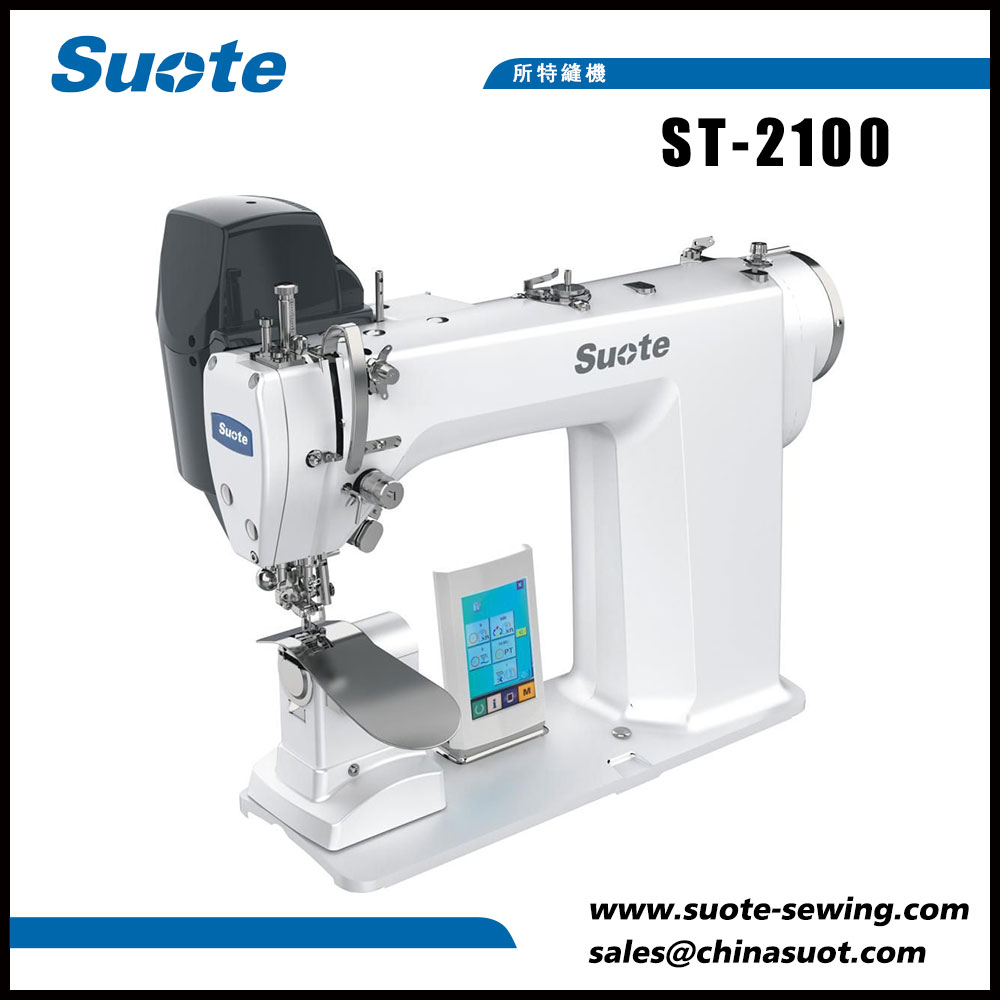
In our factory, we manufacture Suit Sewing Machine units with servo motors as the standard configuration. The servo motor eliminates the clutch and the continuous idle consumption. The motor is controlled by a digital signal processor that adjusts the speed and torque based on the pedal position. Zhejiang Suote Sewing Machine Mechanism Co.,Ltd has been manufacturing sewing machine mechanisms for over 15 years.
2. How Much Energy Is Saved by Eliminating Idle Running?
The biggest energy saving from a servo motor comes from the elimination of idle running. In a typical garment factory, the sewing machine is actually stitching for 40 to 60 percent of the working time. The rest of the time is spent handling the fabric, aligning the seams, and changing the thread. During these non-stitching periods, the clutch motor continues to run at full speed, consuming 300 to 500 watts. The servo motor stops and consumes less than 5 watts. The table below shows the energy consumption for a 10-hour shift with 50 percent stitching time.
| Operating mode | Clutch motor power | Servo motor power | Duration per shift | Clutch motor energy | Servo motor energy |
| Stitching at full speed | 650 W | 500 W | 5 hours | 3,250 Wh | 2,500 Wh |
| Stitching at low speed | 650 W | 200 W | 2 hours | 1,300 Wh | 400 Wh |
| Idle (handling fabric) | 400 W | 5 W | 3 hours | 1,200 Wh | 15 Wh |
| Total per shift | N/A | N/A | 10 hours | 5,750 Wh | 2,915 Wh |
| Energy saving | N/A | N/A | N/A | N/A | 49% |
The servo motor reduces the energy consumption by 49 percent in this example. The saving is higher in factories where the stitching time is lower. In our factory, we have measured the actual energy consumption of 200 Suit Sewing Machine units before and after a servo motor retrofit. The average saving was 42 percent. The payback period for the retrofit was 8 months. Zhejiang Suote Sewing Machine Mechanism Co.,Ltd provides a energy audit service to help factories calculate their potential savings.
3. How Does the Servo Motor Reduce Energy at Low Speed?
A clutch motor runs at a constant speed, regardless of the sewing speed. When the operator needs to sew slowly, the clutch slips, and the excess energy is dissipated as heat. A servo motor adjusts its speed to match the sewing speed. At low speed, the servo motor consumes only the power required to overcome friction and perform the stitching. The table below shows the power consumption at different sewing speeds.
| Sewing speed (RPM) | Clutch motor power | Servo motor power | Energy saving |
| 0 (idle) | 400 W | 5 W | 99% |
| 500 | 650 W | 120 W | 82% |
| 1,000 | 650 W | 180 W | 72% |
| 2,000 | 650 W | 280 W | 57% |
| 3,000 | 650 W | 400 W | 38% |
| 4,000 | 650 W | 500 W | 23% |
| 5,000 (max) | 650 W | 550 W | 15% |
Plant manager's note: The energy saving is greatest at low speed and idle. In suit sewing, many operations are performed at low speed for accuracy. The servo motor is particularly advantageous for these operations. In our factory, we have documented that a suit sewing line with servo motors consumes 35 to 45 percent less energy than the same line with clutch motors. The exact saving depends on the stitch type and the operator's technique.
4. What Other Benefits Do Servo Motors Provide?
Servo motors provide benefits beyond energy saving. The first is reduced noise. The clutch motor runs continuously, creating a constant noise level of 75 to 85 dB. The servo motor is quiet when idle and produces less noise at low speed. This improves the working environment and reduces operator fatigue. The second is reduced maintenance. The clutch motor has a clutch mechanism and a brake that wear out and require adjustment. The servo motor has no clutch and no brake, which reduces maintenance cost and downtime. The third is improved stitching quality. The servo motor maintains a constant speed under varying loads, which produces more consistent stitches. The table below summarizes the additional benefits.
| Benefit | Clutch motor | Servo motor |
| Noise level at idle | 75 – 85 dB | 55 – 65 dB |
| Maintenance interval | 3 – 6 months | 12 – 24 months |
| Stitch consistency | Moderate (speed varies with load) | High (speed constant) |
| Operator fatigue | Higher (noise and vibration) | Lower (quieter and smoother) |
| Needle positioning | Manual | Automatic (needle up/down) |
In our factory, we manufacture Suit Sewing Machine units with servo motors that include automatic needle positioning, thread trimming, and speed control. These features further improve productivity and reduce operator effort. Suote provides a complete retrofit kit for factories that want to upgrade their existing machines.
Frequently Asked Questions About Servo Motors in Suit Sewing Machines
Summary for Plant Managers and Production Engineers
Servo motors in Suit Sewing Machine units reduce plant energy consumption by eliminating idle running, adjusting power to the sewing speed, and maintaining constant speed under varying loads. The energy saving is 35 to 45 percent compared to clutch motors. The payback period for a retrofit is 6 to 10 months. In addition to energy saving, servo motors reduce noise, reduce maintenance, and improve stitch quality. Zhejiang Suote Sewing Machine Mechanism Co.,Ltd has been manufacturing sewing machine mechanisms for over 15 years and provides complete servo motor retrofit kits and energy audit services.
Zhejiang Suote Sewing Machine Mechanism Co.,Ltd manufactures Suit Sewing Machine units with servo motors, automatic needle positioning, and thread trimming. We provide retrofit kits, energy audits, and payback calculators for garment factories.