

How to Calibrate a Numerical Control Dosing Machine for Consistent Results
2026-10-29
Consistent dosing starts with proper calibration. Whether you are running a Numerical Control Dosing Machine on a high-speed filling line or a small-batch chemical process, calibration is the foundation of repeatable accuracy. At EPIC, we have supported hundreds of manufacturers in tuning their dosing systems for precision, and the principles below reflect the practices we recommend most often. This guide walks through the calibration workflow, the tools you need, and the checks that keep results stable over time.
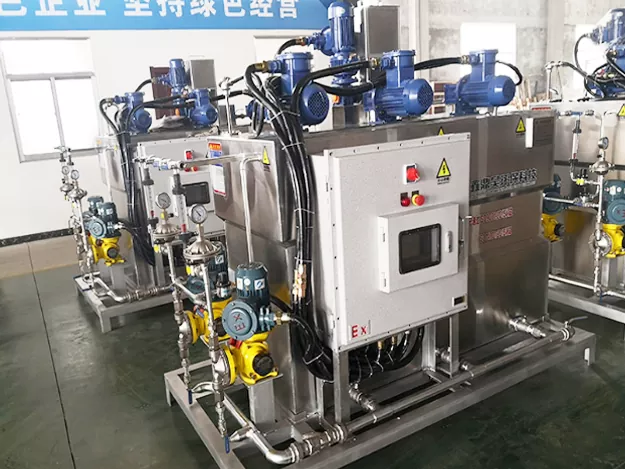
Why Calibration Matters for a Numerical Control Dosing Machine
A Numerical Control Dosing Machine relies on programmed parameters—pump speed, valve timing, and flow rate—to deliver a target dose. Small drift in any of these variables compounds across thousands of cycles. Calibration aligns the machine's programmed values with actual delivered volume, closing the gap between setpoint and reality.
Tools and Preparation
Before starting, confirm the following:
-
Calibrated scale with resolution at least 10× finer than your target tolerance
-
Representative material sample at production temperature
-
Clean dosing head and tubing, free of residue
-
Stable power supply and compressed air (if applicable)
-
Calibration log sheet for traceability
Step-by-Step Calibration Workflow
-
Stabilize the system. Run the Numerical Control Dosing Machine for 10–15 minutes so pumps and valves reach operating temperature.
-
Set a baseline. Program a mid-range dose and run 20 cycles, discarding the first five.
-
Weigh and record. Capture the delivered mass for each cycle on the calibrated scale.
-
Calculate deviation. Compare average delivered dose against the setpoint.
-
Adjust parameters. Modify flow coefficient or pulse timing in small increments—no more than 2% per iteration.
-
Re-verify. Repeat the 20-cycle test until deviation falls within tolerance.
-
Document and lock. Record final parameters and enable parameter protection.
Key Calibration Parameters
| Parameter | Typical Adjustment Range | Impact on Consistency |
|---|---|---|
| Flow coefficient | ±5% | Primary dose accuracy |
| Valve open time | ±10 ms | Drop repeatability |
| Pump speed | ±3% | Throughput vs. precision balance |
| Suck-back volume | ±0.2 mL | Drip and stringing control |
Verifying Consistency After Calibration
Calibration is not complete until consistency is proven. Run a 50-cycle validation and track the coefficient of variation (CV). For most industrial applications, a CV below 1% indicates a well-tuned Numerical Control Dosing Machine. Repeat validation after any material change, nozzle swap, or scheduled maintenance.
Maintenance Habits That Protect Calibration
-
Recheck calibration every 500 operating hours or after any pump seal replacement
-
Log ambient temperature and humidity alongside calibration data
-
Inspect tubing for wear that alters flow resistance
-
Train operators to recognize drift symptoms early
FAQ
How often should a Numerical Control Dosing Machine be calibrated? Recalibrate every 500 operating hours, after any component replacement, and whenever a new material batch shows different viscosity; high-precision lines may require weekly verification.
What causes a Numerical Control Dosing Machine to lose dosing accuracy over time? Common causes include pump seal wear, air bubbles in the line, valve seat erosion, temperature-driven viscosity shifts, and parameter drift after power interruptions—each should be checked systematically during troubleshooting.
Can a Numerical Control Dosing Machine be calibrated for multiple materials? Yes, most controllers store multiple material profiles, but each profile must be validated separately because viscosity and density differences directly affect delivered volume.
What tolerance is realistic for a Numerical Control Dosing Machine? Well-maintained systems typically achieve ±0.5% to ±1% of target dose, while ultra-precision configurations with EPIC calibration support can tighten results further depending on material and cycle time.
Final Thoughts
Calibration is a cycle, not a one-time task. Pair disciplined verification with quality components, and your Numerical Control Dosing Machine will deliver consistent results shift after shift. Contact us at EPIC today to discuss calibration support, parameter optimization, or a system audit for your production line.