

How to Choose the Right Carbonated Beverage Filling Machine for Your Factory
2026-09-17
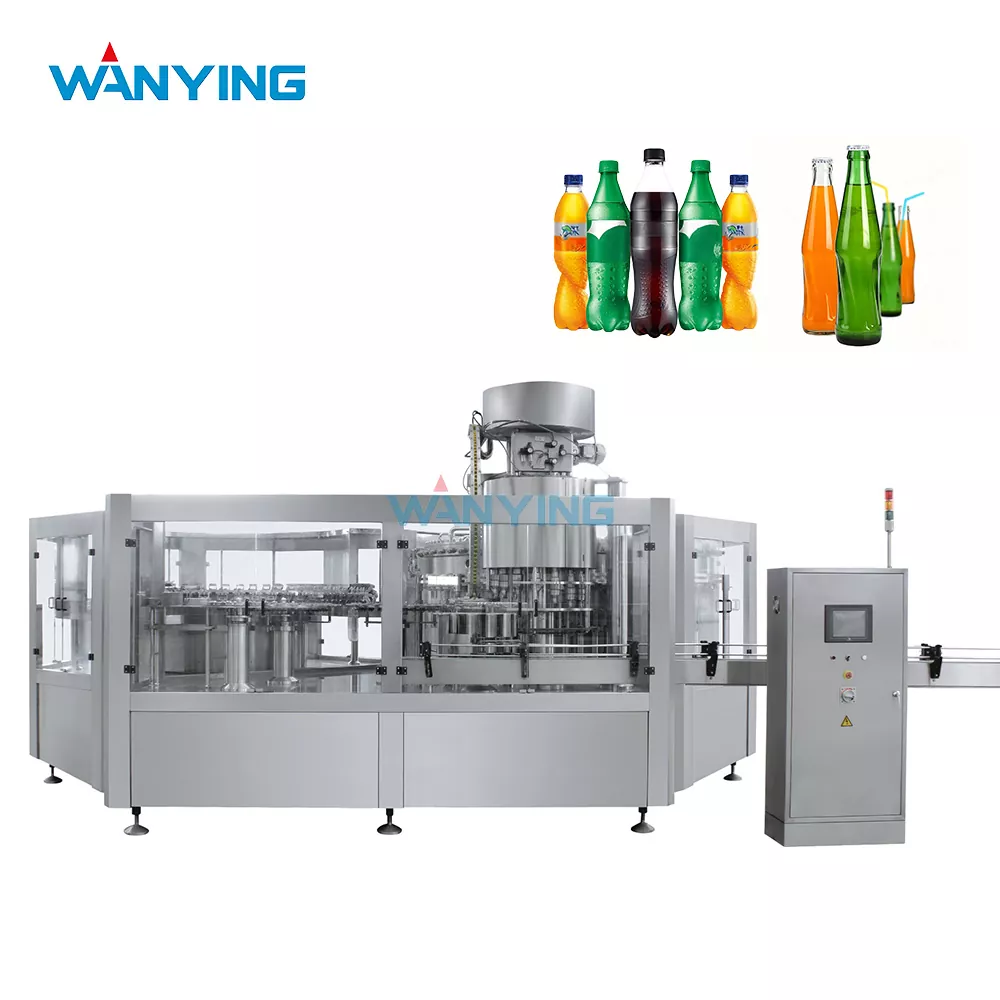
Selecting the appropriate Carbonated Beverage Filling Machine is one of the most consequential capital decisions a beverage manufacturer can make. Whether you operate a craft soda startup or a high-volume bottling plant, the equipment you install directly affects product quality, carbonation retention, throughput, and long-term operating costs. Wanying has spent years engineering filling solutions for carbonated drinks, and this guide distills the key criteria that factory owners and production managers should evaluate before committing to a purchase.
1. Define Your Production Capacity First
Before comparing suppliers, calculate your required output in bottles per hour (BPH). Undersizing a Carbonated Beverage Filling Machine creates bottlenecks; oversizing it wastes capital and floor space.
| Production Scale | Typical Output | Recommended Machine Type |
|---|---|---|
| Small craft / pilot | 1,000–3,000 BPH | Semi-automatic or monoblock |
| Mid-size factory | 3,000–12,000 BPH | Automatic rotary monoblock |
| Large-scale plant | 12,000–36,000 BPH | High-speed rotary with servo control |
Wanying offers models across all three tiers, allowing factories to scale without changing suppliers.
2. Evaluate Carbonation Retention Technology
Carbonated beverages are sensitive to pressure loss during filling. The best Carbonated Beverage Filling Machine uses isobaric (counter-pressure) filling, where the bottle is pressurized before the product enters. This prevents foam generation and preserves CO₂ volume.
Key technical checks:
-
Filling valve design — balanced-pressure valves reduce turbulence.
-
Temperature control — product should be chilled to 2–4°C before filling.
-
Pre-evacuation and CO₂ flushing — removes oxygen, extending shelf life.
-
CIP compatibility — clean-in-place systems must handle sugar residues.
3. Match the Machine to Your Packaging Format
Bottle material, neck finish, and cap type all influence machine configuration.
| Packaging Type | Considerations |
|---|---|
| PET bottles | Lightweight handling, neck-guided transfer |
| Glass bottles | Higher weight tolerance, careful gripping |
| Cans | Different filling head geometry, seaming integration |
| Multiple sizes | Requires changeover kits and adjustable star wheels |
A flexible Carbonated Beverage Filling Machine from Wanying can be configured with quick-change format parts, reducing downtime between production runs.
4. Assess Automation and Control Systems
Modern factories benefit from PLC-controlled systems with HMI touchscreens. Look for:
-
Real-time monitoring of fill volume and pressure
-
Automatic rejection of underfilled or overfoamed bottles
-
Data logging for traceability and compliance
-
Remote diagnostics to reduce service response time
Wanying integrates Siemens and Allen-Bradley control platforms, giving operators familiar, reliable interfaces.
5. Calculate Total Cost of Ownership
Purchase price is only part of the equation. Consider:
-
Energy consumption per 1,000 bottles
-
Spare parts availability and lead time
-
Maintenance labor requirements
-
Water and cleaning chemical usage
-
Expected service life (typically 10–15 years for quality units)
Frequently Asked Questions
What is the difference between isobaric and gravity filling for carbonated drinks? Isobaric filling maintains counter-pressure so CO₂ stays dissolved, while gravity filling causes excessive foaming and carbonation loss, making it unsuitable for Carbonated Beverage Filling Machine applications.
How often should a Carbonated Beverage Filling Machine be serviced? Routine maintenance should occur every 500 operating hours, with full valve inspection and seal replacement every 2,000–3,000 hours depending on production intensity.
Can one Carbonated Beverage Filling Machine handle both PET bottles and aluminum cans? Standard rotary fillers are typically dedicated to one container type, but Wanying can supply hybrid or convertible systems with interchangeable changeover parts for factories running multiple formats.
Final Considerations
Choosing the right Carbonated Beverage Filling Machine requires balancing capacity, carbonation technology, packaging flexibility, automation, and lifetime cost. Partnering with an experienced manufacturer shortens the learning curve and protects your investment. Contact us today to request a customized proposal, technical drawings, and a live demonstration tailored to your factory's production goals.