

How to Choose the Right Vinegar Filling Machine for Your Business
2026-10-22
Selecting the appropriate Vinegar Filling Machine is one of the most consequential equipment decisions a vinegar producer will make. Whether you operate a small artisanal bottling facility or a high-volume production plant, the right Vinegar Filling Machine directly affects output, product quality, and long-term operating costs. At Wanying, we have supported producers across the food and beverage industry in matching filling equipment to their exact production needs. This guide distills that experience into practical, actionable criteria.
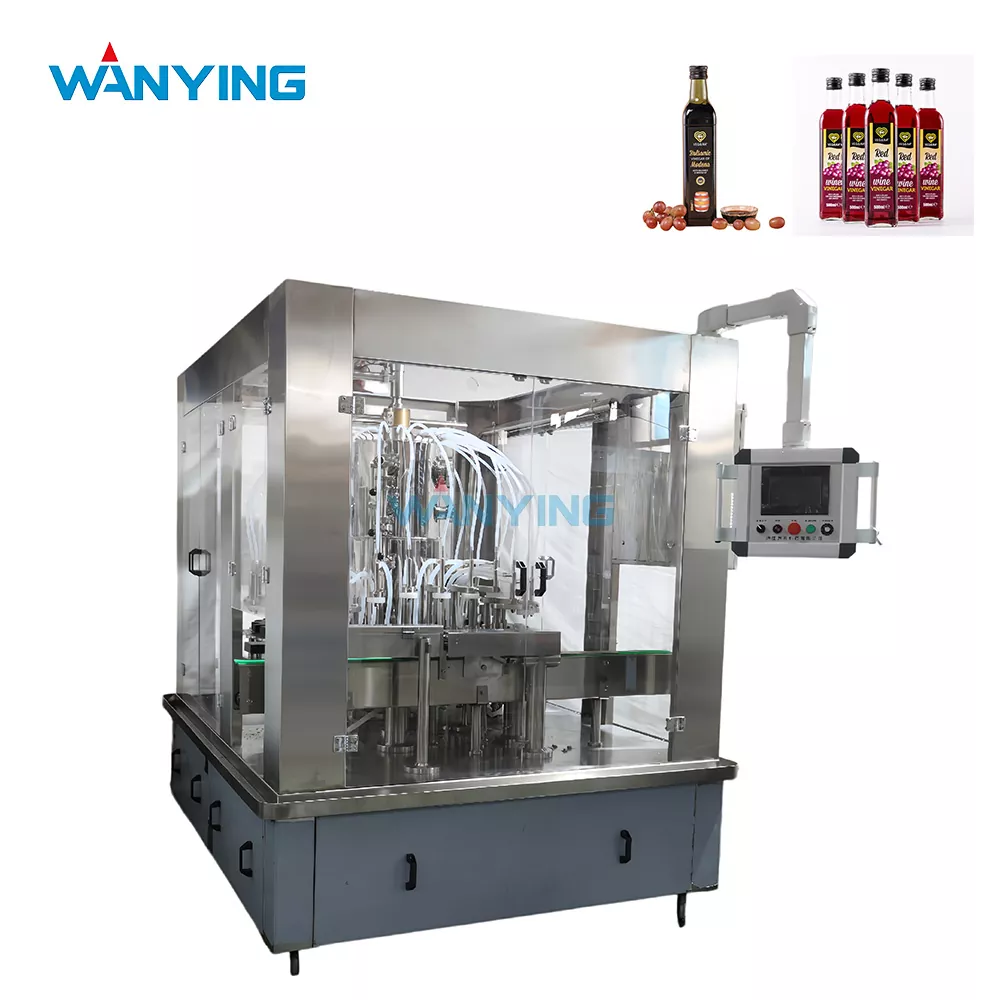
Key Factors to Evaluate Before You Buy
Before comparing models, define your production profile. The checklist below covers the variables that most often determine whether a Vinegar Filling Machine performs well or becomes a bottleneck.
-
Production capacity: Match filling speed (bottles per hour) to your current output plus a realistic growth margin.
-
Bottle and cap compatibility: Confirm the machine handles your bottle diameters, heights, neck finishes, and closure types.
-
Filling accuracy: Vinegar is a low-viscosity liquid; look for ±0.5% or better volumetric accuracy to control giveaway and comply with net-content regulations.
-
Material compatibility: Wetted parts should be food-grade stainless steel (304 or 316L) to resist acetic acid corrosion.
-
Automation level: Semi-automatic units suit low-volume craft producers; automatic and rotary systems fit continuous lines.
-
Cleaning and sanitation: CIP (clean-in-place) capability reduces downtime and supports food-safety audits.
-
Supplier support: Installation, spare parts availability, and operator training matter as much as the hardware itself.
Comparison Table: Matching Machine Type to Production Scale
| Machine Type | Typical Output | Best For | Automation Level | Relative Cost |
|---|---|---|---|---|
| Semi-automatic Vinegar Filling Machine | 500–2,000 bottles/hour | Startups, craft vinegar, small batches | Manual loading, automatic fill | Low |
| Linear automatic Vinegar Filling Machine | 2,000–6,000 bottles/hour | Growing producers, multi-SKU bottling | Automatic fill and capping | Medium |
| Rotary automatic Vinegar Filling Machine | 6,000–20,000+ bottles/hour | High-volume industrial production | Fully integrated line | High |
Technical Specifications Worth Verifying
Request documented specifications rather than verbal assurances. A reputable Wanying configuration typically includes:
-
Filling principle: piston, gravity, or pressure filling—each suits different viscosity and foaming behavior.
-
Accuracy tolerance: stated as a percentage of fill volume, tested across the full speed range.
-
Contact materials: certification for food-grade stainless steel and FDA-compliant seals and gaskets.
-
Changeover time: the minutes required to switch bottle formats, a major hidden cost in multi-product plants.
-
Control system: PLC with touchscreen HMI, recipe storage, and fault diagnostics.
-
Compliance: CE or equivalent certification, plus documentation supporting your food-safety program.
Frequently Asked Questions
Q: What filling accuracy should a Vinegar Filling Machine achieve?
A: For low-viscosity liquids such as vinegar, a well-engineered Vinegar Filling Machine should hold volumetric accuracy within ±0.5% across its full speed range. Tighter tolerance reduces product giveaway and helps ensure compliance with net-content labeling rules; always ask suppliers for test data rather than nominal figures.
Q: Can one Vinegar Filling Machine handle different bottle sizes and shapes?
A: Yes, provided the machine is designed for format changeover. Look for adjustable guide rails, change parts for different neck diameters, and recipe storage in the control system. Confirm the changeover time in minutes and the cost of additional change-part sets before committing to a model.
Q: How much maintenance does an automatic Vinegar Filling Machine require?
A: Routine maintenance typically includes daily rinsing of the filling circuit, weekly inspection of seals and nozzles, and scheduled replacement of wear parts such as O-rings and valves. Machines with CIP capability and accessible component layouts cut labor time substantially; Wanying also supplies spare-part kits and maintenance schedules to keep uptime high.
Final Checklist and Next Steps
Use this shortlist to structure supplier conversations: verified capacity data, accuracy test reports, material certificates, changeover times, spare-parts lead times, and after-sales training terms. Compare at least three quotations on total cost of ownership, not purchase price alone. Contact us at Wanying today to discuss your bottling requirements, request a specification-matched quotation, and arrange a demonstration of the Vinegar Filling Machine best suited to your business.