

How To Program A CNC Hollow Column Cutting Machine For Complex Cuts
2026-01-23
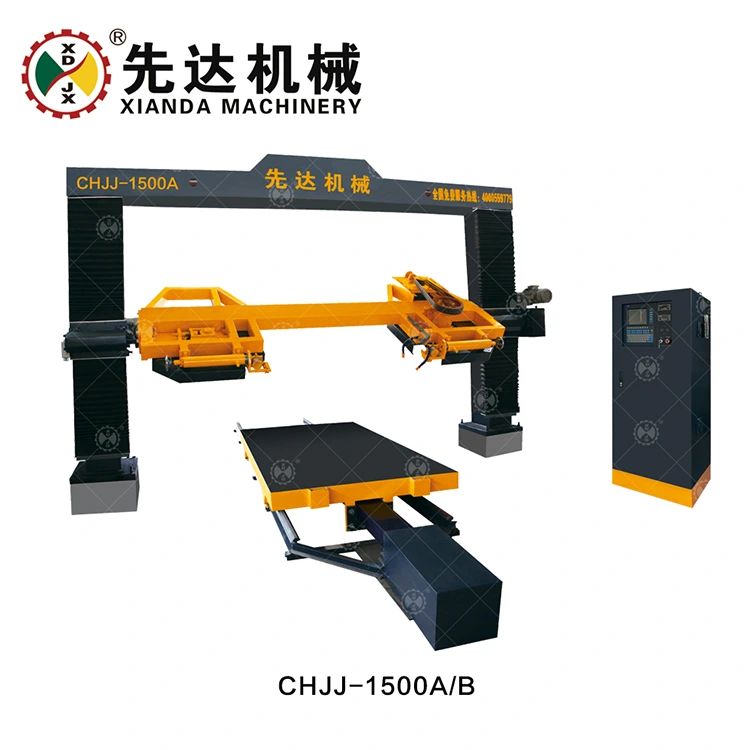
Mastering the programming of your CNC Hollow Column Cutting machine is the key to unlocking its full potential for intricate plasma or oxy-fuel cutting. For fabricators demanding precision on large plates, the stability of a Xianda Hollow Column Cutting machine provides the ideal platform. This guide outlines the core steps to program complex geometries efficiently and accurately, ensuring you maximize the return on your investment.
The programming workflow follows a logical sequence, from design to machine-ready code.
Essential Programming Steps:
-
CAD Design: Create or import a detailed 2D vector drawing of your part. Ensure all lines and curves for the complex cuts are closed and precise.
-
CAM Processing: In your CAM software, this is where you define the how. Critical actions include:
-
Setting the cutting order to minimize heat distortion.
-
Adding lead-ins and lead-outs (like a small arc or line) to prevent start-point defects.
-
Assigning correct cutting parameters (speed, amperage, gas pressure) for the material type and thickness.
-
-
Post-Processing & Simulation: Convert the CAM data into machine-specific G-code using a Xianda-compatible post-processor. Always run a software simulation to check for errors and collisions.
-
Machine Setup & Transfer: Securely fasten the workpiece, set the machine zero point, and transfer the program via network or USB to the Hollow Column Cutting machine controller.
Key Parameters for Complex Cuts Table:
| Parameter | Why It Matters for Complex Cuts |
|---|---|
| Cutting Speed | Too fast causes uncut edges; too slow increases heat input and warping. |
| Kerf Compensation | Automatically offsets the toolpath to account for the width of the cut, ensuring final part dimensions are accurate. |
| Pierce Height/Delay | Protects the torch tip during the initial penetration, crucial for thicker materials. |
Hollow Column Cutting machine FAQ
What is the main advantage of a Hollow Column design for complex cutting?
The primary advantage is exceptional rigidity and stability. The hollow column structure minimizes vibration and deflection during high-speed directional changes, which is critical for maintaining precision in intricate contours and sharp corners.
How do I prevent excessive dross (slag) on the bottom edge of complex shapes?
Dross is often a result of incorrect speed, power, or gas pressure. For complex shapes, ensure your cutting parameters are perfectly tuned for the material thickness. Using high-quality consumables and ensuring the torch is perfectly perpendicular to the workpiece are also vital steps.
Can I nest multiple complex parts on a single plate with this machine?
Absolutely. One of the greatest efficiencies of a CNC Hollow Column Cutting machine like those from Xianda is the ability to use nesting software. You can arrange multiple parts of varying complexities on a single sheet to minimize material waste, with the machine automatically optimizing the cutting path between them.
Programming complex cuts requires understanding the synergy between your software and the physical machine's capabilities. A well-programmed Xianda Hollow Column Cutting machine transforms digital designs into flawless physical parts with repeatable accuracy.
Ready to achieve new levels of precision and efficiency in your fabrication shop? Contact us today to learn how a Xianda Hollow Column Cutting machine can be integrated into your workflow and to discuss your specific application needs.