

How to Select a Solid Wall Pipe Extrusion Line?
2026-02-11
Abstract
A Solid Wall Pipe Extrusion Line is a critical investment for manufacturers producing PVC, HDPE, PP, or other thermoplastic pipes for water supply, drainage, electrical conduits, and industrial applications. Selecting the right extrusion line directly affects production stability, product quality, energy consumption, and long-term operating costs. This article provides a structured and practical guide to understanding how a solid wall pipe extrusion line works, identifying common customer pain points, and evaluating key technical and commercial factors. The goal is to support informed decision-making and reduce operational risks throughout the equipment lifecycle.
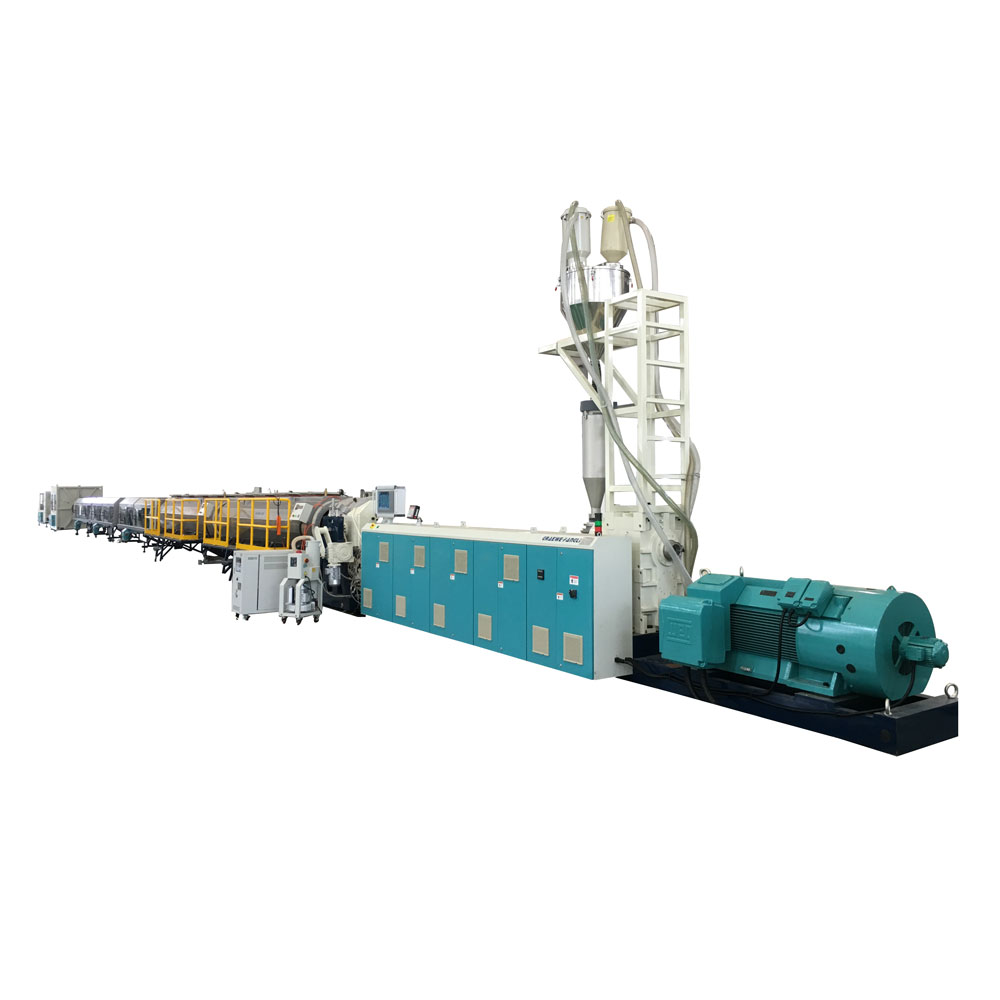
Table of Contents
- Article Outline
- Solid Wall Pipe Extrusion Line Overview
- Common Customer Pain Points
- Working Process Explained
- Core Components and Functions
- Key Selection Criteria
- Configuration Comparison Table
- Quality Control and Performance Stability
- Typical Applications
- Frequently Asked Questions
- Conclusion and Contact
Article Outline
- Definition and industrial role of solid wall pipe extrusion lines
- Main challenges faced by pipe manufacturers
- Technical workflow from feeding to cutting
- Equipment configuration and scalability
- Selection guidelines for long-term value
- Quality assurance and application scenarios
Solid Wall Pipe Extrusion Line Overview
A Solid Wall Pipe Extrusion Line is an integrated production system designed to continuously manufacture pipes with uniform wall thickness and smooth internal and external surfaces. Unlike structured-wall or corrugated pipe systems, solid wall pipes rely entirely on material density and dimensional accuracy to meet mechanical and pressure requirements.
These extrusion lines are commonly used for producing PVC-U, PVC-O, HDPE, PP, and PPR pipes. The final products are widely applied in municipal infrastructure, agricultural irrigation, building drainage, cable protection, and industrial fluid transport. The extrusion line must therefore balance high output with precise control over temperature, pressure, and cooling.
Common Customer Pain Points
Manufacturers investing in a solid wall pipe extrusion line often encounter similar challenges, particularly when scaling production or entering new markets.
- Inconsistent pipe diameter and wall thickness
- High energy consumption per unit output
- Frequent downtime due to unstable extrusion
- Limited flexibility for different pipe materials or sizes
- Difficulty meeting local or international standards
Addressing these issues requires a clear understanding of equipment design, automation level, and after-sales technical support.
Working Process Explained
A solid wall pipe extrusion line operates as a continuous and synchronized system. Each stage directly affects the next, making overall coordination essential.
- Raw material feeding and drying to ensure stable melt quality
- Plasticizing and homogenization inside the extruder
- Melt shaping through a precision-designed pipe die
- Vacuum calibration to stabilize outer diameter
- Cooling through water spray or immersion tanks
- Haul-off to maintain constant line speed
- Cutting and stacking for finished pipe handling
Core Components and Functions
Each component in a solid wall pipe extrusion line plays a defined role in maintaining output stability and product consistency.
- Extruder: Provides uniform melt and stable pressure
- Pipe Die Head: Determines pipe geometry and surface quality
- Vacuum Calibration Tank: Controls outer diameter accuracy
- Cooling System: Ensures proper solidification without deformation
- Haul-Off Unit: Synchronizes speed with extrusion output
- Cutting Unit: Delivers clean and precise pipe lengths
Key Selection Criteria
Choosing the right solid wall pipe extrusion line requires evaluating both current production needs and future expansion plans.
- Target pipe diameter range and wall thickness
- Compatible raw materials and formulations
- Required output capacity per hour
- Automation and control system level
- Energy efficiency and operating cost
- Technical support and customization capability
Typical Configuration Comparison
| Configuration Type | Pipe Diameter Range | Output Level | Suitable Application |
|---|---|---|---|
| Single-Screw Standard Line | 16–160 mm | Medium | Building drainage, conduits |
| High-Speed PVC Line | 20–110 mm | High | Mass production water pipes |
| Large-Diameter HDPE Line | 200–800 mm | High | Municipal infrastructure |
Quality Control and Performance Stability
Stable production is achieved through precise temperature control, closed-loop vacuum regulation, and synchronized haul-off systems. Advanced extrusion lines integrate intelligent control platforms to monitor pressure, melt temperature, and line speed in real time.
This level of control reduces scrap rates, ensures consistent mechanical performance, and supports compliance with regional pipe standards.
Typical Applications
- Urban water supply and drainage systems
- Agricultural irrigation networks
- Electrical and communication conduits
- Industrial fluid transport pipelines
Frequently Asked Questions
Can one extrusion line process different materials?
With proper screw design and temperature adjustment, many solid wall pipe extrusion lines can handle multiple thermoplastic materials.
How is pipe dimensional accuracy ensured?
Accuracy depends on die design, vacuum calibration stability, and synchronized haul-off speed control.
What affects long-term operating cost?
Energy efficiency, wear-resistant components, and maintenance accessibility are key factors influencing total cost of ownership.
Conclusion and Contact
Selecting a solid wall pipe extrusion line is a strategic decision that influences product quality, production efficiency, and market competitiveness. A well-designed system offers stable output, flexible configuration, and reliable long-term performance.
Ningbo Fangli Technology Co., Ltd. provides engineered solid wall pipe extrusion solutions tailored to diverse production requirements. For customized configurations, technical consultation, or project evaluation, please contact us to explore how a professional extrusion line can support your manufacturing goals.