

How to Select the Right Centrifugal Blower Fan for Industrial Applications?
2025-12-24
Article Summary: Centrifugal blower fans play a crucial role in industrial ventilation, air circulation, and process cooling systems. This article explores the technical specifications, operational applications, and frequently asked questions about centrifugal blower fans. It guides engineers and facility managers on how to select, maintain, and optimize these fans for maximum efficiency.
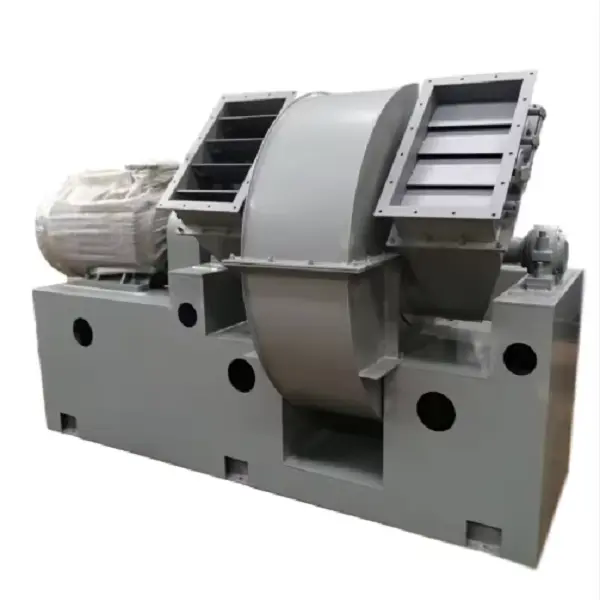
Table of Contents
- Introduction to Centrifugal Blower Fan
- Specifications and Performance Parameters
- Applications and Operational Insights
- Frequently Asked Questions
- Conclusion and Brand Information
Introduction to Centrifugal Blower Fan
Centrifugal blower fans are mechanical devices designed to move air or gas efficiently through ducts and ventilation systems. Unlike axial fans that move air parallel to the fan shaft, centrifugal fans generate airflow perpendicular to the inlet, creating higher pressure suitable for industrial environments. These fans are widely used in HVAC systems, chemical plants, power stations, and manufacturing facilities. The focus of this article is to provide an in-depth understanding of centrifugal blower fan specifications, selection criteria, and practical guidance for industrial applications.
Specifications and Performance Parameters
Choosing the appropriate centrifugal blower fan requires evaluating its technical parameters to match operational requirements. Below is a table summarizing key specifications for common industrial centrifugal fans:
| Parameter | Typical Range |
|---|---|
| Airflow Capacity | 500 – 50,000 CFM |
| Static Pressure | 0.5 – 15 inches WC |
| Motor Power | 0.5 – 50 HP |
| Rotation Speed | 900 – 3600 RPM |
| Material | Galvanized Steel, Stainless Steel, Aluminum |
| Temperature Range | -20°C to 250°C |
| Noise Level | 60 – 85 dB(A) |
Understanding these parameters helps in selecting a fan that meets airflow and pressure requirements while optimizing energy consumption and operational longevity.
Applications and Operational Insights
Centrifugal blower fans are versatile and widely adopted across various industries. Their applications include:
- Industrial ventilation in factories and warehouses.
- Process air handling in chemical and pharmaceutical plants.
- Cooling and exhaust systems in power generation.
- Dust collection and filtration systems.
- Combustion air supply for boilers and furnaces.
When selecting a centrifugal blower fan, the following operational considerations are critical:
- Airflow Efficiency: Ensuring the fan delivers the required CFM at the designated static pressure.
- Durability: Selecting materials resistant to corrosion, abrasion, and high temperatures.
- Energy Consumption: Optimizing fan speed and motor efficiency to minimize operational costs.
- Maintenance Access: Ensuring easy access for inspection, lubrication, and component replacement.
Frequently Asked Questions About Centrifugal Blower Fans
Q1: How is the airflow capacity of a centrifugal blower fan calculated?
A1: Airflow capacity is typically measured in cubic feet per minute (CFM) and calculated based on the fan’s impeller diameter, rotation speed, and blade design. Engineers use performance curves provided by manufacturers to match airflow with system static pressure requirements.
Q2: What factors affect the noise level of a centrifugal blower fan?
A2: Noise levels depend on impeller type, fan speed, housing design, and airflow turbulence. Forward-curved impellers generate quieter airflow but lower pressure, while backward-inclined impellers produce higher pressure with slightly more noise. Acoustic enclosures or vibration isolators can reduce operational noise.
Q3: How can centrifugal blower fans be maintained for long-term reliability?
A3: Maintenance involves regular inspection of bearings, lubrication of motor and fan shafts, cleaning of inlet and outlet ducts, and monitoring vibration levels. Proper installation, alignment, and balancing of impellers prevent premature wear and extend operational life.
Conclusion and Brand Information
Centrifugal blower fans are indispensable for efficient air handling across industrial applications. By understanding the technical specifications, operational applications, and common maintenance practices, facility managers and engineers can ensure optimal performance and longevity. Hebei Ketong provides a comprehensive range of centrifugal blower fans tailored to meet industrial standards, combining durability, efficiency, and reliability.
For further inquiries or to discuss customized solutions, contact us today.