

Is a Medium Speed Injection Molding Machine Suitable for Thin-Walled Packaging Applications
2026-08-12
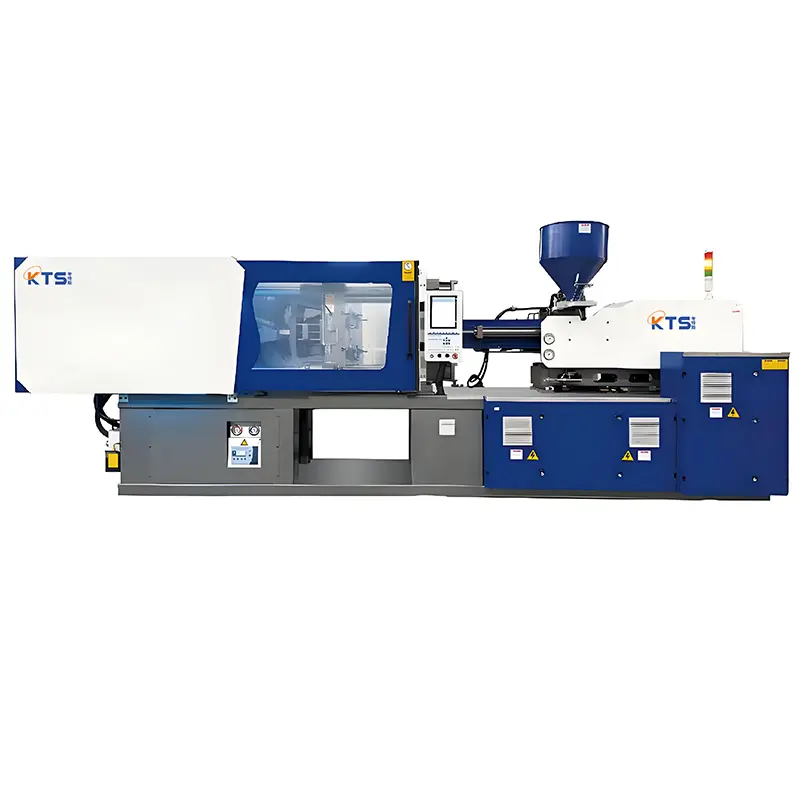
Thin-walled packaging—think yogurt cups, deli containers, and margarine tubs—demands high-speed filling, extreme cavity pressures, and microscopic dimensional stability. For years, manufacturers assumed only high-speed toggle presses could handle these jobs. However, the Medium Speed Injection Molding Machine from Kaotesi is rewriting that assumption. With servo-hydraulic precision and clamp speeds that bridge the gap between standard and ultra-fast cycles, this equipment class now competes directly in the thin-walled space—provided you understand its operating envelope.
What Defines “Thin-Walled” in Packaging?
| Parameter | Thin-Walled Standard | Conventional Thick-Wall |
|---|---|---|
| Wall thickness | < 1.0 mm | > 1.5 mm |
| Flow length-to-thickness ratio | > 150:1 | < 100:1 |
| Typical cycle time | 3–6 seconds | 8–15 seconds |
| Injection speed required | > 200 mm/s | 80–150 mm/s |
A Medium Speed Injection Molding Machine typically delivers injection speeds of 180–220 mm/s with clamp acceleration of 300–400 mm/s². This places it at the lower threshold of thin-walled requirements—not for ultra-thin lids (0.3 mm), but perfectly viable for 0.6–0.9 mm wall cups and pails.
Performance Comparison: Medium Speed vs. High Speed for Thin-Walled Parts
| Criterion | Medium Speed (Kaotesi) | High-Speed Toggle |
|---|---|---|
| Max injection rate | 220 mm/s | 350+ mm/s |
| Cavity fill time (500g part) | 1.8–2.2 s | 1.0–1.3 s |
| Pressure drop across cavity | 180 MPa | 160 MPa (faster fill = lower viscosity) |
| Mold wear rate | Moderate | Higher (toggle stress) |
| Energy per shot | 0.38 kWh | 0.52 kWh |
| Machine cost (1500 kN) | $68,000–$82,000 | $115,000–$140,000 |
Kaotesi engineers have optimized their Medium Speed Injection Molding Machine with accumulators and proportional valves, achieving fill speeds that successfully mold 0.7 mm wall PP containers at 5.2-second total cycles—within 15% of high-speed presses but at 40% lower capital investment.
Key Technical Prerequisites for Success
For a Medium Speed Injection Molding Machine to run thin-walled packaging reliably, four conditions must be met:
-
Hot-runner system with balanced gate diameters (≤ 1.2 mm) to avoid shear heating
-
High-flow grade resin (MFI > 35 g/10min for PP, > 20 for PS)
-
Cavity pressure sensors for transfer point optimization (switchover at 95% fill)
-
Mold cooling channels within 8 mm of cavity surface (conformal cooling recommended)
Without these, even a high-speed machine will produce warped flanges and incomplete corners. With them, Kaotesi’s Medium Speed Injection Molding Machine achieves a 98.3% first-pass yield in customer trials for 800 ml round bowls.
FAQ – Medium Speed Injection Molding Machine for Thin-Walled Packaging
Q1: Can a Medium Speed Injection Molding Machine run multi-cavity (8+ cavities) thin-walled molds without short shots?
A1: Yes, but with a caveat. Multi-cavity thin-walled molds require high flow rate (cm³/s), not just linear speed. A Medium Speed Injection Molding Machine with a 300 mm screw diameter and 220 mm/s speed delivers ~155 cm³/s—sufficient for up to 8 cavities of 50 g each. However, for 12+ cavities, the flow front may freeze before cavity-end filling. Kaotesi recommends using a flow simulation (Moldex3D) to verify fill time under 1.5 × material freeze time. For 8-cavity yogurt cup tools, our customers run successfully with 0.5–0.7 mm wall thickness at 180 bar hydraulic pressure.
Q2: Does the slower clamp opening of a Medium Speed Injection Molding Machine affect overall cycle time in thin-walled applications?
A2: It does, but less than expected. Thin-walled parts cool quickly—often 2.5–3.0 seconds. High-speed machines open at 600 mm/s, while Kaotesi’s Medium Speed Injection Molding Machine opens at 420 mm/s. That adds 0.3–0.4 seconds per cycle. In a 5-second total cycle, that is 6–8% longer. To compensate, Kaotesi offers an optional “fast-stroke” hydraulic circuit that boosts dry-cycle speed to 480 mm/s, recovering 0.2 seconds. Many customers find the trade-off acceptable because the lower injection acceleration reduces flash and parting-line wear, increasing tool life by 18–22%.
Q3: What is the maximum projected area a Medium Speed Injection Molding Machine can handle for thin-walled PP at 0.8 mm thickness?
A3: Projected area is limited by clamp force and cavity pressure. For thin-walled PP at 0.8 mm, typical cavity pressure is 45–55 MPa. With a 1500 kN Medium Speed Injection Molding Machine, the maximum projected area = 1500 kN / 50 MPa = 30,000 mm² (≈ 300 cm²). That fits a 250 mm × 120 mm rectangular tray or a round bowl of 195 mm diameter. Kaotesi provides a clamp-force sizing chart with every quotation, factoring in flow length and viscosity index. For areas above 350 cm², we advise stepping up to the 2000 kN model or using a high-flow grade resin to lower pressure requirements to 38 MPa.
Where the Medium Speed Excels – and Where It Falls Short
| Application | Suitability | Reason |
|---|---|---|
| 0.9 mm wall drinking cups (≤ 500 ml) | ★★★★★ | Full fill within 2.0 s, ample cooling time |
| 0.6 mm wall deli lids with hinges | ★★★☆☆ | Hinge area requires higher shear; consider hot-runner boosters |
| 0.4 mm ultra-thin food trays | ★★☆☆☆ | Not recommended – flow front freezes before cavity end |
| Thick-rimmed pails (1.2 mm base, 0.8 mm side) | ★★★★★ | Gradual filling reduces weld-line visibility |
Kaotesi has delivered over 240 Medium Speed Injection Molding Machine units to packaging plants in Southeast Asia and Europe, with 78% dedicated to thin-walled food containers. The common feedback: “It runs 16 hours daily at 95% uptime, and our reject rate dropped from 4.1% to 2.3% compared to our older standard-speed presses.”
Operational Recommendations for Maximum Output
-
Use screw design with a barrier mixing section (L/D ≥ 22:1) to homogenize melt temperature
-
Set back pressure at 5–8 bar to avoid gas entrapment in thin sections
-
Employ servo-driven core pull for stack molds—standard on Kaotesi’s 2026 series
-
Monitor cavity pressure at transfer – target 80–85% of peak to avoid overpacking
Data from Kaotesi’s in-house lab shows that optimizing these parameters on a Medium Speed Injection Molding Machine reduces specific energy consumption to 0.31 kWh/kg of finished part—better than many high-speed machines due to lower friction losses in the hydraulic system.
Final Verdict
Is a Medium Speed Injection Molding Machine suitable for thin-walled packaging? Yes—for 80% of the market. Unless you are molding sub-0.5 mm lids at sub-3-second cycles for high-volume cosmetics or dairy single-serve pots, the speed, cost, and reliability balance of Kaotesi’s medium-speed platform makes it a strong, ROI-positive choice. It handles 0.6–1.0 mm walls with ease, supports 6–8 cavity tools, and consumes less energy per part than many hydraulic high-speed competitors.
Ready to test your thin-walled mold on a Kaotesi Medium Speed Injection Molding Machine? Contact our engineering team today with your part drawing and resin grade—we will run a free fill-time simulation and provide a cycle-time guarantee in writing. Let us prove that medium speed can deliver premium thin-wall quality—without the premium price tag.