

Is an Embossing Machine the Key to Higher-Value Surface Finishing?
2026-01-05
When I first started exploring surface finishing solutions for industrial production, I wasn’t only looking for aesthetics. I needed consistency, durability, and a process that could scale without sacrificing quality. That search gradually led me to Feihua, a brand I encountered through practical discussions with manufacturers facing the same bottlenecks I was dealing with. It was in this context that the Embossing Machine stood out, not as a flashy upgrade, but as a quietly reliable solution that solved real production problems.
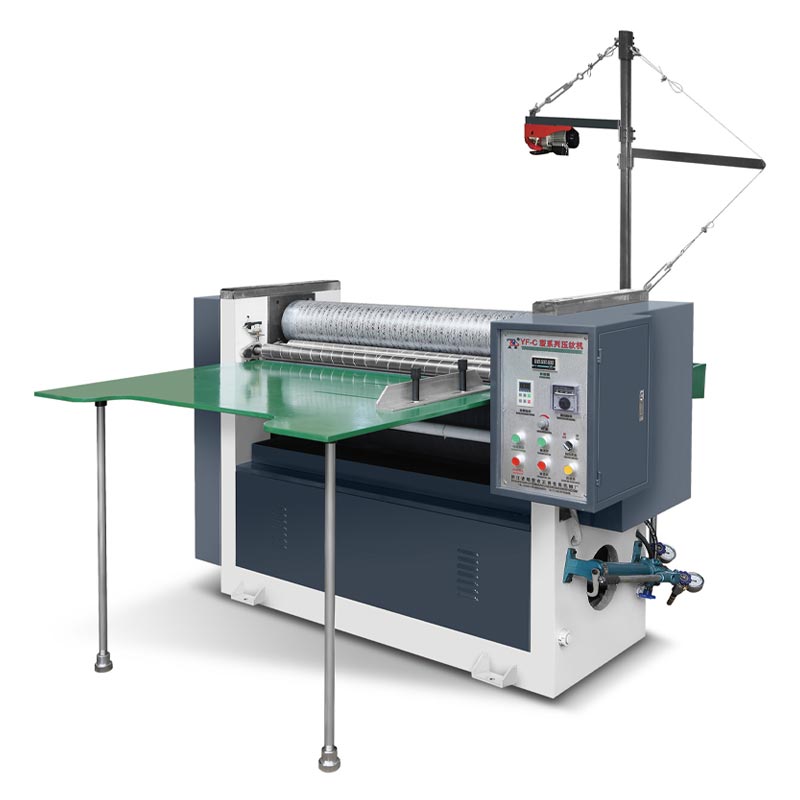
Why does choosing the right Embossing Machine matter for modern manufacturers?
From my experience, surface embossing is no longer just about adding texture. Buyers now expect functional surfaces that improve grip, hide defects, enhance brand perception, and maintain uniformity across large batches. A poorly matched Embossing Machine can lead to uneven patterns, excessive waste, and frequent downtime, all of which directly impact delivery schedules and cost control.
- Inconsistent pressure often results in uneven embossing depth
- Limited material compatibility restricts production flexibility
- Manual adjustments increase operator dependency and error rates
- Low stability shortens machine lifespan and raises maintenance costs
How does a well-designed Embossing Machine improve production efficiency?
What I quickly noticed is that a high-quality Embossing Machine doesn’t just emboss better, it stabilizes the entire workflow. By maintaining uniform pressure and precise alignment, it reduces rework and allows operators to focus on throughput instead of constant corrections. This is especially critical when dealing with metal sheets, films, or decorative panels where surface consistency defines the final value.
| Production Challenge | Impact on Output | How an Embossing Machine Helps |
|---|---|---|
| Uneven surface patterns | High rejection rates | Precision rollers ensure uniform embossing depth |
| Frequent material changeovers | Extended downtime | Flexible adjustment system supports multiple materials |
| Operator skill dependency | Inconsistent quality | Stable mechanical structure reduces human error |
| Excessive maintenance | Rising operational costs | Robust components extend service life |
What product advantages should I look for in an Embossing Machine?
After comparing multiple options, I realized that performance is not defined by a single parameter. A reliable Embossing Machine combines mechanical strength, process control, and adaptability. These elements work together to support long-term production goals rather than short-term output gains.
- Stable frame construction that minimizes vibration during operation
- Accurate roller alignment for consistent embossing patterns
- Wide application range for metal sheets, films, and composite materials
- User-friendly adjustment mechanisms that reduce setup time
- Design focused on continuous operation and industrial durability
Can an Embossing Machine support both customization and mass production?
One of the most common concerns I hear is whether an Embossing Machine can handle customized patterns without slowing down mass production. In practice, the answer depends on design philosophy. Machines engineered with modular rollers and precise control systems allow pattern changes while maintaining speed and repeatability. This balance is critical for manufacturers serving diverse markets with varying design requirements.
| Production Requirement | Traditional Limitation | Optimized Machine Capability |
|---|---|---|
| Custom surface patterns | Long setup time | Quick roller replacement and alignment |
| High-volume output | Pattern inconsistency | Stable pressure control across long runs |
| Material diversity | Frequent recalibration | Adaptive structure supports multiple thicknesses |
Why is long-term reliability crucial when investing in an Embossing Machine?
In my view, the real cost of an Embossing Machine is not the initial purchase, but how it performs after thousands of operating hours. Machines built with durability in mind reduce unexpected shutdowns, protect surface quality over time, and provide predictable output. This reliability becomes a competitive advantage when delivery timelines are tight and quality standards are non-negotiable.
Is now the right time to upgrade your Embossing Machine solution?
If surface quality, efficiency, and consistency are becoming limiting factors in your production line, it may be time to reassess your embossing process. A well-matched Embossing Machine can quietly transform output quality while lowering long-term operating pressure. If you’re exploring options and want to understand how this technology can fit your specific application, we invite you to contact us. Share your requirements, ask questions, and let’s discuss how the right embossing solution can support your next stage of growth.