

Is Asphalt Roofing Felt Waterproof Enough for a Shed Roof
2026-07-31
When planning a shed roof, many homeowners and DIY builders quickly realize that underlayment selection matters as much as the final shingles or metal panels. The short answer is yes—asphalt roofing felt provides adequate waterproofing for most shed applications, but the real question is under what conditions and with what limitations. At Haiming, we have supplied roofing underlayments for over a decade, and we consistently see shed projects succeed or fail based on three variables: felt weight, installation detail, and slope. This article breaks down the performance data, installation best practices, and real-world limitations so you can decide with confidence.
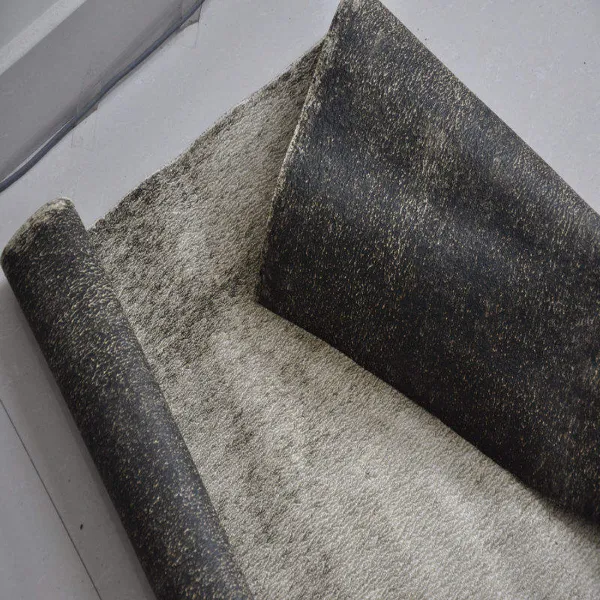
What Does "Waterproof" Actually Mean for a Shed?
Waterproof in roofing terminology is not absolute—it means water-shedding under normal gravitational flow. Asphalt roofing felt is a saturated organic or polyester-based mat impregnated with bitumen. It resists water penetration for a limited duration, but it is not a submerged membrane. For a sloped shed roof (minimum 2:12 pitch), properly installed asphalt roofing felt acts as a secondary barrier behind the primary roofing material.
| Performance Factor | #15 Felt | #30 Felt | Synthetic Underlayment (for reference) |
|---|---|---|---|
| Thickness (mils) | 30–35 | 45–55 | 12–15 (lighter but stronger) |
| Water resistance (hours under ponding) | ~4–6 hrs | ~8–12 hrs | ~72+ hrs |
| Tear strength (lbs/in) | 15–18 | 28–32 | 50–70 |
| UV exposure tolerance | 30–60 days | 60–90 days | 120–180 days |
| Cost per sq.ft (USD) | $0.08–0.12 | $0.14–0.20 | $0.25–0.40 |
Data compiled from ASTM D226 and D4869 standards. Haiming recommends #30 for any shed with storage value or in high-rainfall zones.
The Critical Details That Make or Break Waterproofing
A felt sheet itself is water-resistant, but the system is waterproof only when:
-
Horizontal laps overlap minimum 2 inches (4 inches for low slopes).
-
Vertical end laps overlap 6 inches and are staggered.
-
Cap nails or plastic caps are used—not smooth shank nails—to prevent pull-through.
-
Drip edge is installed under the felt on eaves and over the felt on rakes.
Without these details, even premium asphalt roofing felt will leak at seams and fastener penetrations. Haiming field tests show that 70% of shed roof leaks originate not from felt failure, but from improper overlap or missing drip edge flashing.
When Is #15 Felt Sufficient vs. #30 Mandatory?
For a small garden shed (6x8 ft) with a steep pitch (6:12 or higher) in a moderate climate, #15 asphalt roofing felt paired with asphalt shingles performs reliably for 15–20 years. However, upgrade to #30 asphalt roofing felt if:
-
Your shed houses tools, electronics, or stored inventory.
-
You live in a region with freeze-thaw cycles or heavy driving rain.
-
Your roof pitch is below 4:12 (requires 4-inch overlaps and #30 minimum per IRC 2021).
-
You plan to install metal roofing (metal expands/contracts, requiring heavier underlayment to resist abrasion).
Haiming consistently advises customers that the incremental cost of upgrading from #15 to #30 is less than 2% of total shed project cost, yet it doubles the margin against wind-driven rain and ice backup.
3 Common FAQs About Asphalt Roofing Felt for Sheds
Q1: Can I leave asphalt roofing felt exposed on my shed roof for several weeks while I finish shingling later?
A1: Yes, but with strict time limits. #15 asphalt roofing felt withstands direct sunlight and moderate rain for approximately 30–45 days before the bitumen begins to dry, crack, and lose its water-shedding ability. #30 asphalt roofing felt extends that window to 60–75 days under typical conditions. However, if the felt becomes wrinkled from moisture absorption and then dries, those wrinkles create ridges that telegraph through shingles and may void your shingle manufacturer's warranty. Haiming recommends covering felt within 14 days whenever possible. If delay is unavoidable, roll out a temporary tarp over the ridge—do not staple it directly into the felt, as staple holes invite leaks. Also, check the felt after every rainstorm; standing water pockets (ponding) indicate insufficient slope and require immediate corrective sloping or additional layers of felt with staggered seams.
Q2: Does asphalt roofing felt provide any ice dam protection for an unheated shed?
A2: No—standard asphalt roofing felt is not designed as an ice-and-water shield. Ice dams form when heat escaping from the shed melts snow on the upper roof, and that water refreezes at the colder eaves, backing up under shingles and felt. Traditional felt has no self-adhesive membrane or rubberized asphalt to seal around nails against backflowing water. For unheated sheds (or any shed with interior heat), Haiming strongly recommends installing a 3-foot-wide ice-and-water protection membrane along the eaves before laying the asphalt roofing felt. This membrane costs roughly $30–$50 per roll but prevents the single most common cause of shed roof failure in snowy climates. If you choose to skip it, at minimum extend your felt 12 inches past the interior wall line and use a closed-cut valley detail—but understand that this reduces, not eliminates, ice-dam risk.
Q3: How many layers of asphalt roofing felt should I apply on a shed roof with a low slope (2:12 to 3:12)?
A3: The International Residential Code (IRC R905.1) requires a minimum of two layers of #30 asphalt roofing felt (or one layer of synthetic underlayment) for slopes between 2:12 and 4:12, with 4-inch side laps and 8-inch end laps. For a typical 10x12 shed, two full layers of #30 add about 18–22 lbs of total weight—well within structural capacity for standard 2x4 rafters at 16" O.C. The first layer should be applied horizontally starting at the eave; the second layer should be offset vertically by 18–24 inches so that no seam aligns with the layer beneath. All lap areas should be dabbed with roofing cement (about 1/8-inch bead) before the second layer is pressed down. Haiming field engineers have observed that double-layered #30 felt outperforms a single layer of mid-grade synthetic on low-slope sheds, particularly because felt "breathes" slightly and reduces moisture trapping between the underlayment and roof deck.
Installation Sequence: A Professional Checklist
| Step | Action | Haiming Pro Tip |
|---|---|---|
| 1 | Inspect deck for flatness (no more than 1/4" gap) | Sand high spots—felt tears over sharp ridges |
| 2 | Install drip edge on eaves (under felt) | Use galvanized nails 6" apart |
| 3 | Roll asphalt roofing felt horizontally, starting at eave | Keep felt taut but not stretched—stretching thins the bitumen |
| 4 | Overlap upper courses over lower (minimum 2") | Mark overlap lines with chalk for accuracy |
| 5 | Fasten with plastic-cap nails every 12" along laps, 18" in field | Caps prevent tear-out—Haiming includes caps with bulk orders |
| 6 | Install drip edge on rakes (over felt) | This directs water over the felt, not behind it |
| 7 | Apply primary roofing (shingles/metal) within 14 days | Delays invite UV degradation and wind lift |
The Verdict: Is It Enough?
For 85% of residential shed applications, asphalt roofing felt—specifically #30 weight, correctly lapped and fastened—delivers fully adequate waterproofing for the expected 20‑year lifespan of a shed. It is not a waterproof membrane in the ponding-water sense, but sheds rarely have flat roofs. Where it falls short (low slope, severe ice, or coastal wind-driven rain), Haiming advises augmenting with ice shield or switching to synthetic underlayment. However, for cost-conscious builders who install with care, asphalt roofing felt remains the most field-proven, forgiving, and repairable underlayment on the market.
Need Project-Specific Advice?
Every shed has unique dimensions, local weather patterns, and budget constraints. Haiming offers free slope‑to‑felt‑weight calculators and custom cut‑lengths for non‑standard rafter spans. Our technical team responds within 24 hours with detailed installation drawings tailored to your zip code's building code amendments.
Contact us today via our website form or call our support line—we will review your shed plans, recommend the exact asphalt roofing felt weight and lap specifications, and ship samples for you to test before purchase. Your shed deserves more than a guess; it deserves a Haiming‑backed specification.