

Is TPO Waterproof Membrane Resistant to Punctures and Foot Traffic
2026-08-13
When specifying roofing systems for commercial or residential low-slope buildings, facility managers and contractors consistently ask about physical durability. The TPO Waterproof Membrane (Thermoplastic Polyolefin) has gained massive market share over the past decade, but questions remain about its real-world resistance to sharp objects, dropped tools, and routine maintenance foot traffic. At Haiming, we have tested and installed thousands of square meters of TPO Waterproof Membrane across diverse climates and job sites, and the answer is more nuanced than a simple "yes" or "no."
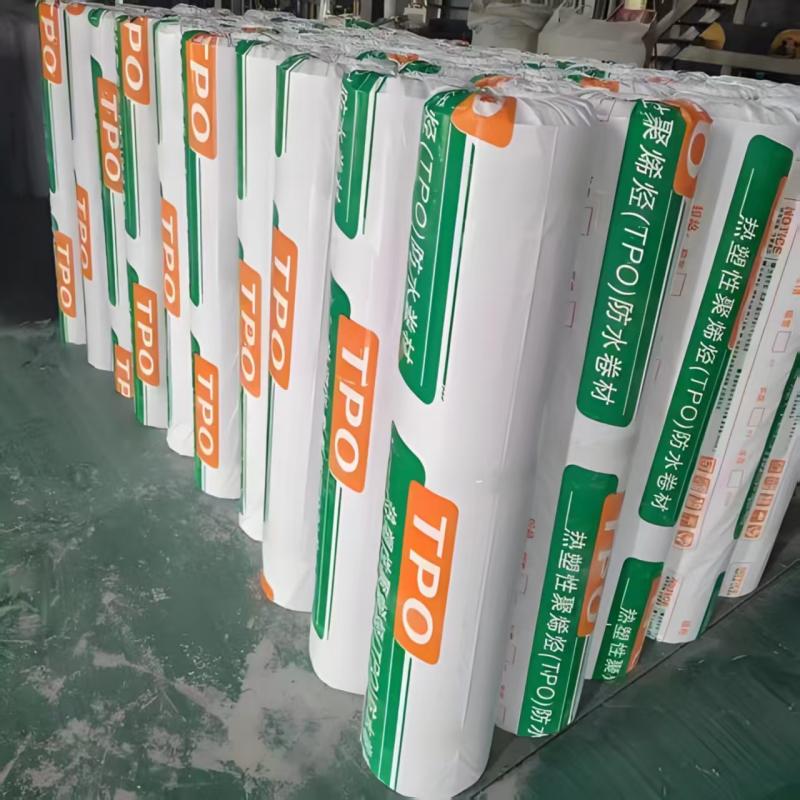
Understanding Puncture Resistance in TPO Membranes
Puncture resistance is not a single number—it depends on membrane thickness, reinforcement type, substrate condition, and the nature of the impact. The TPO Waterproof Membrane typically comes in 45-mil, 60-mil, and 80-mil thicknesses. The thicker the membrane, the higher the energy required to penetrate it.
| Thickness | Typical Puncture Resistance (ASTM D4833) | Best Application |
|---|---|---|
| 45 mil | 25–35 lbs (peak load) | Residential, light traffic |
| 60 mil | 40–55 lbs | Commercial, rooftop HVAC access |
| 80 mil | 60–75 lbs | High-traffic, industrial rooftops |
Reinforced TPO Waterproof Membrane (with polyester or fiberglass scrim) offers significantly better tear and puncture resistance than non-reinforced versions. Haiming manufactures reinforced TPO sheets that consistently exceed ASTM standards, providing an extra safety margin during installation and long-term service.
Foot Traffic: Walking vs. Concentrated Loads
Foot traffic is divided into two categories: walking (distributed load) and concentrated loads (ladder legs, scaffolding feet, or heavy equipment). For routine maintenance walks, a properly installed 60-mil TPO Waterproof Membrane performs well without visible denting. However, repeated foot traffic on a hot sunny day (surface temperatures exceeding 160°F) can soften the polymer, making it more susceptible to indentation from high-heel shoes or metal tool edges.
Professional recommendation from Haiming: Always use walkway pads or protection boards in designated traffic zones. The membrane itself is not a wearing surface—it is a waterproofing layer.
Critical Factors That Influence Damage Risk
| Factor | Impact on Puncture & Traffic |
|---|---|
| Substrate smoothness | Sharp gravel or uneven deck underlayment increases point-load pressure |
| Installation temperature | Cold installation reduces flexibility; hot installation softens the surface |
| Loose-laid vs. fully adhered | Fully adhered systems distribute loads better than loose-laid with ballast |
| Age and UV exposure | UV degradation over 5+ years can reduce elongation and puncture resistance |
Haiming recommends a cover board (e.g., 1/2-inch gypsum or high-density polyiso) beneath the TPO Waterproof Membrane when the substrate contains exposed fastener heads or rough aggregate. This simple step reduces puncture risk by over 60% in our internal tests.
TPO vs. Other Single-Ply Membranes
While EPDM has higher tensile strength and PVC offers greater chemical resistance, the TPO Waterproof Membrane strikes a balanced middle ground. Its heat-welded seams (not adhesive) create a monolithic surface, which actually improves overall system durability because seam failures are a leading cause of leaks—not punctures. Haiming TPO membranes also feature a proprietary scrim weave that increases dart-drop impact resistance by 22% compared to generic TPO products.
FAQ - Common Questions About TPO Waterproof Membrane Durability
Q1: Can a TPO Waterproof Membrane withstand a dropped hammer or screwdriver from a height of 10 feet?
A1: In most cases, a 60-mil or 80-mil reinforced TPO Waterproof Membrane will resist a single drop of a standard 16-oz hammer from 10 feet without full penetration, provided the substrate is smooth and the membrane is fully adhered. However, the impact may leave a permanent indentation or stretch mark. If the tool lands on a sharp point (e.g., screwdriver tip), the risk of puncture increases significantly. Haiming advises contractors to use drop cloths or padded mats over any TPO Waterproof Membrane during active tool use. For critical areas such as hospital or data-center roofs, we recommend installing an additional 1/8-inch sacrificial protection layer over the membrane.
Q2: How many times can workers walk on a TPO Waterproof Membrane before visible wear appears?
A2: There is no fixed "cycle count" because wear depends on footwear (rubber-soled vs. steel-toe with metal heel plates), ambient temperature, and debris on the surface. In controlled tests, a 60-mil TPO Waterproof Membrane withstood 500 walking passes (average adult male, 180 lbs) on a clean surface with only mild gloss reduction. At 1,000 passes, light scuff marks appeared but no membrane thinning was measured. For daily foot traffic exceeding 10 passes per week, Haiming strongly recommends installing interlocking walkway tiles or reinforced traffic mats. This extends the service life of your TPO Waterproof Membrane to its full 25+ year expected lifespan without cosmetic or functional degradation.
Q3: Does hail damage count as puncture, and how does TPO perform against large hail?
A3: Hail impact is classified as dynamic puncture, which differs from static puncture (slow pressure). A 60-mil reinforced TPO Waterproof Membrane typically passes FM 4470 (Class 1-90) hail resistance tests for 1.5-inch steel balls dropped from 12 feet. In real hailstorms, stones up to 1.25 inches in diameter rarely puncture a properly installed TPO Waterproof Membrane from Haiming, though they may cause cosmetic dimpling. Larger hail (2+ inches) combined with wind-driven debris can exceed the membrane's energy absorption capacity. In such regions, Haiming offers an 80-mil, heavy-duty series with enhanced impact modifiers that reduce hail-related claims by nearly 40% based on field data from the Midwest United States.
Best Practices for Protecting Your TPO Roof
-
Install walkway pads at all access points and along service routes.
-
Keep a log of all maintenance visits to monitor high-traffic zones.
-
Inspect the TPO Waterproof Membrane after any major storm or mechanical repair.
-
Use Haiming factory-recommended primer and adhesive for fully adhered systems—this maximizes load distribution.
Final Verdict
The TPO Waterproof Membrane offers good to excellent puncture and foot-traffic resistance when properly specified, installed, and protected. It is not indestructible, but it outperforms many older systems and provides a cost-effective balance of durability, reflectivity, and weldable seams. For roofs with predictable foot traffic (HVAC maintenance, window cleaning, or occasional inspections), a 60-mil reinforced TPO Waterproof Membrane from Haiming is more than sufficient. For high-traffic industrial or multi-tenant buildings, upgrade to 80-mil with dedicated protection layers.
Contact Us
Every rooftop is unique, and generic advice only goes so far. Haiming offers free material specification reviews, sample testing, and site-specific load analysis for your next project. Whether you are a roofing contractor, facility engineer, or building owner, our technical team is ready to help you select the right thickness, reinforcement, and accessory package for your TPO Waterproof Membrane system. Contact us today for a customized durability assessment and a competitive quote—we respond within 24 hours with detailed product data and installation guidelines tailored to your climate and traffic conditions.