

What Alloys Are Best Suited for Gravity Die Casting in Automotive Applications
2026-09-08
Selecting the right alloy for Gravity Die Casting directly determines component performance, production yield, and long-term durability in modern vehicles. Xuxing has spent over two decades refining alloy-specific process parameters for Gravity Die Casting, and our production data consistently shows that material choice accounts for nearly 40% of final part quality. This guide examines the most widely adopted aluminum and magnesium alloys, their mechanical behaviors under permanent mold conditions, and the practical trade-offs that engineers face during series production.
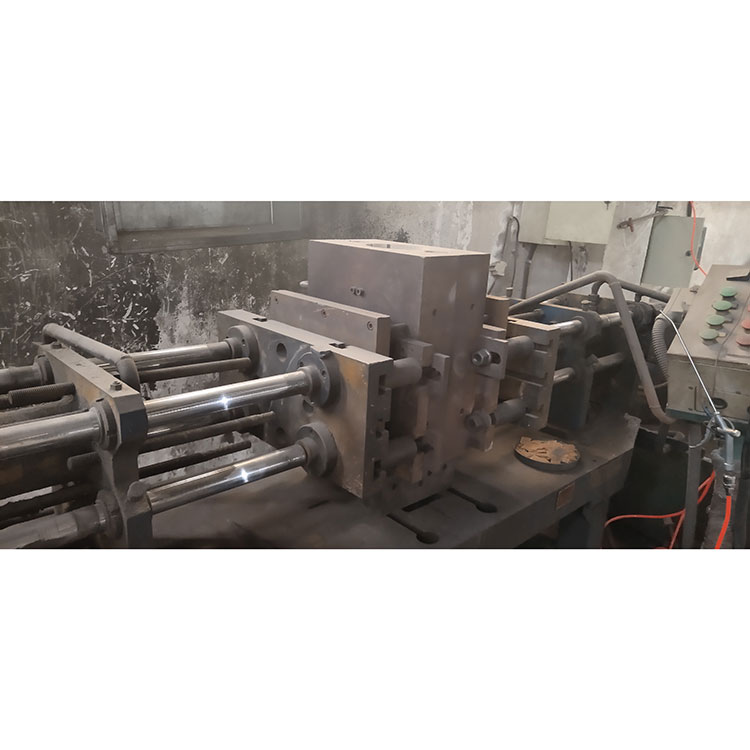
Why Alloy Selection Matters in Gravity Die Casting
Unlike high-pressure die casting, Gravity Die Casting relies on molten metal flowing into a reusable steel mold solely under gravitational force. This slower fill rate demands alloys with excellent fluidity, controlled solidification shrinkage, and stable feeding characteristics. The automotive sector prioritizes alloys that balance lightweighting with crashworthiness, fatigue resistance, and thermal management—particularly for powertrain, structural, and chassis components.
Top Alloy Families for Automotive Gravity Die Casting
| Alloy Series | Typical Automotive Applications | Key Advantage in Gravity Die Casting | Limitation |
|---|---|---|---|
| A356 (Al-Si-Mg) | Suspension arms, steering knuckles, wheels | Excellent castability + heat-treatable (T6) | Lower ductility vs. 3xx.0 variants |
| A319 (Al-Si-Cu) | Cylinder heads, engine blocks, water jackets | High fluidity for thin-wall sections (3–4 mm) | Reduced corrosion resistance |
| A380 (Al-Si-Cu-Mg) | Transmission housings, brackets | Superior pressure tightness | Limited weldability |
| Al-Mg (5xx series) | Structural crash boxes, cross-members | Outstanding impact energy absorption | Narrow freezing range → hot tearing risk |
| AM60 (Mg-Al-Mn) | Instrument panels, seat frames | 33% lighter than aluminum | Higher tooling wear due to magnesium reactivity |
| AZ91D (Mg-Al-Zn) | Steering columns, pedal supports | High yield strength (≈150 MPa as-cast) | Susceptible to microporosity |
Among these, A356 remains the industry benchmark for safety-critical suspension parts because its T6 heat treatment unlocks yield strengths above 220 MPa while maintaining 5–7% elongation. Xuxing has optimized gating designs specifically for A356 in Gravity Die Casting, reducing oxide film entrainment by over 60% compared to conventional top-fill systems.
Critical Performance Criteria for Alloy Selection
When evaluating alloys for Gravity Die Casting, automotive engineers must weigh four interlinked factors:
-
Fluidity index – determines minimum fillable wall thickness (A319 excels at 2.8 mm; A380 requires ≥3.2 mm)
-
Hot tear susceptibility – Al-Mg alloys demand higher mold temperatures (250–300°C) to avoid cracking
-
Die soldering tendency – high-iron alloys (e.g., A380) reduce adhesion but compromise ductility
-
Heat treatment response – artificial aging (T5/T6) can double as-cast strength but adds cycle time
For electric vehicle battery housings, Xuxing frequently recommends A356 with 0.12–0.15% Sr modification, which refines eutectic silicon and improves thermal shock resistance during rapid charging cycles.
Gravity Die Casting FAQ
Q: How does the solidification rate in Gravity Die Casting affect alloy mechanical properties compared to sand casting?
A: In Gravity Die Casting, the metal mold extracts heat 8–10 times faster than sand molds, producing a finer dendritic structure (secondary dendrite arm spacing typically 25–40 μm vs. 60–100 μm in sand). This refinement directly increases ultimate tensile strength by 15–25% for the same alloy chemistry. However, the rapid cooling also creates higher thermal gradients, which intensify shrinkage porosity if the gating system fails to maintain directional solidification. Xuxing addresses this by implementing water-cooled copper chill blocks in the mold's thickest sections, ensuring that the feeder remains the last liquid zone—a practice that has reduced rejection rates from 8.2% to under 2.1% across our automotive production lines.
Q: Can magnesium alloys be reliably processed in permanent molds without special safety measures?
A: Yes, but Gravity Die Casting of magnesium (e.g., AM60, AZ91D) demands strict melt protection because molten magnesium oxidizes vigorously above 650°C and can ignite in air. Automotive foundries must use sulfur hexafluoride (SF₆) or HFC-134a cover gases, along with precision-controlled pouring ladles. Additionally, the steel die must be coated with boron nitride or specialized phosphate-based release agents to prevent exothermic reactions that degrade mold surfaces. Xuxing has validated a proprietary die coating system that extends magnesium tool life to 85,000–100,000 shots—comparable to aluminum—while maintaining a safe production environment. The weight savings (up to 34 kg per vehicle) often justify these additional operational costs for premium EV platforms.
Q: Why is A380 not recommended for structural welded assemblies in Gravity Die Casting?
A: A380 contains 2.0–4.0% copper, which forms intermetallic compounds (Al₂Cu) that segregate along grain boundaries during the slower solidification of Gravity Die Casting (fill time 3–8 seconds). These copper-rich phases lower the alloy's solidus temperature from 595°C to approximately 515°C, making the heat-affected zone prone to liquation cracking during arc welding. Furthermore, the high silicon content (7.5–9.5%) reduces ductility below 2.5% elongation, failing typical OEM weld joint strength requirements (>180 MPa). For welded subframes, Xuxing recommends either A356-T6 (which can be pulse-MIG welded with 4043 filler) or switch to an Al-Mg alloy (5182) that offers 12–14% elongation and superior fusion zone integrity.
Practical Recommendations from the Foundry Floor
Based on Xuxing’s annual output of over 2.8 million Gravity Die Casting automotive components, we observe that:
-
Engine blocks → A319 with 6–7% Si and 3–4% Cu for wear resistance at cylinder bores
-
Suspension knuckles → A356-T6, Sr-modified, with Mg/Si ratio maintained at 1.73
-
EV battery trays → A356 or A357 (higher Mg) for fatigue endurance under vibration loads
-
Small brackets & levers → A380 for its exceptional dimensional stability without heat treatment
A common mistake is over-specifying high-performance alloys without evaluating mold thermal balance. For instance, switching from A380 to A356 in Gravity Die Casting may require 30–50°C higher die temperatures to avoid cold shuts, which directly impacts cycle time by 8–12 seconds per shot.
Future Trends in Gravity Die Casting Alloys
The industry is rapidly moving toward secondary alloys with 30–50% recycled content, driven by EU End-of-Life Vehicle regulations. Xuxing is currently trialing an experimental Al-Si-Fe-Mn alloy that maintains A356-level strength while accepting 0.6–0.8% Fe—a tramp element traditionally limited to 0.2% in primary alloys. Early results show that optimized Mn/Fe ratios (above 1.2) transform brittle platelet β-phases into harmless α-Al(FeMn)Si particles, preserving ductility above 4%.
Partner with Specialists Who Understand Alloy-Performance Links
Choosing the right alloy for Gravity Die Casting is never a one-size-fits-all decision—it depends on geometry, heat treatment routes, welding requirements, and cost targets. Xuxing offers full-spectrum support from alloy selection consultation, mold flow simulation, to prototype sampling and PPAP documentation.
Contact us today to discuss your upcoming automotive project. Our engineering team will provide a comparative alloy matrix tailored to your component's loading conditions, along with cycle-time estimates and tooling investment breakdowns. Reach out via our website or email [email protected]—let’s turn your casting challenges into production successes.