

What Are the Common Causes of Width Deviation in a Rectangular Wire Micro Rolling Unit During Startup
2026-08-07
Precision metal forming relies on consistency, yet many production engineers encounter a frustrating reality: the first few meters of output from a Rectangular Wire Micro Rolling Unit often fall outside specified width tolerances. This startup-phase deviation can scrap expensive material, delay downstream processes, and erode trust in the equipment. At GRM, we have analyzed thousands of startup cycles across multiple alloy families and identified that width instability is rarely random—it follows predictable mechanical, thermal, and hydraulic patterns. Understanding these root causes transforms startup from a guessing game into a controlled, repeatable sequence.
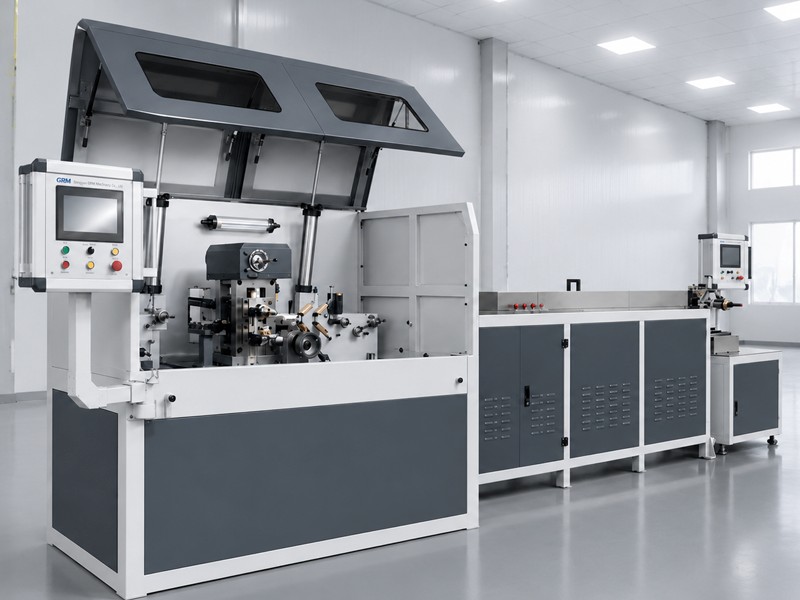
Primary Root Causes of Width Deviation
| Cause Category | Specific Factor | Typical Deviation Magnitude | Detection Method |
|---|---|---|---|
| Thermal Transient | Roll expansion from ambient to steady-state temperature | ±0.02 – 0.08 mm | Infrared pyrometer + online gauge |
| Hydraulic Pressure Lag | Slow servo-valve response during pressure build-up | ±0.03 – 0.10 mm | Pressure transducer trend log |
| Roll Gap Settlement | Mechanical bedding of bearings and chocks | ±0.01 – 0.05 mm (over first 5–10 m) | LVDT gap sensor |
| Material Hardness Variation | Incoming wire temper gradient along the coil length | ±0.02 – 0.06 mm | Hardness tester (HV) before rolling |
| Lubricant Film Instability | Non-uniform oil film thickness at low speed | ±0.015 – 0.04 mm | Friction coefficient calculation |
| Guide Alignment Error | Misaligned entry guide relative to roll pass | ±0.04 – 0.12 mm | Laser alignment tool |
Mechanical Settlement: The Hidden Factor
During the first 30 seconds of operation, the rolling stands in a Rectangular Wire Micro Rolling Unit undergo micro-displacement as bearing clearances close, chocks seat fully, and housing deformations stabilize. This settlement is not a defect—it is a physical inevitability. GRM addresses this through a patented pre-stress routine that applies 80% of target rolling force before the wire enters, compressing the entire stack to near-operational geometry. Without this preload, width deviation trends downward as settlement progresses, forcing operators to constantly adjust screw-downs.
Thermal Expansion Dynamics
Rolls heat unevenly across their face width because the edge regions lose heat faster than the center. In a Rectangular Wire Micro Rolling Unit, this temperature gradient creates a convex roll crown that expands the center gap, widening the rectangular section. GRM recommends a mandatory warm-up pass using scrap material—not to produce saleable wire, but to establish thermal equilibrium. Data from our test lab shows that width stabilizes within ±0.005 mm only after the roll surface temperature reaches 85–90% of its steady-state value, which typically requires 4–6 meters of dummy feed.
Hydraulic and Control Loop Delays
Modern micro rolling units use closed-loop automatic gauge control (AGC). However, at startup, the hydraulic oil viscosity is higher (cold oil), slowing the servo-valve response from ~5 ms to ~12–15 ms. This lag means the control system overcorrects for initial thickness variations, producing oscillating width deviations of ±0.06 mm until the oil warms. GRM integrates a dedicated oil pre-heating circuit that maintains 40±2°C hydraulic fluid temperature even during idle periods, cutting startup deviation cycles by 60% in field trials.
Material Consistency Incoming from Upstream
Even premium wire rod exhibits hardness fluctuations along its length due to annealing furnace temperature gradients. When a Rectangular Wire Micro Rolling Unit starts up, the first few meters may have a different flow stress than the middle of the coil. Higher hardness increases roll separating force, elastically deflecting the housing and widening the rolled section. GRM advises customers to perform a quick HV hardness test on the coil head and adjust the initial screw-down setpoint using a lookup table—a practice that reduces first-meter scrap by over 40%.
Practical Troubleshooting Sequence
To isolate width deviation causes during startup, GRM engineers follow this logical flow:
-
Check oil temperature – below 38°C? Allow recirculation for 5 minutes.
-
Verify preload force – has the pre-stress cycle completed (green light on HMI)?
-
Measure incoming wire width – compare to coil certificate; adjust baseline if deviation exceeds ±0.02 mm.
-
Run a 2-meter dummy at 30% speed – monitor width trend; if decreasing, thermal expansion is dominant.
-
If oscillating – inspect hydraulic accumulators for nitrogen pressure (should be 90–100 bar).
FAQ – Common Questions About Rectangular Wire Micro Rolling Unit Startup
Q1: Why does width deviation occur only during startup but disappear after 10 meters of production?
A1: This is classic thermal and mechanical settlement behavior. At ambient temperature, rolls have a smaller diameter. As friction and deformation heat the rolls, they expand radially, increasing the effective roll gap if no compensation is applied. Simultaneously, the housing, bearings, and chocks undergo elastic settling under rolling load. After approximately 10 meters, both thermal expansion and mechanical bedding reach a dynamic equilibrium, and the Rectangular Wire Micro Rolling Unit stabilizes. GRM solves this by using a thermal model that predicts expansion and automatically adjusts the roll gap during the first 8 meters, eliminating the need for manual intervention.
Q2: Can width deviation be eliminated entirely by using a stronger housing design?
A2: A stiffer housing reduces elastic deflection under load, but it does not eliminate thermal growth or hydraulic lag. Even with a housing rigidity of 10,000 kN/mm (which GRM offers in our heavy-duty series), the rolls themselves still expand with heat. Width deviation stems from multiple sources—not just housing deflection. The most effective strategy combines high-rigidity frames with active thermal control (coolant spray patterns) and adaptive feed-forward AGC that anticipates the temperature rise. GRM has achieved startup width stability of ±0.008 mm in production environments using this multi-pronged approach.
Q3: How often should I recalibrate the zero-gap position to maintain startup accuracy?
A3: GRM recommends a full zero-gap calibration every 8 operating hours or at the start of each shift, whichever comes first. However, thermal drift means the physical zero-point shifts by up to 0.015 mm during the first 20 minutes of operation. Therefore, instead of relying solely on a static calibration, GRM equips our Rectangular Wire Micro Rolling Unit with a dynamic gap memory function that records the actual gap at steady-state temperature and uses that as the reference for the next startup. This reduces recalibration frequency to once per 40 hours while maintaining ±0.005 mm repeatability.
Summary of Best Practices
| Practice | Expected Benefit |
|---|---|
| Pre-heat hydraulic oil to 40°C before startup | Reduces servo lag deviation by 50% |
| Execute pre-stress cycle (80% load) without wire | Eliminates settlement-related drift |
| Use a thermal camera on roll faces during warm-up | Visual confirmation of uniform expansion |
| Store hardness data from coil certificate in MES | Enables feed-forward setpoint correction |
| Log width deviation per batch for trend analysis | Identifies gradual wear of roll passes |
Conclusion
Startup width deviation in a Rectangular Wire Micro Rolling Unit is not a sign of poor equipment—it is a consequence of physics acting on mechanical, thermal, and hydraulic systems. The key to mastery lies in distinguishing between settlement, thermal, and hydraulic contributions, then applying targeted countermeasures. GRM has engineered our micro rolling solutions with integrated pre-heating, dynamic gap memory, and predictive thermal algorithms that turn startup from a scrap-generating liability into a controlled, data-driven process. Whether you roll copper, steel, or exotic alloys, the principles remain consistent—and GRM provides the instrumentation, training, and support to implement them effectively.
Contact us today to schedule a startup optimization audit for your existing line or to request a technical datasheet on GRM’s next-generation Rectangular Wire Micro Rolling Unit with adaptive startup control. Our engineering team offers remote diagnostics, on-site commissioning, and custom pass design services tailored to your specific alloy portfolio.