

What Are the Common Maintenance Issues with a Pharmaceutical PVC Blister Sheet Machine
2026-07-02
For pharmaceutical packaging lines, the Pharmaceutical PVC blister sheet machine is the backbone of primary packaging operations. Any unplanned downtime directly impacts batch release, material waste, and regulatory compliance. While modern equipment from trusted manufacturers like Eaststar is engineered for reliability, even the best Pharmaceutical PVC blister sheet machine requires systematic maintenance. Ignoring early warning signs leads to costly repairs, rejected blisters, and failed seal integrity tests.
This guide outlines the most frequent maintenance challenges encountered in daily production, provides a structured troubleshooting approach, and offers actionable solutions—all based on field data from high-volume pharma plants.
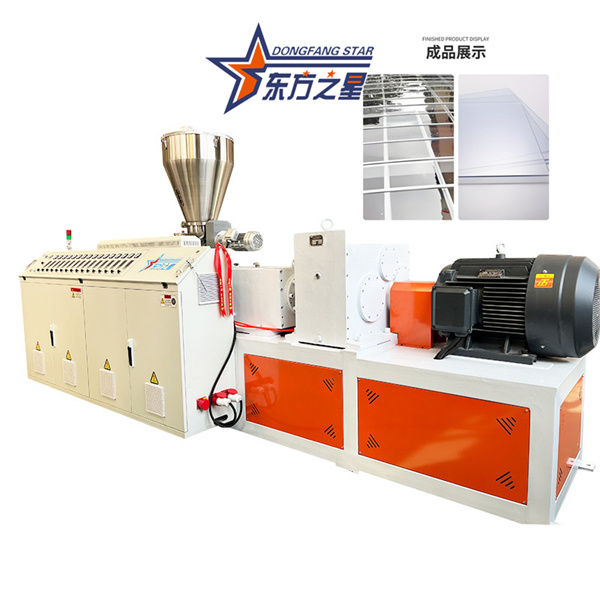
1. Heating System Fluctuations
The forming station relies on precise, consistent heat to soften PVC film. The most common complaint is temperature drift—where the actual platen temperature deviates from the setpoint by ±5°C or more.
| Symptom | Root Cause | Immediate Action |
|---|---|---|
| Blister wall thinning | Thermocouple wear or loose connection | Replace thermocouple; recalibrate |
| Uneven blister depth | Heater cartridge burnout in zone | Swap cartridge; check SSR relay |
| Long heat-up time | Scale buildup on cooling plates | Descaling with approved solvent |
Eaststar recommends logging heating profiles every shift. A sudden drop in amperage draw often indicates a failing heater before temperature alarms trigger.
2. Film Tracking and Web Tension Issues
PVC film must travel through the Pharmaceutical PVC blister sheet machine with zero lateral drift. Misalignment causes edge curling, fold marks, and misfeeds into the sealing station.
-
Common causes: Worn dancer roller bearings, uneven brake pressure on the unwinder, or debris on guide rails.
-
Preventive measure: Clean all idler rollers with isopropyl alcohol daily. Eaststar machines include laser-aligned guide rails, but operators must verify tension values (in N/mm²) against the film batch certificate.
3. Sealing Station Contamination
The sealing plate (or roller) develops a carbonized layer from PVC residue and anti-blocking agents. This is the #1 reason for peel-force failures in blister packs.
| Issue | Frequency | Solution |
|---|---|---|
| Residue buildup | Every 4–6 hours | Offline cleaning with brass scraper + non-abrasive pad |
| Pitted sealing surface | Every 3 months | Precision grinding or replace plate |
| Inconsistent seal pressure | Weekly | Check pneumatic cylinder stroke and pressure gauge |
Eaststar offers quick-change sealing plates with PTFE coating, which reduces cleaning frequency by 40%. However, never use steel wool on coated surfaces—it destroys the non-stick layer.
4. Cutting and Perforation Die Wear
The punching unit creates tear-off perforations between blister cards. Dull dies produce ragged edges that fail visual inspection and can jam downstream cartoners.
Key maintenance metrics to track:
-
Die clearance: 0.03–0.05 mm (check with feeler gauge)
-
Punching force: Monitor via load cell (should remain within ±2% of baseline)
-
Lubrication: Food-grade PTFE spray every 2 hours of runtime
If you notice increased motor current during the cutting stroke, stop the Pharmaceutical PVC blister sheet machine immediately and inspect the die holder for play. Eaststar supplies hardened D2 steel dies with a guaranteed 5-million-cycle life under proper lubrication.
5. Pneumatic System Leaks
Modern blister machines use 5–7 bar compressed air for clamping, forming, and ejecting. Even a 0.5 bar drop reduces forming pressure, leading to shallow cavities.
-
Top leak points: Quick-release couplings, cylinder rod seals, and solenoid valve exhaust ports.
-
Detection method: Ultrasonic leak detector or soapy water test during idle periods.
-
Fix: Replace O-rings and use thread sealant (never Teflon tape on pneumatic fittings).
Eaststar integrates pressure sensors with real-time display; a yellow warning appears at 6.2 bar, and a red alarm at 5.8 bar—allowing proactive intervention.
6. Electrical Control and Sensor Drift
Proximity sensors, photoelectric registration marks, and encoder feedback are critical for indexing accuracy. Dust from PVC trimming accumulates on sensor lenses, causing false triggers.
Weekly checklist:
-
Clean all photoelectric sensors with lens-grade wipes
-
Verify registration mark contrast using a grey card
-
Check encoder coupling for set-screw tightness
A mis-indexed Pharmaceutical PVC blister sheet machine wastes 3–5% of film per shift. Eaststar’s PLC-based system logs each sensor’s signal-to-noise ratio, so you can replace a failing sensor during scheduled downtime rather than in the middle of a batch.
Preventive Maintenance Schedule (Summary Table)
| Component | Daily | Weekly | Monthly | Quarterly |
|---|---|---|---|---|
| Heating platens | Visual check | Thermocouple calibration | - | Heater resistance test |
| Tension rollers | Wipe clean | Bearing grease | Align rails | Replace dancer springs |
| Sealing plate | Scrape residue | Check flatness | - | Grind/polish |
| Punching dies | Lubricate | Clearance check | Sharpness test | Replace if worn |
| Pneumatics | Drain filters | Leak test | Rebuild cylinders | - |
| Sensors | Clean lenses | Test response | - | Replace backup units |
FAQ – Common Questions About the Pharmaceutical PVC Blister Sheet Machine
Q1: How do I know if my heating system needs recalibration versus replacement?
A: First, perform a temperature uniformity test using a surface pyrometer at three points (center, left, right) on the platen. If the variance exceeds ±3°C after tightening all terminal connections, the thermocouple is suspect. Replace the thermocouple and run an autotune cycle. If the temperature still oscillates beyond ±2°C over 10 minutes, the solid-state relay (SSR) has likely degraded—replace it. Only consider full heater bank replacement if more than 30% of cartridges show resistance deviation >10% from nominal. Eaststar provides a diagnostic flowchart in every machine manual to differentiate these scenarios.
Q2: What is the most cost-effective way to reduce sealing plate cleaning frequency?
A: The proven approach is a two-step strategy. First, adjust the sealing temperature downward by 5–8°C while increasing dwell time by 0.2 seconds—this reduces carbonization without compromising peel strength (validate with seal-force tester). Second, apply a silicone-based release spray specifically rated for PVC at the start of each shift, but only a 1-second burst—over-application transfers to the film and ruins heat-seal coating. Many Eaststar users also install an exhaust hood directly over the sealing station to remove fumes and airborne particles, which cuts residue buildup by nearly half. Combined, these measures extend cleaning intervals from 4 hours to 8–10 hours.
Q3: Why does my machine occasionally skip indexing even though the registration sensor shows a green light?
A: This is almost always a mechanical slack issue rather than an electrical fault. When the dancer arm oscillates excessively (visible as jerky motion), the film momentarily loses tension, and the encoder counts pulses but the film doesn't advance proportionally. The sensor sees the registration mark correctly, but the physical film position lags behind. Check the air pressure to the dancer cylinder—it should be 2.5–3.0 bar. Then inspect the brake pad on the unwinding shaft; worn pads create uneven back-tension. Finally, clean the encoder wheel and ensure its rubber surface is not glazed. If all these check out, increase the registration window tolerance in the PLC by one millisecond—Eaststar’s engineering team can guide this parameter adjustment remotely.
Conclusion
Proactive maintenance of your Pharmaceutical PVC blister sheet machine is not an expense—it is an investment in batch consistency, OEE improvement, and audit readiness. From heater drift to sensor contamination, every issue has a predictable pattern and a documented countermeasure. Eaststar machines are built with diagnostic ports, quick-access panels, and interchangeable modules to simplify every task listed above.
However, even the best preventive schedule cannot replace expert eyes and hands. If you are facing recurring faults, unexplained quality rejects, or simply want to benchmark your current maintenance program against industry best practices, our service team is ready.
Contact us today for a free maintenance audit of your Pharmaceutical PVC blister sheet machine. Eaststar offers on-site training, spare parts kits, and remote diagnostics to keep your line running at peak performance. Reach out via our website or call your regional support number—let us help you turn maintenance from a headache into a competitive advantage.