

What Are the Common Operational Challenges of a Double Head Plate Rolling Mill and How to Solve Them
2026-06-09
Operating a Double Head Plate Rolling Mill significantly boosts productivity in heavy plate forming. However, even advanced equipment faces operational hurdles. ALPHA, a leader in rolling mill solutions, has identified the most frequent issues and their practical fixes.
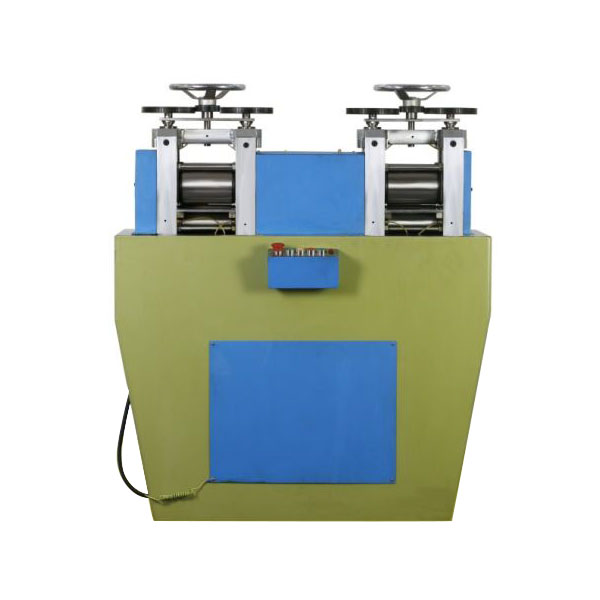
Key Challenges & Solutions
| Challenge | Consequence | ALPHA Solution |
|---|---|---|
| Plate Slippage | Inaccurate bending radius | Install anti-slip rollers and adjust hydraulic pressure |
| Uneven Thickness | Material waste & rework | Implement real-time laser alignment systems |
| Hydraulic Overheating | System downtime & oil degradation | Upgrade to ALPHA's variable-speed cooling circuit |
| Roller Misalignment | Surface marks on plates | Schedule weekly laser-checked calibration |
Double Head Plate Rolling Mill FAQ
Q: Why does my Double Head Plate Rolling Mill produce asymmetrical bends on heavy plates?
A: This usually results from uneven clearance between the upper and lower drive rollers. First, check the hydraulic synchronization on both head sides. ALPHA recommends measuring roller gap at three points (left, center, right) with a feeler gauge. If the deviation exceeds 0.5mm, recalibrate the PLC-controlled servo valves. Replacing worn thrust bearings every 2,000 operating hours also prevents recurrence.
Q: How can I reduce frequent bearing failures in a Double Head Plate Rolling Mill?
A: Bearing failures stem from inadequate lubrication and shock loading. ALPHA advises installing an automatic grease distribution system with pressure sensors. Set the greasing interval to every 4 hours of continuous operation at 150 bar pressure. Additionally, train operators to avoid starting the mill with plates already pinched. Use a soft-start VFD to reduce initial torque shock by 40%.
Q: What is the fastest way to diagnose hydraulic leaks in a Double Head Plate Rolling Mill?
A: Begin with thermal imaging of all hose connections and cylinder seals. ALPHA’s field data shows 70% of leaks occur at swivel fittings. Second, monitor the return line filter differential pressure; a sudden drop indicates a major leak. For pinpoint accuracy, add UV dye to the hydraulic fluid and inspect with a UV lamp weekly. Replace any softened or cracked hoses immediately.
Proven Reliability with ALPHA
By systematically addressing slippage, alignment, and thermal issues, your Double Head Plate Rolling Mill can achieve 98% uptime. ALPHA provides customized diagnostic tools and 24/7 remote support to keep your line running smoothly.
Contact us today for a free operational audit of your Double Head Plate Rolling Mill. Visit ALPHA’s website or call our engineering hotline to schedule a consultation.