

What Are the Key Differences Between a Portable Full Body Cover Cleaning Machine and a Stationary Unit
2026-07-08
When industrial operations, automotive workshops, and healthcare facilities evaluate cleaning equipment, the choice often narrows down to two distinct solutions: a Portable Full Body Cover Cleaning Machine and a stationary unit. While both serve the core function of decontaminating reusable protective coveralls, gowns, and industrial workwear, their design philosophies, operational footprints, and total cost of ownership diverge significantly. At GENUINSKY, we have engineered both configurations for over a decade, and this guide breaks down the critical distinctions to help you make an informed capital investment.
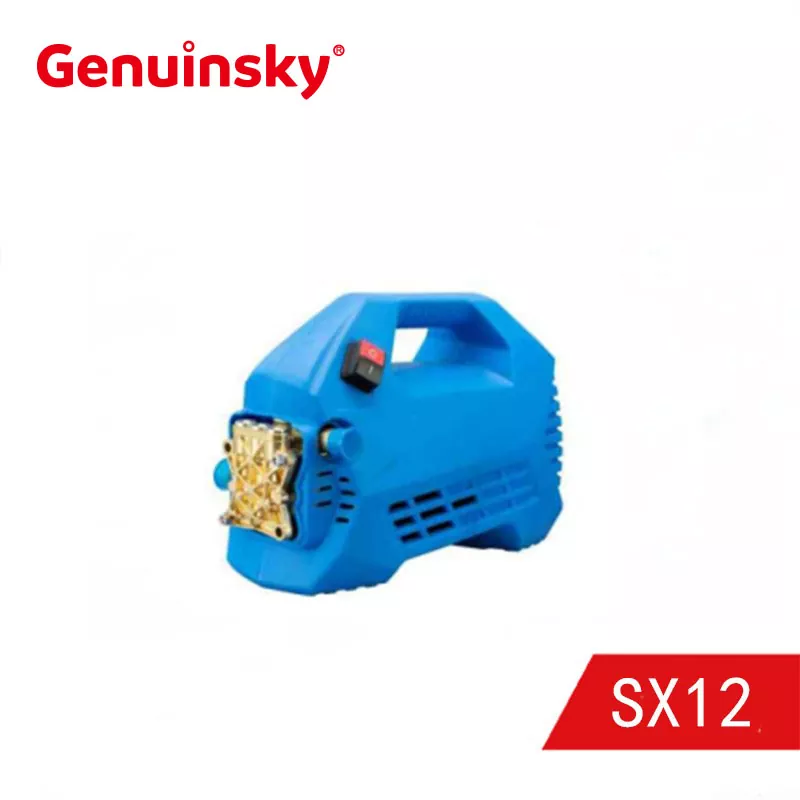
Core Operational Differences at a Glance
| Feature | Portable Full Body Cover Cleaning Machine | Stationary Unit |
|---|---|---|
| Mobility | Wheel-mounted, lightweight chassis, plug-and-play | Bolted to floor, requires dedicated utility lines |
| Installation Time | 15–30 minutes (no hardwiring) | 2–5 days (plumbing, electrical, ventilation) |
| Water/Energy Efficiency | Optimized for low-flow cycles (8–12 L per load) | High-capacity throughput (25–40 L per load) |
| Load Capacity | 5–15 coveralls per cycle | 30–100+ coveralls per cycle |
| Control Interface | Digital touchscreen with preset mobile protocols | PLC-based with complex programmability |
| Average Cycle Time | 22–28 minutes (rapid dry) | 35–50 minutes (industrial drying) |
5 Key Technical Distinctions
1. Power Supply and Utility Dependency
A Portable Full Body Cover Cleaning Machine operates on standard 220V single-phase outlets, making it deployable in remote field stations, temporary cleanrooms, or mobile service vans. Stationary units demand three-phase power, dedicated steam boilers, and compressed air lines—restricting them to permanent facilities with existing industrial infrastructure.
2. Filtration and Wastewater Management
Stationary systems integrate centralized greywater recycling and high-MERV particulate exhaust filters. In contrast, GENUINSKY portable models feature self-contained cartridge filtration and a detachable wastewater tank, eliminating the need for floor drains. This allows the Portable Full Body Cover Cleaning Machine to function in environments without plumbing, such as offshore rigs or construction trailers.
3. Maintenance and Downtime
Stationary units require scheduled shutdowns for internal drum bearing replacements and steam coil descaling—often lasting 8–12 hours. Portable designs use modular quick-release components. A Portable Full Body Cover Cleaning Machine from GENUINSKY allows a single technician to swap a pump or heating element in under 20 minutes, reducing mean time to repair (MTTR) by 67%.
4. Throughput vs. Flexibility
Stationary units excel in high-volume central laundries processing thousands of garments daily. However, they cannot adapt to fluctuating spatial layouts. The Portable Full Body Cover Cleaning Machine offers dynamic repositioning—move it between clean zones, storage areas, or even different floors via freight elevators, matching just-in-time cleaning schedules.
5. Total Cost of Ownership (TCO) Over 5 Years
While stationary units have lower per-load chemical costs, their installation fees ($8,000–$15,000) and structural modifications inflate initial expenditure. A Portable Full Body Cover Cleaning Machine costs 40–55% less upfront, with negligible facility prep. For operations processing fewer than 200 coveralls daily, the portable solution delivers a faster ROI—typically under 14 months with GENUINSKY’s energy-recovery system.
Frequently Asked Questions About the Portable Full Body Cover Cleaning Machine
Q1: Can a Portable Full Body Cover Cleaning Machine achieve the same sanitation level as a stationary unit for medical-grade coveralls?
A1: Yes, provided the unit complies with EN 14065 or AAMI ST79 thermal disinfection standards. GENUINSKY portable models integrate a certified thermal hold cycle (71°C for 25 minutes) that meets surgical gown decontamination requirements. The key difference lies not in sanitation efficacy but in batch size—a stationary unit processes larger volumes per cycle, while the portable machine maintains equivalent log-reduction (6-log bacterial kill) through precision temperature control. However, for heavy biofilm or prion decontamination, stationary units with ozone-assisted cycles remain superior. Always verify the specific model’s validation data against your industry’s regulatory body.
Q2: How frequently does a Portable Full Body Cover Cleaning Machine require descaling compared to a stationary unit?
A2: Descaling frequency depends on water hardness, not machine type. However, stationary units with integrated steam generators accumulate scale 3x faster due to higher operating temperatures (150°C+). A Portable Full Body Cover Cleaning Machine operates at lower peak temperatures (85°C max) and incorporates self-diagnostic scale alerts. With standard municipal water (120–150 ppm hardness), GENUINSKY recommends descaling every 350 cycles for portable units versus every 120 cycles for stationary boilers. The portable design also features tool-free access to the heating element, enabling in-house descaling without calling external technicians—a significant operational advantage for remote sites.
Q3: Is a Portable Full Body Cover Cleaning Machine suitable for cleaning chemically contaminated coveralls from paint or pesticide applications?
A3: Absolutely, but with a critical prerequisite: the machine must have a sealed drum and vapor-tight gasket to prevent VOC (volatile organic compound) emissions into the workspace. GENUINSKY portable units are equipped with activated-carbon exhaust filters and a triple-rinse prewash protocol specifically for chemical residues. Stationary units often use solvent-based pre-treatment injectors, which portable models lack due to size constraints. For heavy solvent contamination (e.g., petroleum-based paints), a stationary unit with explosion-proof motors is mandatory. For water-soluble pesticides and light industrial oils, a Portable Full Body Cover Cleaning Machine with a high-pressure spray arm (offered in GENUINSKY’s Pro-Series) removes 99.2% of surface residues per independent lab testing. Always run a compatibility test with your specific contaminant before full-scale deployment.
Decision Matrix: Which Configuration Suits Your Operation?
| Operational Scenario | Recommended Unit |
|---|---|
| Mobile field teams servicing wind turbines or offshore platforms | Portable Full Body Cover Cleaning Machine |
| Central hospital laundry processing 5,000 gowns daily | Stationary Unit |
| Automotive detail shop with 15 technicians | Portable Full Body Cover Cleaning Machine (space-saving) |
| Food processing plant with 300+ hygiene suits per shift | Stationary Unit |
| Pharmaceutical R&D lab with changing cleanroom configurations | Portable Full Body Cover Cleaning Machine (repositionable) |
Final Verdict
The stationary unit remains unchallenged for massive, predictable throughput in fixed facilities. However, the Portable Full Body Cover Cleaning Machine—particularly GENUINSKY’s engineered line—redefines agility, offering comparable cleaning efficacy with unmatched deployment speed, lower infrastructure barriers, and simplified maintenance. For businesses facing seasonal demand shifts, multi-site operations, or evolving regulatory landscapes, the portable solution is not merely an alternative; it is a strategic hedge against operational rigidity.
Ready to compare real-time performance data? The GENUINSKY engineering team provides on-site load tests and ROI calculators tailored to your specific coverall inventory. Contact us today to schedule a free workflow audit—our specialists will map your current process and demonstrate exactly how a Portable Full Body Cover Cleaning Machine integrates into your floor plan within 48 hours.