

What Are the Key Maintenance Tips for Extending the Life of a Taper Self-Aligning Idler
2026-08-14
For bulk handling operations, the Taper Self-Aligning Idler represents a critical investment in belt tracking stability and reduced edge damage. However, even the most robust Taper Self-Aligning Idler assembly will underperform or fail prematurely without a disciplined maintenance regime. At Wuyun, we have observed that nearly 70% of idler-related downtime stems from correctable maintenance oversights rather than design flaws. This guide distills field-proven practices to help you protect your equipment, lower total cost of ownership, and maintain consistent material flow.
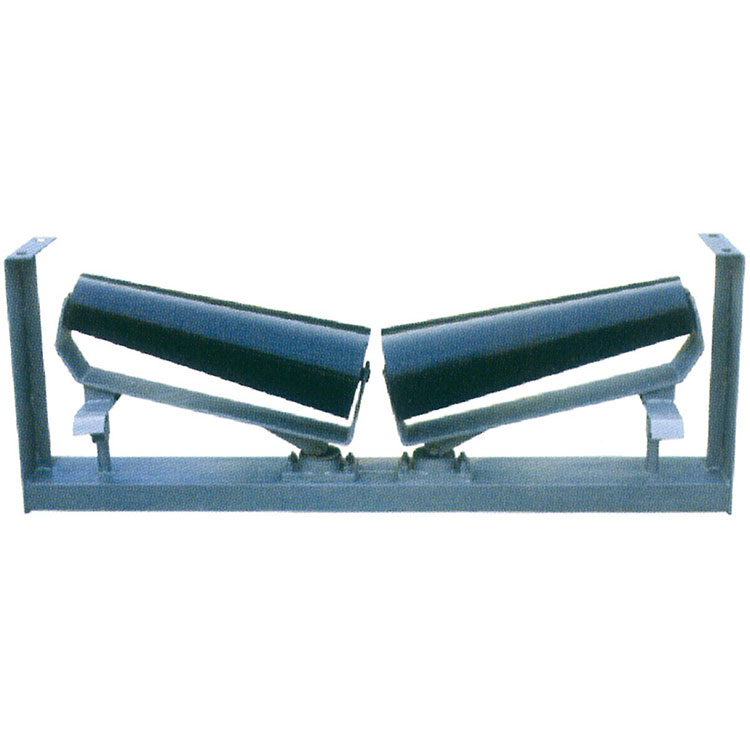
Structured Maintenance Schedule for Taper Self-Aligning Idlers
| Frequency | Action | Inspection Focus | Tool/Equipment |
|---|---|---|---|
| Daily | Visual walk-around | Edge wear, rubber buildup, seal integrity | Flashlight, mirror on stick |
| Weekly | Bearing temperature check | Hot spots (>70°C above ambient) | Infrared thermometer |
| Monthly | Pivot mechanism lubrication | Freedom of rotation, grease contamination | Grease gun, lint-free cloth |
| Quarterly | Frame alignment verification | Parallelism to belt centerline | Laser alignment tool, steel tape |
| Annually | Full disassembly inspection | Roller surface wear, shaft straightness, bearing clearance | Dial gauge, inside micrometer |
Five Pillars of Extended Idler Life
1. Lubrication Discipline
The self-aligning pivot point and the tapered roller bearings demand different lubrication intervals. Over-greasing is as harmful as under-greasing because excess grease creates pressure that pushes past seals, inviting abrasives. Wuyun recommends using a lithium-complex NLGI #2 grease and applying two strokes per bearing every 200 operating hours, not per calendar days.
2. Seal Integrity Checks
The tapered labyrinth seal is the first defense against dust and moisture. Inspect seal lips for cracking or hardening. If you notice fine material dust around the seal outer ring, clean it immediately with a soft brush—never use high-pressure air, which can force particles deeper into the bearing cavity.
3. Pivot Response Testing
A Taper Self-Aligning Idler relies on its pivot to swivel and correct belt drift. Manually swing the idler frame through its full arc (typically ±5°) during monthly stops. A sticky or jerky movement indicates worn pivot bushings or accumulated debris. Document the swivel torque using a spring scale attached to the idler end; any reading above 15 N·m suggests immediate cleaning or bushing replacement.
4. Roller Surface Condition Monitoring
Flat spots, grooving, or material adhesion on the roller barrel destroy the taper effect. Remove caked material with a plastic scraper—metal tools gouge the surface and accelerate belt wear. Measure the roller diameter at three points (ends and center); a variance exceeding 0.5 mm warrants roller rotation or replacement to maintain even contact pressure.
5. Structural Base Integrity
The mounting brackets and base channels can deform under impact loading. Check for cracked welds or bent mounting plates every quarter. Even a 2 mm shift in base alignment reduces the self-aligning effectiveness by roughly 30%, forcing the belt to run against the frame edges.
Common Failure Modes & Corrective Actions
| Symptom | Probable Root Cause | Recommended Correction |
|---|---|---|
| Excessive belt wandering on load zone | Pivot seized due to dried grease | Disassemble pivot, clean with solvent, re-lube with Wuyun-specified grease |
| Metallic screeching during start-up | Bearing cage fracture or insufficient lubricant film | Immediate replacement of bearing; inspect shaft for scoring |
| Uneven roller wear (one side more worn) | Frame not perpendicular to belt travel | Re-shim mounting feet; verify with laser alignment |
| Grease leaking from seal area | Over-greasing or damaged lip seal | Reduce grease volume; replace seal and wipe excess |
Expert FAQ: Taper Self-Aligning Idler Maintenance
Q: How often should I completely disassemble a Taper Self-Aligning Idler for deep cleaning, and what signs indicate that a full teardown is overdue?
A: Full disassembly is recommended every 4,000 operating hours or twice annually for continuous-duty conveyors. However, you should perform an early teardown if you detect any of these three warning signs: (1) axial play exceeding 1.5 mm when you pull and push the roller end, (2) audible grinding noise that persists after fresh lubrication, or (3) visible rust bleeding from the seal lip. During teardown, clean all components in a parts washer, inspect the tapered roller raceways for pitting, and replace all O-rings regardless of appearance because elastomers harden with heat cycles. Reassemble with a torque wrench, tightening the end cap bolts to the manufacturer’s specification—typically 45–50 N·m for standard 4-inch rollers. Never reuse old locking collars; they lose their gripping force after a single removal.
Q: Can I use the same maintenance checklist for a Taper Self-Aligning Idler installed on a reversing conveyor versus a one-direction belt?
A: No, reversing conveyors impose bidirectional thrust loads that accelerate wear on the thrust washers and the tapered bearing race shoulders. For reversing applications, you must shorten your lubrication interval to every 150 operating hours and add a thrust clearance measurement to your monthly checklist. The clearance should remain between 0.2 mm and 0.4 mm; if it exceeds 0.6 mm, the bearing preload is lost, and the idler will hammer on reversal, causing rapid cage failure. Additionally, reverse-flow belts tend to carry material back onto the return side, so increase your daily visual inspection of the roller surface—particularly the trailing edge—because material entrapment there is more common than on standard belts. Wuyun offers a heavy-duty version with reinforced thrust bearings specifically for reversing lines; consult your model number to confirm compatibility.
Q: What is the correct way to measure and adjust the pivot angle on a Taper Self-Aligning Idler without removing it from the conveyor structure?
A: In-situ pivot angle adjustment is not only possible but preferred to avoid structural realignment. First, mark the current pivot position with a permanent marker on the base plate. Then, loosen the two locking bolts on the pivot shaft—do not remove them entirely. Use a digital inclinometer placed on the idler crossbar to read the current angle relative to the horizontal plane. The standard neutral angle is 0°, but for belts that track to one side consistently, you may introduce a bias of up to +1.5° (tilt toward the drift direction) to encourage centering. After each 0.5° adjustment, run the belt for 15 minutes under load and observe tracking behavior. Lock the bolts to 60 N·m torque and re-measure to confirm no shift occurred during tightening. Important: never adjust more than 2° total bias, because excessive tilt lifts the belt edge off the roller, reducing contact area and accelerating cover wear. Record every adjustment in your maintenance log with date, operator name, and observed belt position before and after.
Performance Benchmarking Table (12-Month Comparison)
| Metric | Without Scheduled Maintenance | With Wuyun Recommended Schedule |
|---|---|---|
| Average idler replacement frequency | Every 10 months | Every 28 months |
| Belt edge replacement cost (annual) | $2,400 | $780 |
| Unscheduled downtime (hours/year) | 34 hours | 9 hours |
| Bearing temperature rise (above ambient) | 48°C | 19°C |
| Pivot swivel torque (N·m) | 22 N·m (sticky) | 11 N·m (smooth) |
These figures are aggregated from Wuyun customer sites across mining, aggregate, and port handling industries. The data confirms that a structured approach delivers a 180% increase in Taper Self-Aligning Idler service life while cutting energy consumption by approximately 6% due to reduced friction.
Final Operational Discipline
Document every inspection, lubricant batch number, and adjustment made. Use a digital logbook with photo attachments for visual comparison over time. Train your crew to differentiate between normal operational noise and early warning sounds—this human factor often catches issues before instruments do. Wuyun provides free downloadable inspection checklists tailored to your model; simply visit our resource center.
Ready to protect your investment and eliminate unpredictable idler failures? Contact Wuyun today for a personalized maintenance audit. Our engineering team will review your current practices, recommend condition-monitoring tools, and supply genuine replacement seals and bearings that match your Taper Self-Aligning Idler exactly. Reach out via our website or call your regional Wuyun representative—we respond within 4 business hours to schedule your on-site or virtual assessment. Let us help you turn maintenance from a cost center into a reliability advantage.