

What Are the Latest Trends in WPC Extrusion Machine Technology for Wood Plastic Composite Products
2026-09-30
The global demand for sustainable building materials has pushed WPE Wood Plastic Composition WPC Extrusion Machine technology into a new era of innovation. Manufacturers like Yongte are responding with smarter, more energy-efficient systems that reshape how Wood Plastic Composite products are produced. This article explores the trends driving change across the industry.
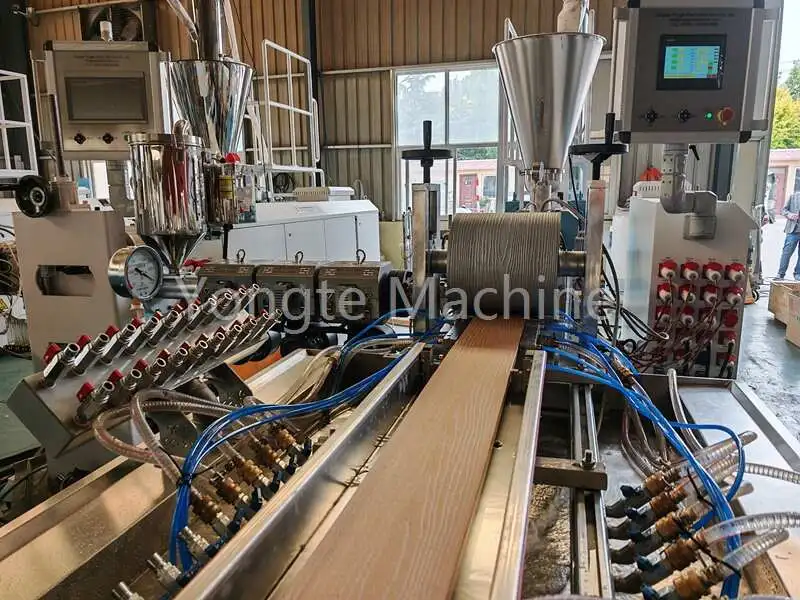
1. Smart Automation and Industry 4.0 Integration
Modern WPC Extrusion Machine lines now incorporate PLC-based control systems, IoT sensors, and real-time data monitoring. Operators can track temperature, screw speed, and die pressure from a single interface. Yongte has embedded remote diagnostics into its latest models, reducing downtime and improving consistency across production runs.
| Feature | Traditional System | Modern Smart System |
|---|---|---|
| Process monitoring | Manual gauges | Real-time IoT dashboards |
| Fault detection | Reactive | Predictive alerts |
| Energy control | Fixed settings | Adaptive optimization |
| Remote support | Not available | Cloud-based diagnostics |
2. Energy-Efficient Screw and Barrel Designs
Advanced screw geometries and bimetallic barrels now deliver better mixing while consuming less power. The goal is uniform melting of Wood Plastic Composite blends without thermal degradation of wood fibers. Yongte engineers customize screw configurations based on the ratio of wood flour to polymer, which directly affects output quality.
3. Multi-Layer and Foamed Extrusion Capability
One of the fastest-growing trends is the ability to co-extrude multiple layers in a single pass. This allows a foamed core with a solid outer skin, reducing density and material cost. A WPE Wood Plastic Composition WPC Extrusion Machine equipped with multi-layer dies gives producers flexibility for decking, fencing, and cladding profiles.
-
Foamed core reduces weight by up to 25%
-
Co-extrusion adds UV-resistant surface layers
-
Single-pass operation lowers labor costs
4. Recycled and Bio-Based Material Processing
Sustainability targets are pushing extruders to handle higher percentages of recycled polymer and agricultural fiber. Machine designs now tolerate moisture variation and contamination better than before. Yongte testing labs help clients validate formulations before full-scale production.
5. Modular and Customizable Line Configurations
Buyers increasingly want scalable solutions. Modular WPC Extrusion Machine platforms allow adding downstream equipment such as calibrators, haul-offs, and cutters as production grows.
FAQ: WPE Wood Plastic Composition WPC Extrusion Machine Common Questions
What is a WPE Wood Plastic Composition WPC Extrusion Machine used for?
It is used to melt and shape a blend of wood fiber and thermoplastic polymer into profiles such as decking boards, wall panels, fences, and window frames through a continuous extrusion process.
How does a WPE Wood Plastic Composition WPC Extrusion Machine differ from a standard plastic extruder?
It features specialized screw designs, venting systems, and temperature control zones that prevent wood fiber from burning while ensuring proper dispersion within the polymer matrix.
What maintenance does a WPE Wood Plastic Composition WPC Extrusion Machine require?
Regular cleaning of the screw and die, inspection of heating elements, lubrication of moving parts, and calibration checks are essential to maintain output quality and extend equipment lifespan.
Conclusion
Staying competitive means adopting technology that balances output, quality, and sustainability. Partnering with an experienced manufacturer ensures your line is built for your specific formulation and market.
Contact us today to discuss your WPC Extrusion Machine requirements and discover how Yongte can deliver a tailored solution for your Wood Plastic Composite production goals.