

What Are the Main Maintenance Challenges for a PV Ribbon Rolling Mill
2026-07-13
Maintaining a PV Ribbon Rolling Mill is critical for ensuring consistent output quality in photovoltaic ribbon production. However, these specialized machines face unique mechanical and thermal stresses that create distinct maintenance hurdles. For manufacturers like GRM, addressing these challenges proactively is the difference between high-yield production and costly downtime. This article explores the primary maintenance obstacles, provides actionable solutions, and answers the most frequently asked questions about PV Ribbon Rolling Mills.
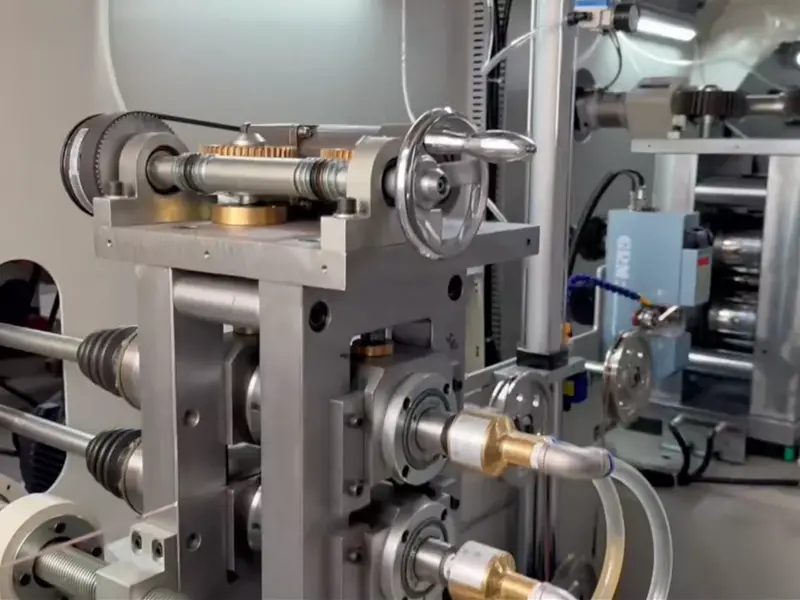
The 5 Core Maintenance Challenges
Below is a breakdown of the most common issues encountered in daily operations, along with their typical causes and recommended inspection frequencies.
| Challenge | Primary Cause | Inspection Frequency | Potential Consequence |
|---|---|---|---|
| Roller Wear & Grooving | Continuous friction with copper/aluminum ribbon under high pressure | Every 500 operating hours | Ribbon thickness variation (> ±5µm) |
| Bearing Overheating | Inadequate lubrication or misalignment | Daily (thermal imaging) | Unplanned shutdown; bearing seizure |
| Tension Control Drift | Load cell calibration loss or encoder feedback lag | Weekly | Broken ribbon or loop formation |
| Coolant System Contamination | Metal fines mixing with emulsion | Every shift (visual check) | Surface defects on finished ribbon |
| Guide Roller Misalignment | Vibration or improper mounting | Monthly | Edge curling and tracking errors |
Deep Dive: The Most Critical Issue – Roller Surface Integrity
The rolling rollers are the heart of any PV Ribbon Rolling Mill. Over time, micro-cracks develop due to cyclic loading. If left unchecked, these cracks transfer onto the ribbon surface, reducing solderability and increasing series resistance in solar cells. GRM recommends implementing a scheduled roller re-grinding cycle—typically after every 2,000 tons of processed material—combined with hardness testing (HRC 58–62 required). Additionally, PV Ribbon Rolling Mills with automatic roller gap compensation (a standard feature in GRM systems) can partially mitigate this wear, but manual verification using laser profilometry remains non-negotiable.
Lubrication and Filtration: The Overlooked Factor
Many operators focus solely on mechanical parts but neglect the lubrication system. A PV Ribbon Rolling Mill circulates up to 500 liters of emulsion per minute. This fluid not only cools but also flushes away metallic debris. The main challenge is maintaining filtration efficiency—clogged pre-filters reduce flow rate, leading to localized hot spots. GRM engineers advise a two-stage filtration approach: magnetic separators for ferrous particles (≥5µm) followed by cartridge filters for non-ferrous fines. Table 2 summarizes the lubrication checklist:
| Parameter | Standard Range | Action if Out-of-Range |
|---|---|---|
| Emulsion Temperature | 38–42°C | Adjust heat exchanger |
| pH Level | 8.2–8.8 | Add pH stabilizer |
| Particle Count (ISO 4406) | ≤ 18/16/13 | Replace filter elements |
| Water Hardness | < 120 ppm | Install demineralizer |
Electrical and Control System Drift
Modern PV Ribbon Rolling Mills rely on PID controllers for speed and tension synchronization. The greatest challenge here is sensor drift—particularly from load cells and LVDT displacement transducers. Over 6–12 months, these sensors can shift by 0.5–1.0%, directly affecting ribbon flatness. GRM recommends a semi-annual calibration protocol using certified dead-weight testers. Moreover, backup power conditioning units are essential because voltage sags can corrupt PLC memory, leading to parameter loss.
PV Ribbon Rolling Mills FAQ – Common Questions from Operators
Q1: How often should the main rollers be replaced entirely, rather than re-ground?
A1: Complete roller replacement is generally required after 4–5 re-grinding cycles, or when the roller diameter has been reduced by more than 2.5% of its original size (typically >3 mm reduction for a 120 mm diameter roller). Beyond this point, the hardened surface layer (case depth) becomes too thin—usually under 2 mm—which compromises structural integrity. GRM provides a roller wear log template that tracks cumulative material throughput; when throughput exceeds 12,000 metric tons per roller set, replacement is mandatory. Always pair new rollers as a matched set to avoid load imbalance.
Q2: What is the most effective method to detect bearing failure before it causes a mill stoppage?
A2: The most reliable early-warning method is vibration spectrum analysis, performed weekly using a portable FFT analyzer. Focus on the bearing defect frequencies (BPFO, BPFI, BSF) in the 1x–10x harmonic range. A sudden increase in acceleration velocity from <2.0 mm/s to >4.5 mm/s (RMS) indicates imminent failure. GRM also recommends installing permanent accelerometers on each bearing housing, connected to a condition monitoring system that triggers alarms at 80% of the threshold. Additionally, always log grease replenishment volume—if consumption rises by >20% week-over-week, this suggests seal degradation allowing lubricant leakage.
Q3: How can we minimize downtime during a scheduled maintenance shift for a PV Ribbon Rolling Mill?
A3: The key is modular pre-assembly. GRM advises maintaining a spare "quick-change" cartridge that includes pre-aligned rollers, bearings, and seals. This cartridge can be swapped in under 4 hours by a trained two-person team, compared to 12–16 hours for piecemeal disassembly. Secondly, create a detailed maintenance checklist that separates tasks into "hot" (while mill is cooling) and "cold" (after thermal equilibrium) categories. For example, check coolant nozzle angles while the mill is still warm (hot task), but perform gap calibration only after 2 hours of cooldown (cold task) to avoid thermal expansion errors. Finally, schedule filter changes and electrical inspections concurrently to overlap downtime windows.
Implementing a Predictive Maintenance Strategy
Reactive maintenance costs 3–5 times more than predictive approaches. For PV Ribbon Rolling Mills, GRM suggests integrating IoT sensors that track vibration, temperature, and motor current draw in real-time. Machine learning algorithms can then flag anomalies 48–72 hours before failure. This approach has reduced unplanned stoppages by 40% in GRM-equipped facilities across Europe and Asia. Remember, the goal is not zero maintenance—it is intelligent maintenance that aligns with production scheduling.
Conclusion and Call to Action
Maintaining a PV Ribbon Rolling Mill demands vigilance across mechanical, fluid, and electrical domains. From roller wear cycles to sensor drift and lubrication chemistry, each element interacts to determine final ribbon quality. By adopting structured checklists, vibration analysis, and modular spare parts, manufacturers can transform maintenance from a cost center into a competitive advantage. GRM has over 15 years of field data and customized maintenance protocols for every mill model.
Contact us today at GRM’s technical support team to schedule a free maintenance audit for your PV Ribbon Rolling Mills. Our engineers will deliver a tailored 12-month preventive schedule, including spare parts inventory recommendations and on-site training.