

What Are the Main Types of Pipe Welding Equipment for Plastic Pipe Processing?
2026-10-16
A piping construction crew leader is preparing for a 2 km PE water main project. The pipe diameter is 315 mm, and the wall thickness is 18.7 mm. The crew has a butt fusion machine and an electrofusion machine. The project schedule allows 30 days for installation. The crew leader must decide which welding method to use for the main line and which method to use for the connections to the existing network. The wrong choice will cost time and money. The right choice depends on the pipe diameter, the wall thickness, the working space, and the skill of the operators. This guide explains the main types of Pipe Welding Equipment and how to select the right one for each application.
1. What Is Butt Fusion Welding and When Is It Used?
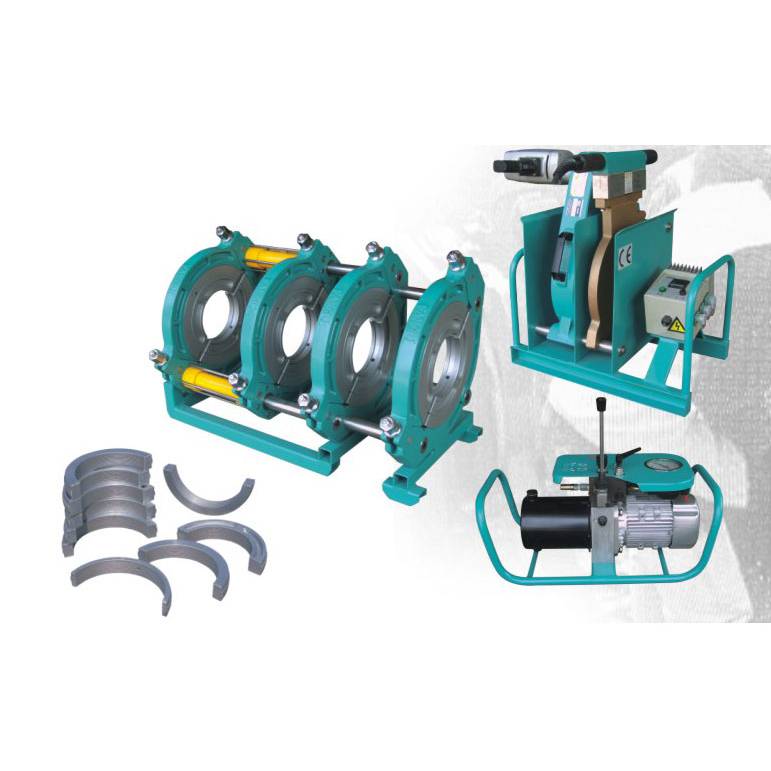
Butt fusion welding is the most common method for joining PE pipes with a diameter greater than 63 mm. The process involves heating the pipe ends with a heating plate, pressing them together, and allowing them to cool under pressure. The result is a joint that is as strong as the pipe itself. Butt fusion Pipe Welding Equipment consists of a clamping unit, a heating plate, a planing tool, and a hydraulic or manual pump. The equipment is available in different sizes to accommodate different pipe diameters. The table below shows the typical butt fusion parameters for PE pipes.
| Pipe diameter (mm) | Wall thickness (mm) | Heating time (seconds) | Cooling time (minutes) | Pressure (bar) |
| 63 | 5.8 | 45 | 6 | 10 |
| 110 | 10.0 | 70 | 10 | 12 |
| 160 | 14.6 | 100 | 15 | 14 |
| 250 | 22.7 | 150 | 22 | 16 |
| 315 | 28.6 | 180 | 28 | 18 |
| 400 | 36.3 | 220 | 35 | 20 |
In our factory, we manufacture Pipe Welding Equipment that covers the range from 63 mm to 800 mm. The butt fusion machines are available with manual, hydraulic, and automatic control. The automatic machines record the heating time, pressure, and cooling time for each joint, which provides traceability for quality assurance. Ningbo Fangli Technology Co., Ltd. has been manufacturing plastic pipe welding equipment for over 15 years.
2. What Is Electrofusion Welding and When Is It Preferred?
Electrofusion welding uses a fitting with a built-in heating coil. The pipe ends are inserted into the fitting, and an electric current is passed through the coil. The coil heats the plastic, which melts and fuses the pipe and the fitting together. Electrofusion is preferred for connections in tight spaces, for joining pipes of different materials, and for repair work. It is also used for small diameter pipes where butt fusion is difficult. The table below compares electrofusion and butt fusion for different applications.
| Parameter | Butt fusion | Electrofusion |
| Pipe diameter range | 63 – 800 mm | 20 – 630 mm |
| Working space required | Large (for clamping and moving pipe) | Small (fitting only) |
| Operator skill | Moderate to high | Moderate |
| Weather sensitivity | High (wind, rain, dust) | Moderate (requires shelter) |
| Joint cost | Low (no fitting) | High (fitting cost) |
| Traceability | Manual log or automatic recorder | Automatic recording in the control unit |
In our factory, we manufacture electrofusion Pipe Welding Equipment with automatic data recording. The control unit records the voltage, current, and time for each joint. The data can be downloaded to a computer for quality documentation. Ningbo Fangli Technology Co., Ltd. provides electrofusion fittings and equipment for PE, PP, and PVDF pipes.
3. What Is Socket Fusion Welding and When Is It Used?
Socket fusion welding is used for small diameter pipes, typically from 20 mm to 63 mm. The process uses a heating tool with a male and female die. The pipe end is heated on the male die, and the fitting is heated on the female die. The pipe is then inserted into the fitting and allowed to cool. Socket fusion is simple and inexpensive, but it is limited to small diameters and requires a skilled operator to ensure the correct insertion depth and heating time. The table below shows the socket fusion parameters for different pipe sizes.
| Pipe diameter (mm) | Heating time (seconds) | Insertion depth (mm) | Cooling time (minutes) |
| 20 | 5 | 14 | 2 |
| 25 | 7 | 16 | 2 |
| 32 | 8 | 18 | 3 |
| 40 | 12 | 20 | 4 |
| 50 | 18 | 23 | 5 |
| 63 | 24 | 27 | 6 |
Construction crew tip: Socket fusion is the most economical method for small diameter pipes. The equipment is portable and requires only a power source. However, the joint quality depends on the operator's technique. The pipe must be inserted to the correct depth, and the heating time must be accurate. In our factory, we provide socket fusion tools with a depth gauge and a timer to reduce operator error. We also provide training for construction crews.
4. How Should Equipment Be Selected for a Project?
The selection of Pipe Welding Equipment depends on four factors: the pipe diameter, the pipe material, the working environment, and the project schedule. The table below shows the recommended equipment for common project scenarios.
| Project scenario | Recommended equipment | Reason |
| Large diameter water main (PE, 315 mm+) | Hydraulic butt fusion machine | High strength, high productivity |
| Small diameter distribution (PE, 20 – 63 mm) | Socket fusion tool | Portable, low cost |
| Tight space connection (PE, 110 – 315 mm) | Electrofusion machine | Minimal space required |
| Repair and maintenance | Electrofusion machine | Can join different materials |
| High productivity project | Automatic butt fusion machine | Fast cycle, traceable data |
| Mixed material project (PE to PP) | Electrofusion with transition fittings | Compatible with different materials |
In our factory, we provide a complete range of Pipe Welding Equipment for all of these scenarios. We also provide a project consultation service to help construction crews select the right equipment for their specific project. Fangli has supplied equipment to projects in more than 40 countries.
Frequently Asked Questions About Pipe Welding Equipment for Plastic Pipe Processing
Summary for Construction Crew Leaders and Project Managers
The main types of Pipe Welding Equipment for plastic pipe processing are butt fusion, electrofusion, and socket fusion. Butt fusion is used for large diameter pipes and provides high strength and low joint cost. Electrofusion is used for tight spaces, repairs, and mixed materials. Socket fusion is used for small diameter pipes and is the most economical method. The selection depends on the pipe diameter, the material, the working environment, and the project schedule. By matching the equipment to the application, construction crews can achieve high productivity and reliable joint quality. Ningbo Fangli Technology Co., Ltd. has been manufacturing plastic pipe welding equipment for over 15 years and provides full project support for our customers.
Ningbo Fangli Technology Co., Ltd. manufactures butt fusion, electrofusion, and socket fusion Pipe Welding Equipment for PE, PP, and PVDF pipes. We provide equipment selection guides, operator training, and on-site technical support.