

What are the primary technical challenges in scaling a Laser Active Protection System LAPS for ground vehicles
2026-05-09
The integration of a Laser Active Protection System LAPS onto armored and tactical ground vehicles represents a paradigm shift in close-in defense. While stationary and naval platforms have seen promising developments, adapting a Laser Active Protection System LAPS for mobile, vibration-prone, and power-limited ground vehicles introduces a unique set of engineering hurdles. Jioptics, a leader in precision optoelectronic solutions, recognizes that overcoming these barriers is essential for next-generation battlefield survivability.
Below is a structured analysis of the primary technical challenges, followed by practical FAQs and a clear path forward.
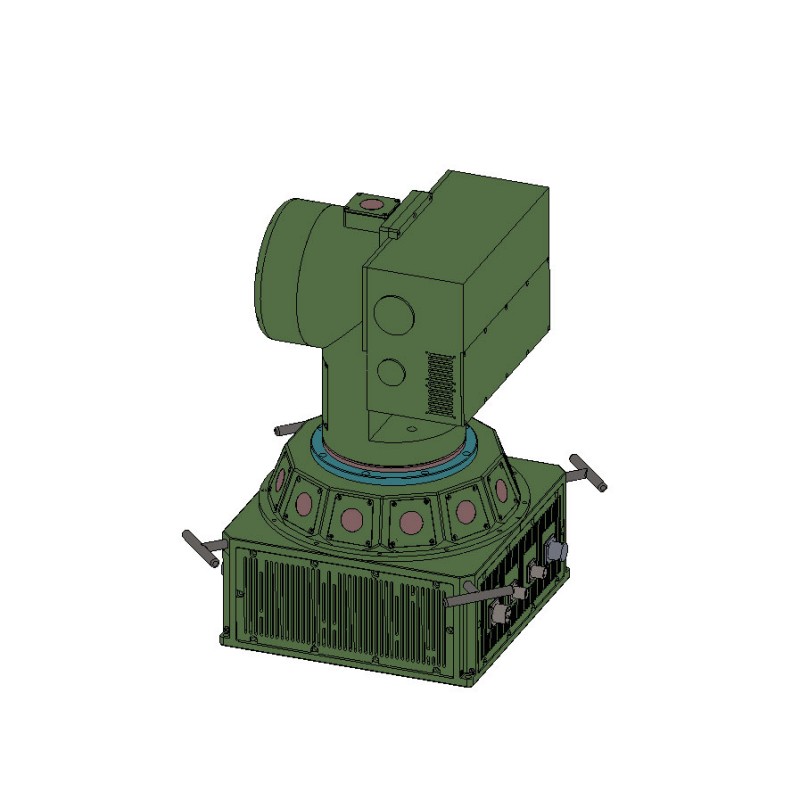
Core Technical Obstacles
| Challenge Category | Specific Issue | Impact on Ground Vehicle Deployment |
|---|---|---|
| Power and Thermal Management | High-energy laser draws >50 kW; vehicle alternator outputs typically 10-30 kW | Limited duty cycle; requires supplementary batteries or hybrid powertrains |
| Beam Stabilization | Vibration from rough terrain (10-500 Hz) misaligns optical path | Engagement error >0.5 mrad at 1 km; miss probability increases sharply |
| Size, Weight, and Power (SWaP) | Laser resonator and cooling unit occupy >2 m³ | Cannot fit on medium tactical trucks or IFVs without redesign |
| Atmospheric Turbulence | Dust, smoke, and thermal blooming near ground level | Beam defocus and energy scatter reduce effective range by 40-60% |
| Target Acquisition Delay | 360° IR sensors + fast steering mirror latency | Time from detection to firing often exceeds 2 seconds, insufficient for rocket threats |
Detailed FAQ – Laser Active Protection System LAPS Common Questions
Q1: Why is vibration such a critical problem for a Laser Active Protection System LAPS on ground vehicles?
A1: Unlike ship-based systems, ground vehicles experience continuous high-amplitude vibration from engines, tracks, and uneven terrain. A Laser Active Protection System LAPS requires beam pointing accuracy within 10 microradians to maintain lethal fluence on a small rocket or drone. Vibration induces misalignment between the tracking camera and the fast steering mirror. Even with active compensation using piezoelectric actuators, the feedback loop bandwidth must exceed 1 kHz to counter hull oscillations. Current off-the-shelf stabilizers achieve only 300-400 Hz, creating a system latency gap that allows agile threats to escape the engagement zone.
Q2: How does the power limitation of a standard military vehicle affect Laser Active Protection System LAPS effectiveness?
A2: Most medium ground vehicles (e.g., JLTV or Boxer) provide 15-30 kW of continuous electrical power. A Laser Active Protection System LAPS capable of defeating an RPG-7 or small UAS requires 50–100 kW of input power to produce a 10–20 kW continuous laser beam after losses. Without a supplemental high-density energy storage system (e.g., lithium-ion capacitors or flywheels), the system can only fire for 5-10 seconds before draining vehicle systems. Furthermore, waste heat from the laser diode arrays (60-70% inefficiency) demands a chiller plate or liquid cooling loop, which adds 400-600 kg and further strains the vehicle’s net power budget. Jioptics is currently developing modular thermal buffer units to decouple burst firing from alternator output.
Q3: Can a Laser Active Protection System LAPS distinguish friendly from enemy fire in complex battlefield clutter?
A3: In urban or forested environments, a Laser Active Protection System LAPS faces thousands of false alarms from welding arcs, sunlight glints, and friendly tracer rounds. Traditional Doppler radar cannot identify a millimeter-scale shaped charge jet. The technical solution requires multispectral sensor fusion: a 360° staring LWIR camera for threat detection, a gated shortwave IR camera for ranging, and a dedicated threat classification neural network running at 100 Hz. However, training such networks on rare hypervelocity projectile signatures remains incomplete. Moreover, the system must reject decoys such as retroreflector-equipped drones. Jioptics has demonstrated a prototype using polarized laser ranging to differentiate between metal cased munitions and plastic decoys, but field validation in electronic warfare conditions is still pending.
Conclusion and Contact
Scaling a Laser Active Protection System LAPS for ground vehicles is not merely a power or cooling exercise—it requires simultaneous breakthroughs in vibration-tolerant optics, compact thermal management, and intelligent target discrimination. Jioptics continues to advance each of these pillars through modular laser heads and adaptive gimbal designs.
For a detailed technical whitepaper or to schedule a demonstration of our latest Laser Active Protection System LAPS hardware, contact us today through the Jioptics official website or reach our engineering team directly at [email protected].