
What Factors Affect the Curing Time and Quality of a UV Curing Machine
2026-01-12
Achieving optimal results in your production process hinges on understanding what affects the performance of your UV Curing Machine. At HOYSTAR, we know that consistent curing speed and flawless quality are non-negotiable for efficiency and product integrity. Several interconnected factors dictate the outcome, and mastering them is key to leveraging the full potential of your equipment.
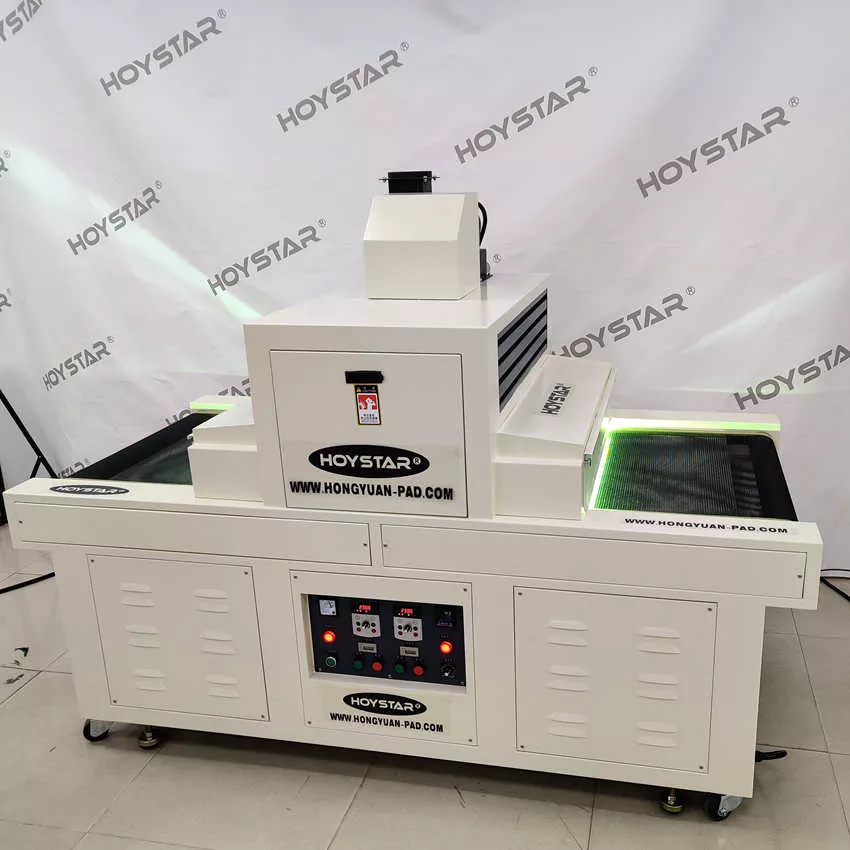
The primary variables influencing UV curing machine performance can be categorized for clarity:
Key Factors Affecting Curing:
-
UV Light Source & Intensity: The type (e.g., LED, Mercury Arc) and power output (W/cm²) directly determine energy delivery.
-
Spectral Output: The wavelength (nm) must match the photoinitiator's absorption peak in the material.
-
Exposure Time: The duration the material is exposed to UV energy.
-
Material Formulation: The specific chemistry of the resin, coatings, or inks used.
-
Distance from Lamp: The gap between the lamp and the substrate affects irradiance.
-
Substrate Properties: The material's temperature, texture, and reflectivity can impact curing.
To illustrate the relationship between some core technical factors, consider the following:
| Factor | Impact on Curing Time | Impact on Curing Quality |
|---|---|---|
| High UV Intensity | Decreases Time | Can improve depth of cure if controlled |
| Incorrect Wavelength | Increases or Prevents Cure | Leads to tacky surfaces or incomplete curing |
| Insufficient Exposure | N/A (Process is too fast) | Causes poor adhesion and soft curing |
| Optimized Distance | Ensures Efficient Time | Promotes even, consistent curing across the surface |
UV Curing Machine FAQ
What is the most common mistake that leads to poor UV curing quality?
The most frequent issue is a mismatch between the UV lamp's spectral output and the photoinitiator system in the material. Using a HOYSTAR UV curing machine with adjustable or specific wavelength ranges ensures compatibility with your formulations.
How does lamp aging affect my UV curing process?
Over time, all UV lamps experience a decline in output intensity. This gradual degradation leads to longer curing times and can eventually result in under-cured products. Regular monitoring and maintenance schedules are essential.
Can environmental conditions impact curing?
Yes, ambient temperature and airborne oxygen can inhibit the polymerization reaction. Cool substrates or high oxygen inhibition (in surface curing) may require adjusted parameters or inert atmospheres, which HOYSTAR systems can be configured to manage.
Understanding and controlling these factors is essential for a reliable production line. A well-calibrated UV curing machine from a knowledgeable provider like HOYSTAR is an investment in speed, quality, and consistency.
For a detailed analysis of your specific application and to find the perfect HOYSTAR UV Curing Machine solution for your needs, contact our technical team today.