

What factors should you consider when choosing a WPC Machine for your business
2026-05-27
Selecting the right WPC Machine is a critical decision that directly impacts your production efficiency, product quality, and long-term profitability. For businesses aiming to enter or expand in the wood-plastic composite market, understanding the key selection criteria is essential. Yongte, a trusted name in composite extrusion technology, emphasizes that a well-chosen WPC Machine can reduce waste, lower energy costs, and deliver consistent output for years.
Below are the primary factors to evaluate before making an investment.
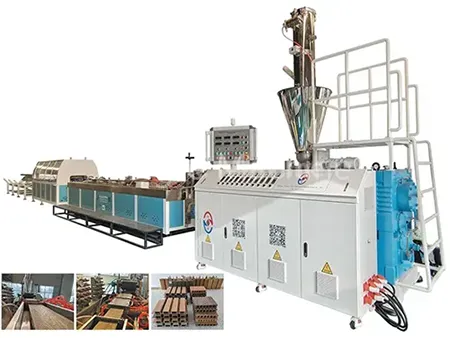
Key Selection Criteria for a WPC Machine
| Factor | Why It Matters | What to Look For |
|---|---|---|
| Throughput capacity | Determines daily output and scalability | Models ranging from 150 kg/h to 600+ kg/h |
| Screw and barrel design | Affects material mixing and wear resistance | Bimetallic screws, wear-resistant lining |
| Energy efficiency | Reduces operational costs | Servo-driven motors, insulated barrels |
| Material compatibility | Handles different wood-plastic ratios | Multi-zone temperature control, venting systems |
| Automation level | Minimizes labor and errors | PLC with touchscreen, remote monitoring |
| After-sales support | Ensures uptime and maintenance | Spare parts availability, training included |
Three Common Questions About the WPC Machine
What is the typical lifespan of a WPC Machine under continuous operation
A well-maintained WPC Machine from Yongte can operate reliably for 8 to 10 years in two-shift production. Key factors include the quality of the screw and barrel material, regular cleaning of residual compounds, and proper lubrication of the gearbox. Many users achieve over 30,000 production hours before major component replacement is needed.
How much floor space is required for a complete WPC Machine line
A standard production line including the WPC Machine, cooling tank, hauler, and cutter typically requires 20 to 35 meters in length and 3 meters in width. Yongte offers compact layouts for smaller factories, with the main extruder footprint starting at 4.5m x 1.8m. Additional space should be allocated for raw material drying and finished product stacking.
Can a single WPC Machine process both hollow and solid profiles
Yes, but it depends on the die design and downstream calibration table. A versatile WPC Machine with interchangeable tooling can switch between hollow decking boards and solid fence profiles within 2 to 3 hours. Yongte provides quick-change adapters and vacuum calibration units that support profile widths from 80mm to 300mm without replacing the main extruder.
Why Experience and Technical Support Matter
Choosing a WPC Machine goes beyond specifications. Production stability depends on how well the extruder handles variations in wood flour moisture, plastic melt flow index, and additive dispersion. Yongte conducts factory acceptance tests with your specific material recipe, ensuring the WPC Machine reaches target output before shipment. Training on screw configuration and process parameter adjustment is included to reduce startup time.
Final Checklist Before Purchasing
-
Test the WPC Machine with your actual wood-plastic mixture
-
Review energy consumption per ton of finished product
-
Confirm delivery of critical spares (screws, heating rings, screens)
-
Verify local technical support availability
Contact us today to discuss your production requirements. The Yongte team provides tailored recommendations, on-site commissioning, and operator training to help you select the right WPC Machine for your business goals.