

What Features Should You Look for in an Automatic Shoe Sewing Machine
2026-11-03
Investing in an Automatic Shoe Sewing Machine is a major decision for any footwear manufacturer, and choosing the right model can directly affect your output, stitch quality, and long-term operating costs. As a specialist in industrial sewing solutions, Sanyou has helped numerous shoe factories select equipment that matches their production scale and product types. This guide breaks down the features that matter most when evaluating an Automatic Shoe Sewing Machine, so you can compare models with confidence and avoid costly mistakes.
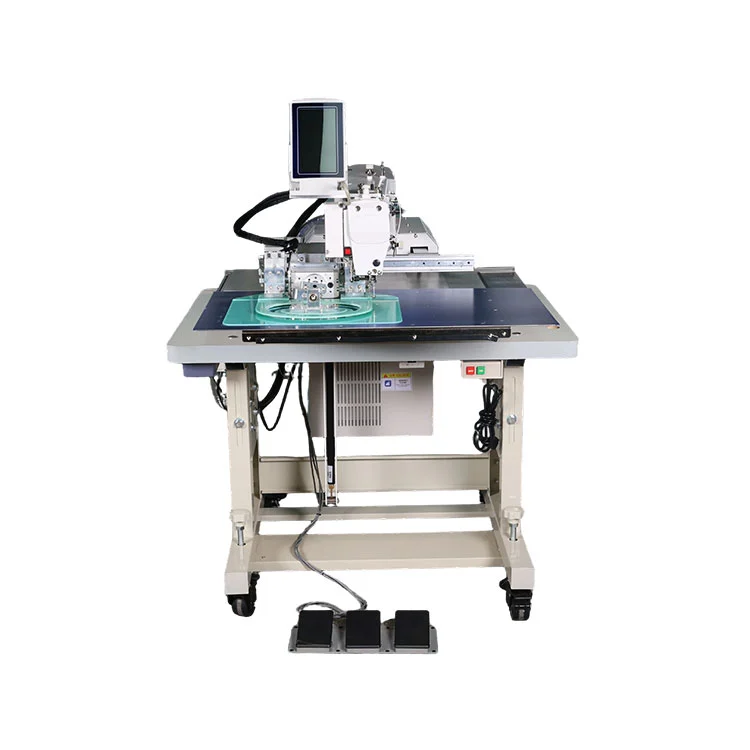
Core Features That Define a Capable Machine
Not every Automatic Shoe Sewing Machine is built for the same workload. The table below summarizes the key specifications to compare before purchase.
| Feature Category | What to Look For | Why It Matters |
|---|---|---|
| Stitch System | Programmable patterns, adjustable stitch length (0.5–5 mm), lock stitch or double-chain options | Determines flexibility across upper, lining, and decorative stitching |
| Motor & Drive | Servo motor with variable speed control, low-noise operation | Improves energy efficiency and precision on curved seams |
| Control Interface | Touchscreen panel, USB/network pattern import, multilingual menu | Reduces setup time and operator training costs |
| Needle & Thread Handling | Automatic thread trimming, needle cooling, multi-thread tension control | Minimizes downtime and defects on dense shoe materials |
| Frame & Feed | Heavy-duty feed dog, programmable X-Y stitching area, stable column design | Ensures accuracy on thick leather and multi-layer assemblies |
| Safety & Maintenance | Needle breakage sensors, self-diagnostic alerts, easy-access lubrication points | Extends machine life and protects operators |
Performance and Automation Considerations
A high-quality Automatic Shoe Sewing Machine should reduce manual intervention without sacrificing consistency. Look for automated pattern memory that stores hundreds of stitching programs, so switching between shoe styles takes minutes rather than hours. Servo-driven systems from reputable suppliers such as Sanyou deliver stable speed under load, which is essential when sewing thick leather uppers or reinforced toe caps. Also evaluate the stitching area size: a larger programmable field supports bigger shoe components and reduces repositioning. Finally, confirm that spare parts and technical support are readily available, because downtime on a production line is far more expensive than the machine itself.
Total Cost of Ownership
Purchase price is only one part of the equation. Calculate energy consumption, consumable usage (needles, thread, bobbins), expected service intervals, and operator training requirements. A slightly higher-priced Automatic Shoe Sewing Machine with better automation and local Sanyou service coverage often delivers a lower cost per pair over five years.
Frequently Asked Questions
Q: How does an Automatic Shoe Sewing Machine differ from a standard industrial sewing machine?
A: An Automatic Shoe Sewing Machine integrates programmable pattern control, automatic thread trimming, and dedicated feeding systems designed for thick, multi-layer shoe materials, whereas a standard industrial machine relies more on manual guidance and offers limited pattern memory.
Q: What stitching area size is suitable for shoe upper production?
A: For most shoe uppers, a programmable stitching field of at least 300 × 200 mm is recommended; larger fields (400 × 250 mm or more) suit boots and full-size components and reduce repositioning time.
Q: How much operator training is required to run an Automatic Shoe Sewing Machine?
A: Most operators with basic sewing experience can become productive within three to five days when the machine offers a touchscreen interface and stored pattern libraries, and Sanyou provides structured onboarding to shorten this ramp-up period.
Conclusion and Next Step
Selecting the right Automatic Shoe Sewing Machine comes down to matching stitch capability, automation level, and service support to your actual production profile. Sanyou offers consultation, live demonstrations, and after-sales service to help you make a data-driven decision. Contact us today to request a specification sheet, compare models, and schedule a trial run for your factory.