

What Happens to Mixing Efficiency When the Volumetric Ratio of Two Feeds Is Highly Unbalanced
2026-05-14
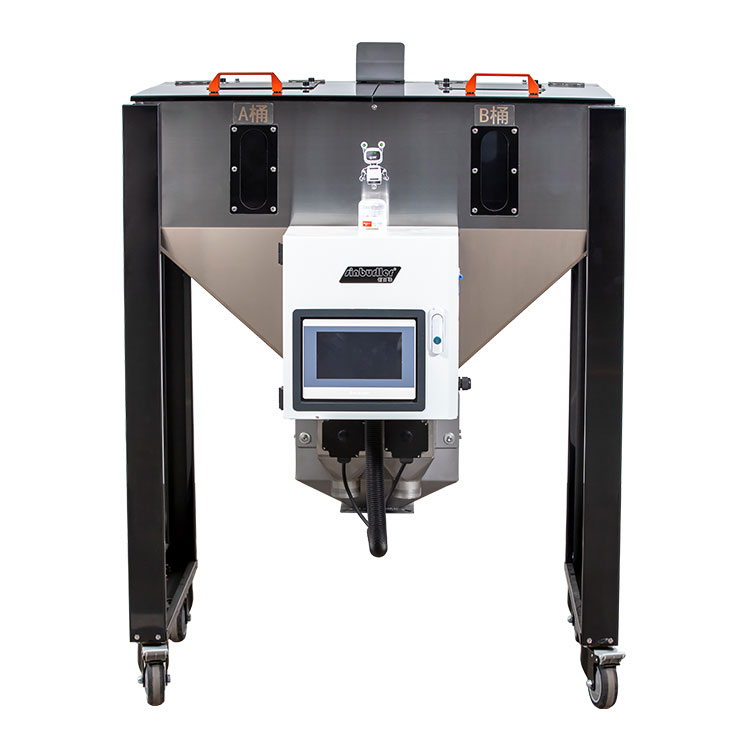
When operating a Volumetric Ratio of Two Feed Mixer, the balance between incoming streams directly dictates mixing quality. A highly unbalanced ratio—such as 10:1 or 20:1—often disrupts dispersion, increases segregation risk, and lowers overall mixing efficiency. Understanding this dynamic is critical for industries using Sinburller precision mixing solutions. This article explores the physical consequences, provides actionable data, and answers common questions about Volumetric Ratio of Two Feed Mixer performance.
Immediate Effects on Mixing Efficiency
| Condition | Mixing Efficiency Outcome |
|---|---|
| Ratio 1:1 | Optimal shear distribution, minimal dead zones |
| Ratio 5:1 | Moderate efficiency loss, longer mixing time required |
| Ratio 10:1 | Significant efficiency drop, risk of channeling |
| Ratio 20:1 | Very poor efficiency, dominant feed bypasses minor feed |
Key Mechanisms Behind Efficiency Loss
-
Flow asymmetry: The dominant feed creates preferential paths, leaving the minor feed under-dispersed.
-
Shear mismatch: Impellers optimized for balanced ratios fail to impart enough energy to the smaller stream.
-
Residence time distribution (RTD): A highly unbalanced Volumetric Ratio of Two Feed Mixer broadens RTD, causing some particles to exit unmixed.
-
Segregation potential: Powder or liquid components with different densities separate more easily when one feed dominates.
Sinburller mitigates these issues through adaptive rotor-stator geometries and real-time ratio monitoring, restoring efficiency even at 15:1 imbalances.
Volumetric Ratio of Two Feed Mixer FAQ
What volumetric ratio is considered too unbalanced for standard mixers
Any ratio exceeding 8:1 is generally considered highly unbalanced for conventional continuous mixers. At this point, mixing efficiency drops below 70% for most Newtonian fluids. For non-Newtonian or multi-phase feeds, the threshold may be as low as 5:1. Sinburller mixers extend this range to 12:1 by using multi-stage injection ports.
How can I quantify the mixing efficiency loss at a 15:1 volumetric ratio
Efficiency loss can be quantified using the coefficient of variation (CoV) of a tracer concentration. At 1:1 ratio, CoV is typically under 5%. At 15:1, CoV often rises to 18–25% in static or single-rotor mixers. For Sinburller units with adjustable annular gaps, CoV stays below 10%. Testing should follow ISO 11242 standards for liquid mixing or ASTM D6940 for powder blending.
Does increasing mixer speed compensate for an unbalanced volumetric ratio
Increasing speed compensates partially but introduces trade-offs. Higher speed reduces segregation time scales but increases energy consumption by 40–60% and may degrade shear-sensitive components. In a Volumetric Ratio of Two Feed Mixer, speed alone cannot correct flow asymmetry. Sinburller recommends combining moderate speed increases with feed pre-dispersion or split injection geometry, which recovers efficiency without overheating.
Practical Recommendations from Sinburller
To maintain efficiency under highly unbalanced conditions:
-
Install inline static mixers before the main unit to pre-distribute the minor feed.
-
Use variable annular gap technology (patented by Sinburller) to adjust shear zones.
-
Monitor pressure drop across the mixer—an abrupt drop signals channeling.
Contact Us
Optimizing a Volumetric Ratio of Two Feed Mixer for unbalanced feeds requires expert analysis. Sinburller provides free ratio audits and custom rotor designs. Contact our engineering team today to solve your mixing asymmetry challenges.